Kansa thali benefits are mostly practical: bronze dinnerware is durable, long-lasting and rooted in centuries of Indian dining tradition. Ayurveda calls kansa the preferred metal for eating, though clinical evidence for specific health effects is lacking. Genuine kansa rings like a bell when tapped, which is also the quickest way to spot a fake.
A few years ago, kansa was the metal your grandmother used and nobody photographed. Today, bronze thalis show up in boutique hotels, wedding registries and food blogs. The comeback is real, and so is the confusion around it. What exactly is kansa, which of the claimed kansa thali benefits hold up, and how do you avoid paying bronze prices for plated steel? Here is an honest guide.
What Exactly Is Kansa?
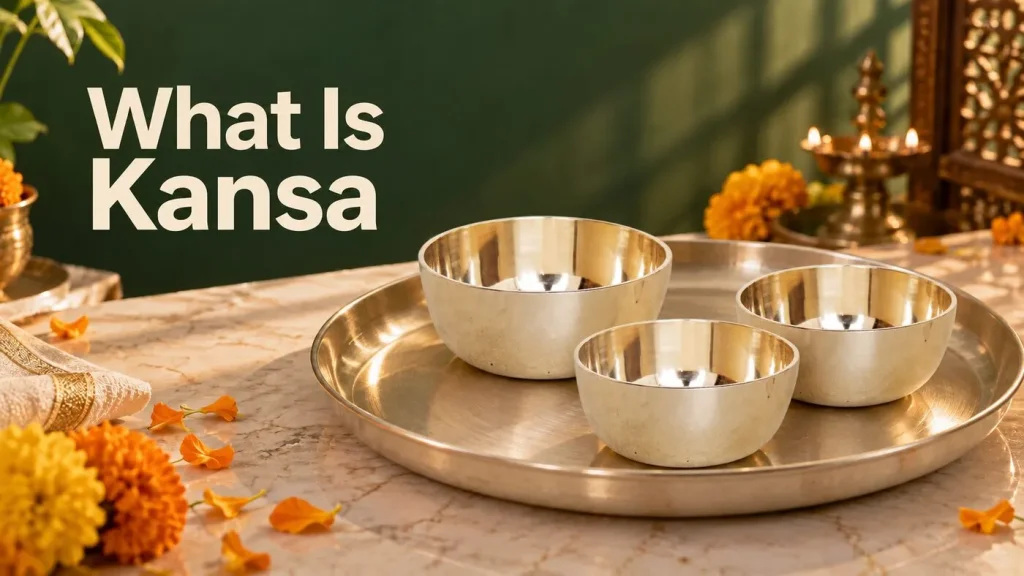
Kansa is the Indian word for bronze, an alloy made primarily of copper and tin. It has a soft, muted gold-grey colour, quite different from the bright yellow of brass, and it feels noticeably dense in the hand.
In India, kansa dinnerware has a long history in regions like Gujarat, Rajasthan, Odisha and Assam, where families served festive meals on bronze thalis, katoris and glasses. Traditional kansa is often hand-beaten by artisans, which gives each piece slight variations that machine-made metal never has.
Why Kansa Dinnerware Is Trending Again
Three things brought kansa back into the spotlight.
First, the wider revival of Ayurveda and traditional Indian living has people re-examining what their kitchens lost to steel and melamine. Second, kansa is photogenic: its soft glow flatters food, which is why restaurants and stylists love it. Third, it is genuinely durable. A well-made kansa thali outlives trends, which makes it feel like a sensible purchase rather than a fashion experiment.
Kansa Thali Benefits: Tradition vs What We Know
Let us separate the traditional claims from the practical, verifiable ones.
Traditional beliefs. Ayurveda considers kansa the best metal for eating, and texts associate it with supporting digestion and balancing the body’s energies. Some sellers go further and claim kansa “alkalises” food or “purifies” it. These claims come from tradition and marketing, not clinical research, and it is fair to hold them lightly. Ayurveda itself is India’s formal system of traditional medicine, promoted by the Ministry of AYUSH.
Practical, verifiable benefits:
- Durability. Kansa is hard and chip-resistant. It does not crack like ceramic or dent as easily as thin steel.
- Food-friendly for most dishes. Bronze handles everyday Indian meals well, from dal and sabzi to sweets.
- A better eating pace. Kansa warms gently to the food and feels substantial, which quietly slows a meal down in the best way.
- Heirloom value. Good kansa pieces are handed down, not thrown out. A bronze dinner set is the kind of purchase a family keeps for decades.
If you are comparing metals for your dining table, our guide on whether brass plates are good for eating makes a useful companion read, and we have even covered specific questions like eating non-veg in a brass plate.
How to Spot Fake or Plated Kansa
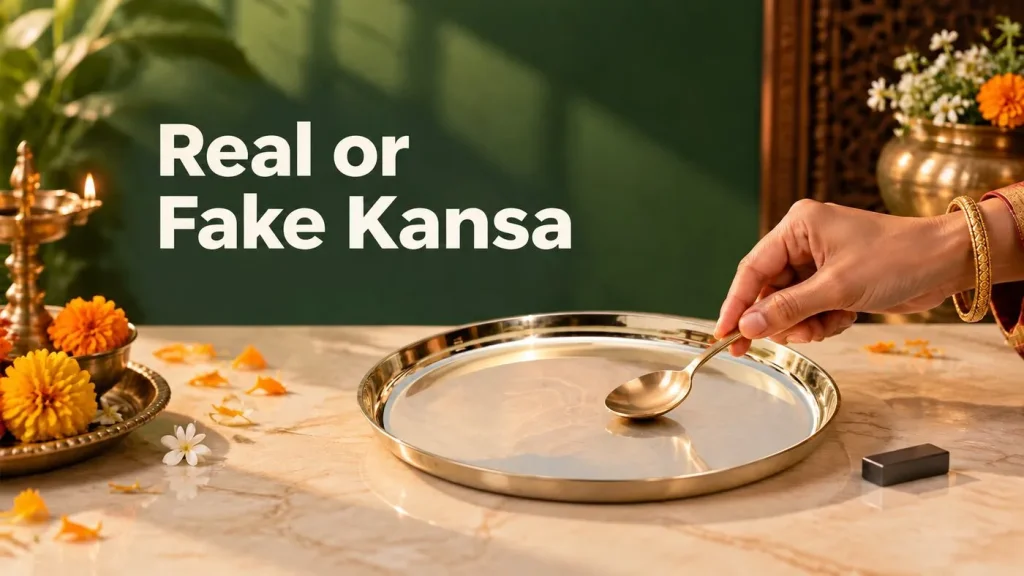
This is where buyers get burned, so pay attention. Plated steel or mixed metal sold as “kansa” is common in markets and on some online listings. Here are five checks that work.
1. The bell test
Tap the piece gently with a spoon or knuckle. Pure kansa produces a clear, sustained ring, almost like a small temple bell. A dull thud suggests another metal underneath.
2. The magnet test
Kansa is not magnetic. If a fridge magnet sticks firmly to the thali, there is steel inside. This single test filters out most cheap fakes.
3. The colour check
Real kansa has a muted, slightly greyish gold tone. If the piece is bright, shiny yellow like fresh brass, be suspicious. Sellers often pass off brass as kansa because buyers expect a golden glow.
4. The weight check
Kansa is dense. A genuine kansa thali feels heavier than a steel or brass plate of the same size. Pick it up before you pay.
5. The price reality check
Pure kansa dinnerware costs meaningfully more than steel or brass equivalents because of its copper-tin composition and handwork. A “kansa” thali set at a suspiciously low price is usually telling you something.
A well-documented listing will say “pure bronze” or “pure kansa” clearly, like this pure bronze kansa thali, rather than vague words like “kansa finish” or “kansa look”.
How to Care for Kansa Dinnerware
Kansa is forgiving, but a few habits keep it beautiful.
- Wash with mild dish soap and a soft sponge after meals.
- Dry immediately with a soft cloth. Water spots are kansa’s main enemy.
- For tarnish or dark patches, rub with lemon and salt, rinse and dry.
- Avoid prolonged contact with very acidic foods like pickles and citrus; serve, do not store.
- Skip the dishwasher. Hand washing takes two minutes and protects the finish.
Who Should Buy Kansa?
Kansa suits anyone who wants to bring a slower, more traditional feel to everyday meals. It makes a thoughtful wedding or griha pravesh gift, and it is ideal for families who enjoy serving guests properly. If your priority is a low-effort, throw-it-in-the-sink metal, steel still wins on convenience. Kansa asks for a little care and gives back a lot of atmosphere.
Kansa for Gifting and Special Occasions
Few metals carry occasion value like kansa. A kansa thali set is a classic wedding and griha pravesh gift in Gujarat and Rajasthan, often passed to the new household as a starter for traditional dining. Metal gifts carry meaning beyond the kitchen too; our article on whether brass brings good luck explores the beliefs behind gifting metal. It signals thought in a way a generic gift voucher never will.
For festivals, serving guests on kansa instantly elevates a simple meal. If you host during Diwali or family functions, even a pair of kansa katoris for desserts makes the table feel considered.
Kansa in Indian Food Culture
Kansa’s place at the Indian table is not new-age wellness fashion. Temple kitchens and traditional households in Odisha, Bengal and Gujarat have cooked and served in bronze for centuries, and festive community meals in several regions are still served on kansa.
Ayurvedic cooking traditions favour kansa for specific dishes, particularly dairy-based and mildly spiced foods. Modern chefs reviving regional Indian cuisine have embraced it for the same reasons their predecessors did: it looks beautiful, it performs well, and it connects the meal to something older than any recipe on it.
Frequently Asked Questions
Is kansa safe to eat from daily?
Yes, kansa has been used for daily dining in India for generations. Keep it clean and dry, and avoid storing acidic food in it.
What is the difference between kansa and brass?
Kansa is bronze, made of copper and tin, with a muted gold-grey colour. Brass is copper and zinc, brighter yellow. Kansa also rings longer when tapped.
Why is kansa dinnerware expensive?
The copper-tin alloy and the hand-beating work behind many pieces push costs up. You are paying for material and craftsmanship.
Does kansa react with food?
With very acidic food over long periods, yes. For normal meal-serving durations it performs well.
Can kansa go on a gas flame?
Thin dinnerware should not. Heavier traditional kansa cookware exists, but check the maker’s guidance first.
The Bottom Line
The real kansa thali benefits are a mix of tradition you can choose to believe and practicality anyone can verify: durability, beauty and a dining experience steel cannot match. Buy with the bell test and the magnet test, care for it with lemon and a soft cloth, and a good kansa set will outlast every food trend that brought it back.