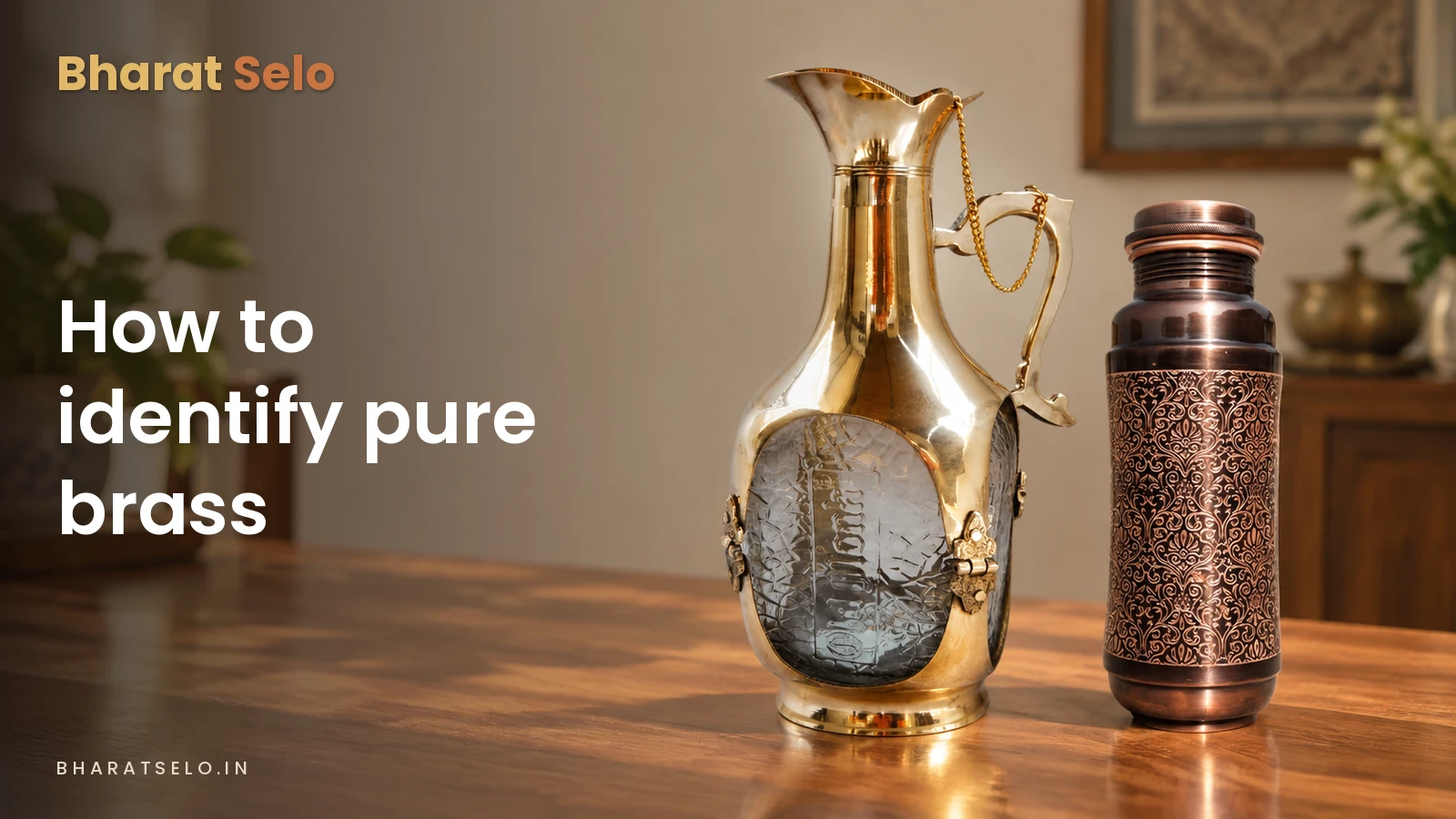
The fastest way for how to identify pure brass or copper is the magnet test: neither metal is magnetic, so strong magnet attraction points to a plated fake. Beyond that, check the colour, weight, sound, and how the surface tarnishes. Together, these six checks screen out most common imitations, though reliable confirmation of purity requires appropriate professional material testing.
The Indian metalware market has a quiet problem: plating. Steel or aluminium coated with a thin layer of brass or copper looks convincing in photos and even in person, right up until the coating wears off. Knowing how to identify pure brass and pure copper takes no special tools, just six simple checks you can do at home or in a shop. Here is each test, what it reveals, and how to shop safely online where you cannot touch the product.
Why Fakes Are So Common
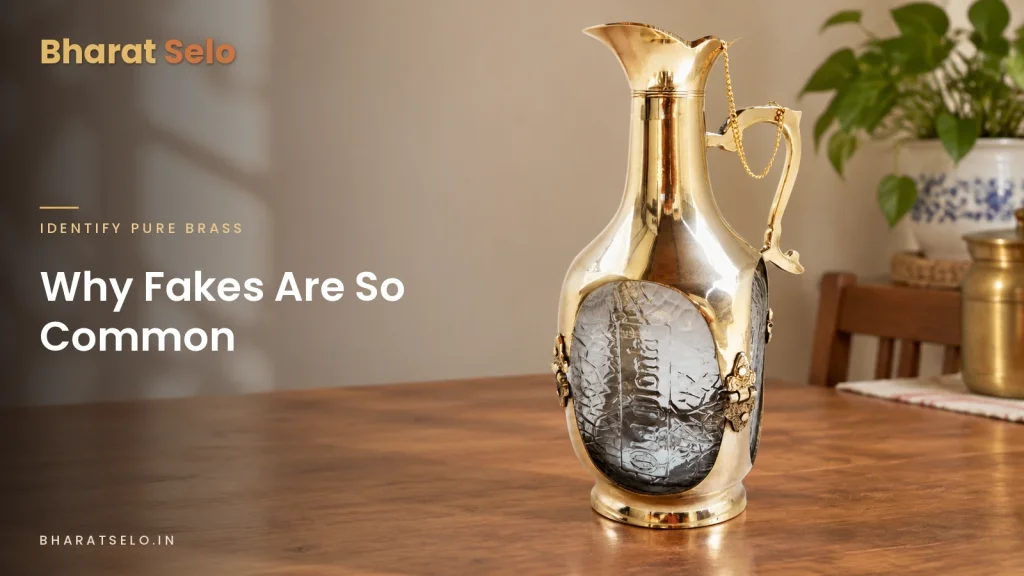
Solid brass and copper cost real money because the metals themselves are expensive. A plated steel item uses a fraction of the metal and can sell at a similar-looking price with a far bigger margin. Purity matters most for items that touch food; our guide on whether brass plates are good for eating covers the safety side.
This does not mean every affordable item is fake. Small brass diyas and simple copper bottles can be genuinely pure at modest prices. The trouble starts when a large, heavy-looking piece is priced suspiciously low. That gap between appearance and price is exactly what these six tests expose.
Test 1: The Magnet Test
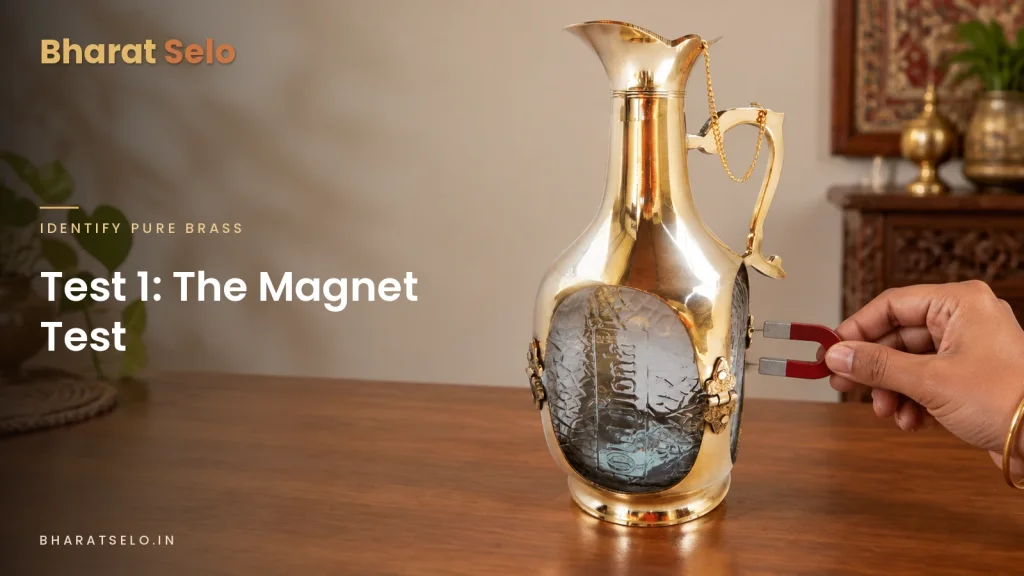
This is the single most useful check. Pure brass, copper and bronze are all non-magnetic. Hold an ordinary fridge magnet against the item.
If the magnet sticks firmly, there is likely a ferromagnetic component such as steel underneath, and the piece is plated, not solid. If nothing happens, the piece may well be solid brass or copper, but a pass is not proof: aluminium, zinc and lead alloys are non-magnetic too, so confirm with the colour, weight and sound tests below. One caution: a weak or partial pull can come from a steel screw or fitting on an otherwise brass item, so test the main body, not hinges or hardware.
Test 2: The Colour Check
Each metal has a signature tone:
- Copper: a warm reddish-brown, like an old one-paisa coin.
- Brass: a bright yellow-gold. The more zinc in the alloy, the paler the yellow.
- Kansa (bronze): a muted, slightly greyish gold.
Plated items often look too perfect: an unnaturally even, mirror-bright gold over the whole surface, including corners and engraved recesses where plating struggles to reach evenly.
Test 3: The Weight Test
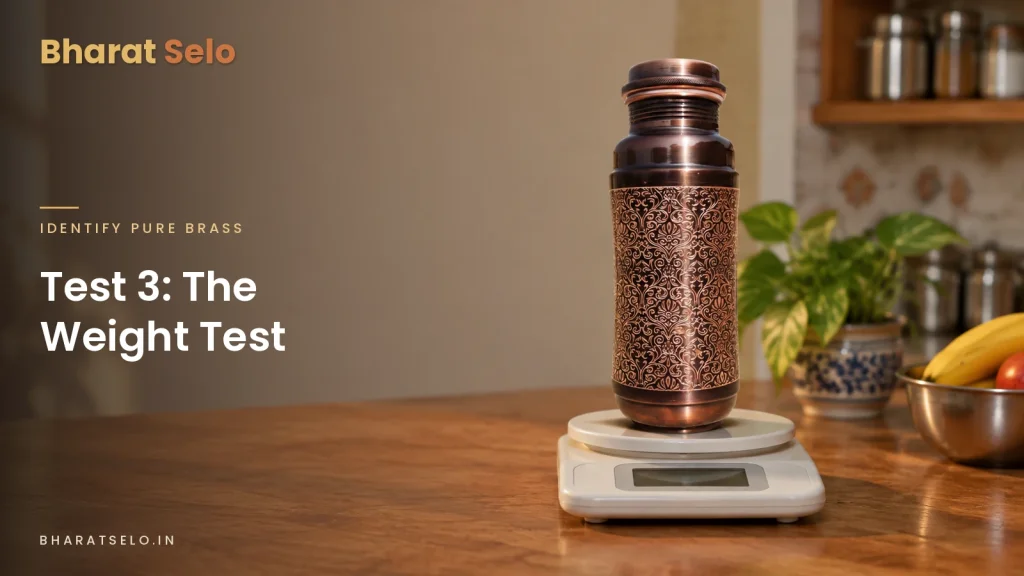
Brass and copper are dense metals. A solid brass thali or copper lota feels noticeably heavy for its size, though weight alone proves nothing, since thick cast steel is heavy too.
Pick the item up and compare it mentally with a steel utensil of similar size. If a big, impressive piece feels surprisingly light, be suspicious. This test pairs naturally with the magnet test: light plus magnetic is a strong indicator of a plated fake.
Test 4: The Sound Test
Tap the item gently with a spoon or your knuckle and listen.
Solid brass produces a clear, ringing tone. Copper gives a softer, duller ring. Kansa sings the longest, with a bell-like sustain. Plated steel sounds flat and tinny by comparison, and hollow-sounding pieces often turn out to be thin sheet metal over nothing.
Test 5: The Scratch Test
This is the only slightly invasive test, so use it on a hidden spot like the base, and only on your own items or with a seller’s permission.
Scratch lightly with a coin or key. Solid brass shows yellow-gold all the way through. Pure copper shows reddish metal inside. A plated item reveals a silvery layer beneath the surface, which is steel or nickel underneath the coating. Even a tiny silver glint settles the question.
Test 6: The Tarnish Test
Real brass and copper tarnish over time: copper darkens and can develop green verdigris, while brass dulls to a brownish tone. This natural ageing is actually a good sign, and it cleans off easily with lemon and salt, as our guide on cleaning brass idols at home shows.
Be cautious with items that never seem to tarnish at all. A lacquer coating can delay tarnish on genuine pieces, but a “brass” item that stays mirror-perfect for years without any coating may be plated. When in doubt, combine this observation with the magnet and weight tests.
How to Buy Safely Online
You cannot tap or weigh a product photograph, so online buying needs a different checklist:
- Read the material description carefully. “Pure brass” or “100% copper” means solid metal. Phrases like “brass finish”, “copper colour” or “gold polish” describe a coating, not the metal.
- Check the listed weight. Genuine sellers state the item’s weight, and solid metal pieces are heavy.
- Look for unedited photos. Real workshop and close-up photos show casting texture. If every photo is a flawless studio render, treat it with caution.
- Buy from specialists. Stores focused on metalware, whether the traditional brass idol makers of Moradabad or curated stores like Bharat Selo, stake their reputation on material honesty. India’s traditional metalware clusters are documented by the Office of the Development Commissioner (Handicrafts), and Moradabad’s brassware holds GI recognition.
Common Myths About Brass and Copper
Myth: a green copper item is poisonous. Verdigris is a natural oxidation layer. It should be cleaned off before use, but its appearance does not mean the item was dangerous or fake.
Myth: heavier always means purer. Weight helps, but a thick cast steel item is heavy too. Pair the weight check with the magnet test.
Myth: shiny means new and good. Antique-finish brass is deliberately darkened and is often the most handcrafted piece in the shop. Judge by material honesty, not sparkle.
Myth: cheap brass is always fake. Small, simple items like basic diyas use little metal and can be pure brass at low prices. Suspicion should scale with size and price, not price alone.
When to Ask the Seller Directly
Tests are for items already in your hand, but confident sellers make testing unnecessary. Before buying, simply ask: is this solid brass or brass-coated? A genuine seller answers clearly and specifically. Evasive replies, or answers like “it is metal, sir”, tell you everything.
Established metalware sellers also share close-up photographs, exact weights and material details on request. If a seller cannot state the metal, they are telling you they do not know or do not want you to know. Either way, walk to the next shop.
Frequently Asked Questions
Does pure brass stick to a magnet?
No. Brass is not magnetic. Strong attraction indicates a ferromagnetic component such as steel beneath a brass coating.
How can I tell copper from brass?
By colour: copper is reddish-brown, brass is yellow-gold. Copper is also softer and scratches more easily.
Is plated brass always a bad purchase?
Not always. Plated items are fine for decor at honest prices. The problem is paying solid-brass prices for plated goods.
Why is my copper bottle not shiny anymore?
Tarnish is common on copper, but it does not prove purity. A lemon-salt rub restores the shine in minutes.
Can I test purity without damaging the item?
You can screen for common fakes without damage: the magnet, weight, sound and colour tests are all non-destructive, and only the scratch test touches the surface. Reliable confirmation of purity, though, requires appropriate professional material testing.
The Bottom Line
Learning how to identify pure brass and pure copper takes one magnet and five minutes of attention. Test the magnet response, feel the weight, listen to the ring, and check the colour and tarnish. Buy from sellers who describe materials precisely, and the only surprises your metalware will give you are compliments.