Quick Answer: Brass is widely believed in Indian tradition and Vastu Shastra to bring good luck, prosperity and positive energy, especially when used for idols, decor, or ritual items placed in specific directions. This is a matter of cultural belief and faith rather than something that can be scientifically proven, though brass does have real, measurable qualities like durability and antimicrobial surfaces that explain its lasting popularity.
If you have seen brass elephants, tortoises, or Ganesha idols described online as “lucky” and wondered whether there is any real basis for that, you are asking a fair question. The honest answer is that luck, in the sense of brass changing your fortune, is a belief rooted in tradition, religion and Vastu Shastra – not something that can be measured or proven. At the same time, brass has genuine, verifiable qualities that make it a practical and long-favoured material for Indian homes.
This article separates the two clearly: what Vastu and tradition say about brass and luck, and what is actually backed by evidence. It also looks at popular brass items for good luck at home, how brass compares with other metals, and what to consider before buying.
Does Brass Bring Good Luck? The Traditional View
In Indian households, brass has long been considered an auspicious metal. It is common to see brass idols, bells, lamps and decorative figurines placed near entrances, pooja rooms, or specific corners of the home in the belief that they invite prosperity and ward off negative energy.
This belief comes primarily from Vastu Shastra, a traditional Indian system of architecture and space arrangement, as well as broader Hindu cultural practice. According to Vastu principles followed by many practitioners, brass is associated with warmth, stability and positive energy, and is often recommended for specific directions such as the northeast or southeast of a home.
It is important to be clear that these are beliefs and traditional practices, not scientifically verified claims. There is no scientific evidence that any metal, including brass, can influence luck or fortune. Vastu Shastra is a traditional belief system, and its principles are a matter of personal or cultural faith rather than empirical fact. Readers should approach claims about luck and energy as cultural tradition, useful for those who find meaning in them, rather than as guaranteed outcomes.
What Is Actually Verifiable About Brass
Separate from luck and energy claims, brass does have real, documented properties that explain why it has remained popular in Indian homes for generations:
- Durability: Brass is a strong copper-zinc alloy that resists dents and general wear, so idols and decor items last for years.
- Antimicrobial surface: Copper-based alloys like brass have a natural, scientifically documented ability to inhibit microbial growth on their surface.
- Corrosion resistance: Brass does not rust the way iron or plain steel can, though it can tarnish over time and needs occasional cleaning.
- Craftsmanship value: Brass is widely used across Indian regions for hand-finished idols, figurines and decor, so items often carry genuine artisanal work.
These qualities are why brass has stayed a trusted material long after the specific rituals or beliefs around it may have shifted from region to region. Whether or not you follow Vastu, brass items generally hold up well as home decor.
Popular Brass Items for Good Luck at Home
If you are exploring brass items believed to bring good luck, a few are especially common across Indian homes. As with all Vastu-related items, their significance is symbolic and traditional rather than guaranteed.
- Brass Ganesha idol: Widely placed near entrances or pooja rooms, associated with removing obstacles and inviting auspicious beginnings.
- Brass elephant figurines: Often shown with trunks raised, associated in popular belief with good fortune and strength.
- Brass tortoise: Associated in Vastu practice with stability and steady financial progress, often placed in the north direction.
- Brass Lakshmi idol or coin: Linked to the goddess of wealth, commonly kept in pooja spaces or near where money is stored.
- Brass bells and wind chimes: Believed to disperse stagnant energy when placed near windows or doors.
If you are setting up a full home temple rather than just decor, our guide on whether brass is good for puja covers the practical side of choosing brass idols, thalis and lamps for daily worship.
Brass vs Other Metals for Luck and Prosperity
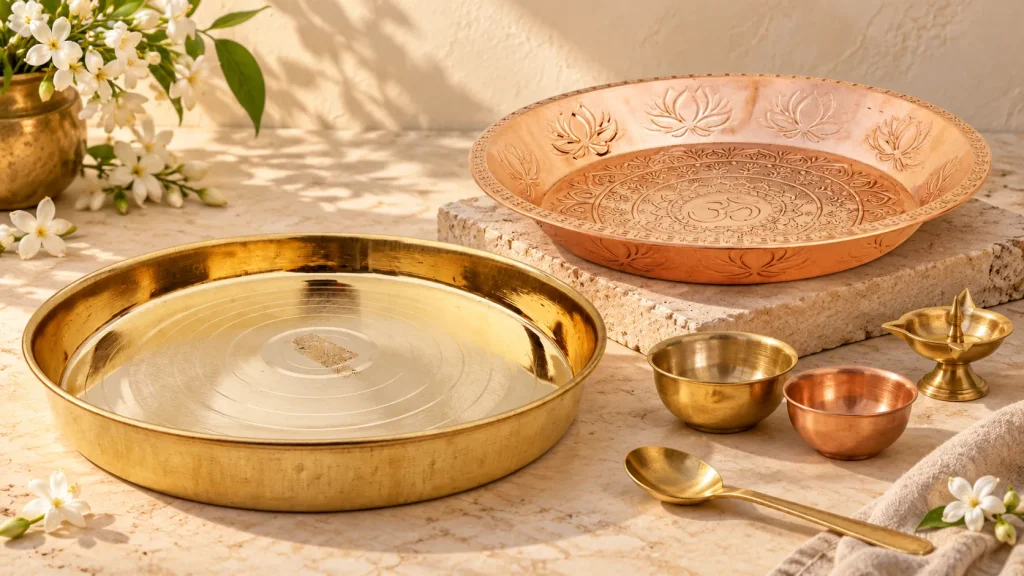
Different metals are associated with different meanings in Vastu and Indian tradition. Here is a general comparison of common beliefs and practical traits. As with brass, the “luck” column reflects traditional belief, not verified fact.
| Metal | Traditional Belief | Durability | Common Use |
| Brass | Prosperity, positive energy, stability | High; resists dents and corrosion | Idols, figurines, decor, puja items |
| Copper | Purity, positive energy in water rituals | Good, but softer than brass | Kalash, water vessels, pyramids |
| Silver | Purity, calm, clarity | Good, but can dent easily | Small idols, coins, jewellery |
| Gold | Wealth, auspiciousness | Very high; does not tarnish | Jewellery, small idols, coins |
Gold and silver carry strong associations with wealth in Indian tradition too, but they are considerably more expensive, which is part of why brass remains the more common, accessible choice for everyday decor and larger figurines. There is no verified evidence that any one metal is objectively more “lucky” than another; the differences above reflect long-standing cultural associations.
Vastu Guidance for Placing Brass Items
Practitioners of Vastu Shastra generally offer specific guidance on where to place brass items, though recommendations can vary between different Vastu consultants and regional traditions:
- Northeast corner: Often suggested for brass deity idols and the home altar or pooja room.
- Main entrance: A common spot for a brass Ganesha or auspicious symbol, believed to welcome positive energy into the home.
- Living room console or entry table: A popular place for brass elephants or decorative figurines.
- Study or workspace: Some Vastu practitioners suggest brass items associated with wisdom or focus in this area.
If Vastu is important to you, consulting a practitioner directly for guidance specific to your home’s layout will be more useful than generic placement rules, since Vastu recommendations can depend on the exact direction and structure of a space.
For those setting up a dedicated worship space rather than general home decor, it helps to also understand how brass compares with other metals used specifically for puja items, since ritual use and decorative use don’t always call for the same considerations.
How to Choose Brass Items for Good Luck at Home
Whether or not you follow Vastu strictly, a few practical points will help you choose brass decor that lasts and looks genuinely well-made:
- Check the finish: A smooth, even surface without rough casting seams usually signals better craftsmanship.
- Feel the weight: Genuine brass items feel noticeably heavier than similarly sized items in cheaper alloys or plated metal.
- Look at the colour: Authentic brass has a warm, golden-yellow tone; a dull grey or overly bright yellow finish can indicate a different or plated metal.
- Consider the size for your space: Larger statement pieces suit entryways and living rooms, while smaller figurines work well on shelves or pooja room corners.
- Buy from a seller who can describe the material clearly: Reliable sellers can confirm whether an item is solid brass, plated, or a mixed alloy.
You can browse a range of handcrafted brass decor and Vastu items to compare designs, from traditional figurines to more contemporary pieces.
Caring for Brass Decor Items
Brass items kept as decor or Vastu pieces need only occasional cleaning rather than daily maintenance, since they are usually not exposed to flame or heavy handling. A soft, dry cloth for regular dusting, along with a mild lemon-and-salt paste or a gentle brass cleaner every few months, keeps the golden shine intact.
Avoid placing brass items in areas with high humidity or direct exposure to water for long periods, as this can speed up tarnishing. If an item does darken over time, this is a natural reaction of the copper in the alloy and does not affect its structural durability.
Frequently Asked Questions
Does brass really bring good luck, or is it just a belief?
It is a belief rooted in Vastu Shastra and Indian cultural tradition. There is no scientific evidence that brass or any metal can influence luck. Many people find meaning and comfort in the tradition regardless, which is a valid personal choice.
What are the vastu benefits of brass according to tradition?
According to Vastu practitioners, brass is associated with warmth, stability and positive energy, and is often recommended for idols, decor and items placed in directions like the northeast or entrance areas. These are traditional beliefs rather than proven effects.
What is considered the luckiest metal for home according to Vastu?
Different Vastu practitioners and traditions emphasize different metals for different purposes; brass, copper, silver and gold are all associated with various forms of auspiciousness. There isn’t one single metal universally agreed upon as “the luckiest,” and interpretations vary by region and consultant.
Is a brass elephant or tortoise actually effective for prosperity?
Their significance is traditional and symbolic, tied to Vastu beliefs and mythology, rather than something with measurable effect. Many households keep them for their cultural and decorative value regardless of belief in their literal effects.
Can I place brass items anywhere in my home, or does direction matter?
Vastu Shastra offers specific directional guidance, such as the northeast for deity idols, but recommendations vary between practitioners. If you want to follow Vastu closely, a consultation tailored to your home’s actual layout will be more reliable than generic rules found online.
Conclusion
So, does brass bring good luck? In the sense of scientifically changing your fortune, there is no evidence for that. What brass does have is a long, genuine place in Indian tradition and Vastu Shastra, where it is associated with prosperity, stability and positive energy – along with real, verifiable qualities like durability and a naturally antimicrobial surface.
If you find meaning in these traditions, choosing well-crafted brass items for good luck at home is a reasonable and time-honoured way to decorate, whether that’s a small figurine or a full pooja room setup. You can explore our collection of handcrafted brass idols and Vastu decor to see the range of traditional pieces available.