The question “can we eat non-veg in a brass plate” comes up more often than you’d expect – especially among people rediscovering traditional Indian metal utensils. Short answer: it’s complicated, and the answer depends on both food science and how long the food stays on the plate. Let’s break it down properly so you can make an informed decision rather than guessing.
What Exactly is Brass – And Why Does It Matter for Food
Before answering whether eating non-veg in brass utensils is safe, it helps to understand what brass actually is. Brass is an alloy of copper and zinc – typically in a ratio of around 70% copper and 30% zinc. Both of these metals are reactive with acids to varying degrees.
When acidic foods – and non-vegetarian foods like meat, fish, and egg-based dishes often fall into this category – come into contact with a brass plate for food, they can trigger a chemical reaction that releases small amounts of copper and zinc into the food. The key word here is “small amounts” – and whether that is a problem depends on how long the food stays in contact with the metal.
Is Brass Safe for Eating Non-Veg Food
The straightforward answer: brass is not the ideal metal for eating non-veg food, particularly for acidic, marinated, or sauced non-veg preparations. Here is why.
Most non-vegetarian dishes – especially those cooked with tomatoes, lemon, tamarind, vinegar, or yogurt-based marinades – are acidic. When you serve these on a brass plate for food, the acid reacts with the copper and zinc in the brass. Over extended contact, this can cause zinc leaching into the food. According to the World Health Organization, excessive zinc intake from leaching metal cookware can cause nausea, stomach cramps, and digestive discomfort. This risk increases the longer the food sits on the metal.
However – and this matters – the risk is largely about duration and acidity level. A non-veg dish served and eaten quickly on a brass plate is significantly less of a concern than acidic food stored in a brass container for hours.
What Does Ayurveda Say About Brass and Non-Veg Food
Ayurvedic texts have actually addressed brass and acidic food combinations for centuries. Traditional Ayurveda recommends avoiding sour, salty, and highly acidic foods in brass and copper vessels for extended periods. The reasoning is consistent with modern food science – these metals react with acids and can alter both the taste and the properties of the food.
Interestingly, Ayurveda also draws a distinction between storage and serving. Serving food briefly on a brass plate is treated differently than storing food in brass containers overnight – the latter is specifically cautioned against for acidic foods regardless of whether they are vegetarian or non-vegetarian.
This is why traditional Indian households that use brass plates for daily meals typically serve dal, rice, rotis, and vegetable-based dishes – foods that are largely neutral to mildly acidic and do not react aggressively with the metal.
So What Should You Use for Non-Veg Meals
For non-vegetarian meals with acidic gravies, marinades, or sauces, stainless steel, food-grade ceramic, or tempered glass are the safer and more practical choices. These materials do not react with acidic food regardless of how long it sits on the plate.
If you love traditional metal utensils, a brass plate for food works perfectly for dry preparations, mildly seasoned dishes, or quick service where the food is not sitting on the plate for more than a few minutes. The risk is low in those scenarios.
And if you want to bring the beauty and tradition of Indian metalware into your meals or your puja space without the acidity concern, the Copper Puja Thali from BharatSeLo is a genuinely excellent choice. Designed for devotional use rather than food service, it brings the sacred quality of traditional Indian metal craftsmanship into your puja room – beautifully made, built to last, and sourced directly from Indian artisans.
Is Brass Safe for Eating Generally – The Complete Picture
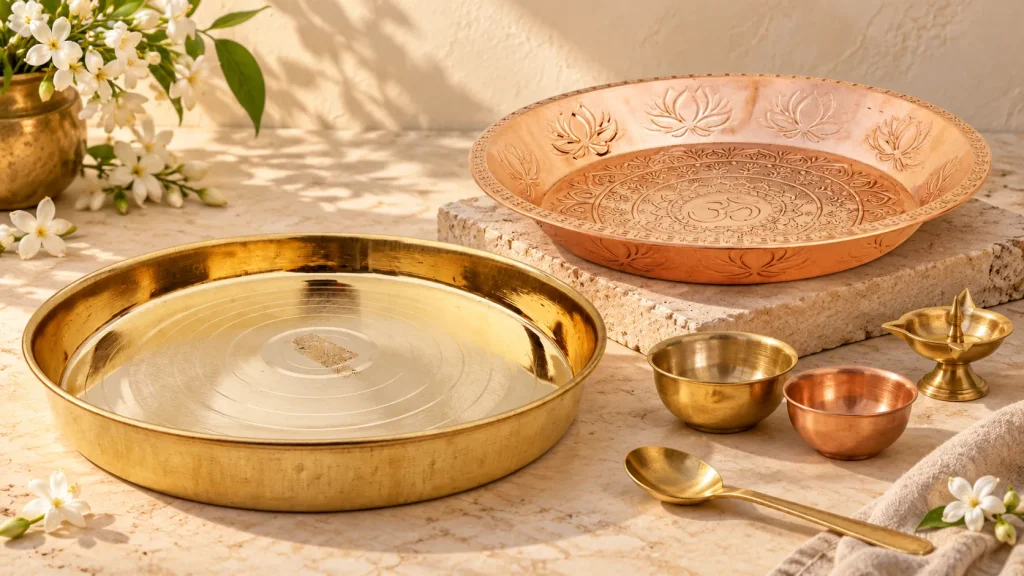
To be clear: brass is safe for eating most everyday foods. Traditional Indian thalis served on brass plates typically include rice, lentils, rotis, and vegetable dishes – foods that are neutral enough not to trigger significant metal leaching during the brief time they spend on the plate.
The concern specifically arises with:
- Highly acidic non-veg dishes – Dishes with tomato, tamarind, lemon, or vinegar bases where food sits on the plate for extended periods.
- Storage in brass – Leftover non-veg food stored in brass containers is a more significant concern than brief serving.
- Old or unlacquered brass – Older brass pieces with surface damage or tarnish may leach more readily than well-maintained, polished brass.
If you care for your brass utensils well – regular cleaning, no prolonged food storage – eating in brass utensils for everyday vegetarian meals is a perfectly safe and traditional practice. For a complete guide on caring for your brass pieces, read our detailed article on how to clean brass idols at home which covers maintenance methods that keep brass surfaces in their best condition.
The Verdict – Can We Eat Non-Veg in a Brass Plate
Here is the honest, no-fluff verdict on “can we eat non-veg in a brass plate“: it is not the best choice, but it is not catastrophic either. The risk is real but context-dependent.
- Low risk – Dry or mildly seasoned non-veg dishes served and eaten quickly.
- Medium risk – Sauced, marinated, or acidic non-veg preparations served on brass plates for more than 10 to 15 minutes.
- High risk – Acidic non-veg food stored in brass containers for hours or overnight.
If you want the beauty of Indian traditional metal in your meals, use brass for vegetarian thalis and keep the acidic, sauced non-veg dishes for stainless steel or ceramic plates. Your digestion will thank you, and your brass plate will last longer too.
And if you are drawn to the beauty of handcrafted Indian metal pieces for devotional use, BharatSeLo’s Puja Thali collection has beautifully made copper and brass thalis specifically designed for puja use – not for storing acidic food, but for daily devotional practice at its most traditional.
Frequently Asked Questions (FAQs)
Here are the most common questions about eating non-veg in brass plates and metal utensil safety:
Q: Can we eat non-veg in a brass plate?
A: Technically yes, but it is not ideal. Brass reacts with acidic foods – and many non-veg dishes contain acidic ingredients like lemon, tomato, tamarind, or yogurt-based marinades. Brief serving on a brass plate carries low risk, but leaving acidic non-veg food on brass for extended periods can cause mild zinc and copper leaching into the food. For everyday non-veg meals, stainless steel or ceramic plates are the safer choice.
Q: Which metal plate is best for eating non-veg food?
A: Stainless steel is the most practical and safest choice for non-veg meals because it does not react with acidic food regardless of how long the food sits on it. Food-grade ceramic and tempered glass are also safe options. Brass and copper plates are better suited for vegetarian meals with neutral to mildly acidic foods.
Q: Is eating in brass utensils good for health?
A: For most vegetarian foods, yes. Brass utensils are safe for daily use with neutral foods like rice, lentils, and rotis. Brass also has mild antimicrobial properties. The concern arises specifically with acidic foods – whether vegetarian or non-vegetarian – stored or served for extended periods in brass containers.
Q: Does brass react with non-veg food?
A: Yes, particularly with non-veg dishes that contain acidic ingredients. The copper and zinc in brass can react with acids from lemon, tomato, tamarind, vinegar, or yogurt-based sauces commonly used in non-veg cooking. This reaction can cause mild metal leaching into the food, especially when the food sits on the plate for more than a few minutes.
Q: Can we use brass plates for puja?
A: Yes, and brass is actually one of the most traditional and recommended metals for puja use. A brass puja thali is used for offering food (prasad), flowers, and diyas during daily worship. For puja purposes, the concern about acidic food reactions is irrelevant since puja offerings are typically fresh, briefly placed, and not stored in the thali. BharatSeLo offers a beautiful range of Copper Puja Thali sets for devotional use.
Q: Is copper plate good for eating non-veg?
A: Copper is even more reactive with acidic foods than brass, so it is also not recommended as a regular plate for acidic non-veg dishes. The WHO and Ayurvedic guidelines both advise against storing sour or acidic food in copper vessels. Copper vessels are best used for drinking water (copper water storage is a well-established Ayurvedic practice) and puja purposes rather than for eating acidic food.
Q: What foods should not be served in brass plates?
A: Avoid serving the following in brass plates for extended periods: highly acidic non-veg dishes (tomato-based curries, tamarind gravies, lemon-marinated meat), sour foods (lemon rice, tamarind-heavy dishes), pickles and chutneys, and any food that will be stored rather than served and eaten promptly. Plain water, rice, rotis, and mild vegetable dishes are fine.
Q: Can brass utensils cause food poisoning?
A: In extreme cases of prolonged acidic food storage in old, damaged brass – yes, excess zinc leaching can cause symptoms resembling mild food poisoning including nausea and stomach cramps. However, this requires significant contact time and high acidity. Brief serving of non-veg food on a well-maintained brass plate is unlikely to cause any acute health issue. The risk is real but exaggerated in most casual use scenarios.
Q: What is the safest traditional metal plate for eating?
A: Among traditional Indian metals, silver is considered the safest for all food types as it is minimally reactive. Bronze (kansa) is also considered safe and beneficial in Ayurvedic tradition for most foods. Stainless steel is the most practical modern choice. Brass is safe for non-acidic vegetarian foods when well maintained.
Q: What is a copper puja thali used for?
A: A copper puja thali is a traditional sacred plate used in Hindu worship for placing offerings such as flowers, incense, diya (oil lamp), kumkum, and prasad (food offering) to a deity during daily puja. It is not designed for regular eating use – its purpose is devotional. BharatSeLo’s Puja Thali collection includes beautifully crafted copper and brass thalis for daily home puja and temple use.