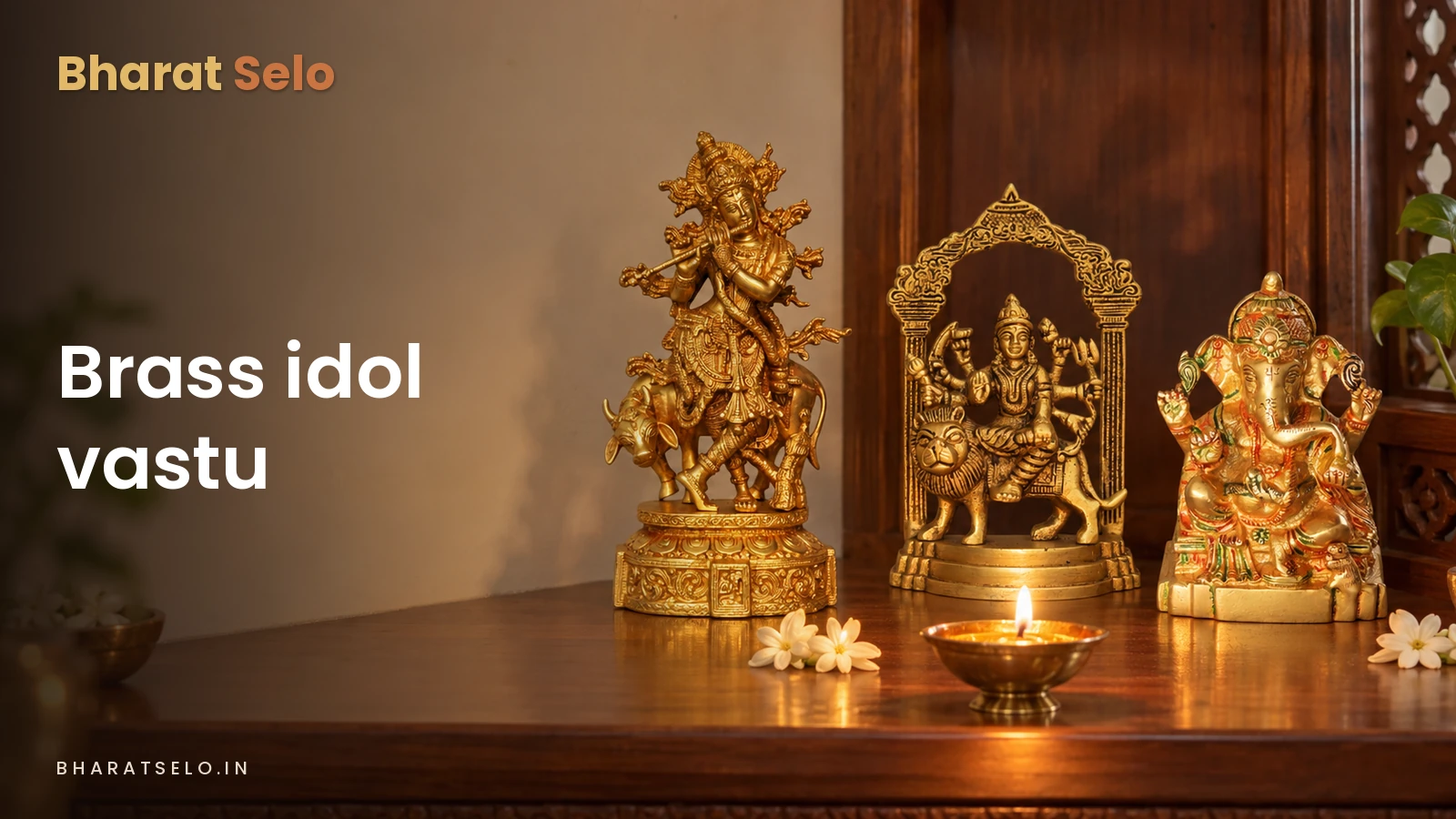
According to brass idol vastu, the best place for idols at home is the pooja room or a clean shelf in the northeast (Ishan kon) of the house, with idols facing west or east so the worshipper faces the opposite direction. Keep idols above waist height, never on the floor, and avoid placing them in bedrooms or near bathrooms.
A brass murti is often bought with love and placed with guesswork. Then someone at home asks the inevitable question: is it facing the right way? Vastu shastra, India’s traditional system of spatial arrangement, has clear answers for idol placement. Whether you follow vastu fully or just want respectful, practical placement, this brass idol vastu guide covers the directions, heights and rules that matter most.
A quick note before we begin: vastu is a belief system, not a science. Families follow it to varying degrees, and regional customs differ. Treat these as widely practised traditions rather than strict laws.
The Golden Rule: Northeast First
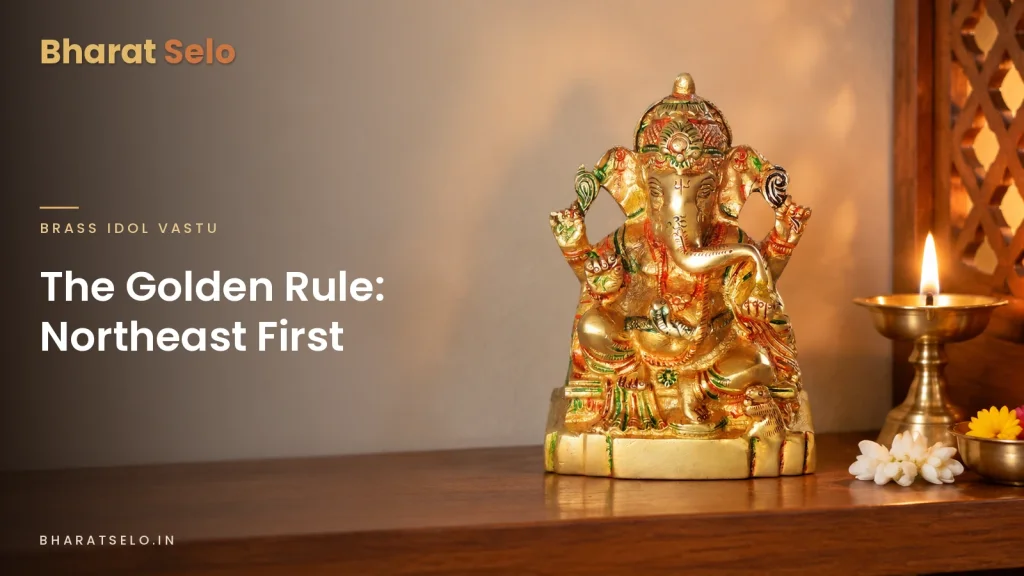
In vastu, the northeast corner of the home, called Ishan kon, is considered the most sacred zone. It is associated with divine energy and morning light, which is why most traditional homes place the pooja room or home temple there.
If a full pooja room is not possible, a clean shelf or cabinet in the northeast of the living room works well. The idols should face east or west. This means when you sit for prayer, you face east or west yourself, both considered auspicious directions for worship.
Placement by Deity
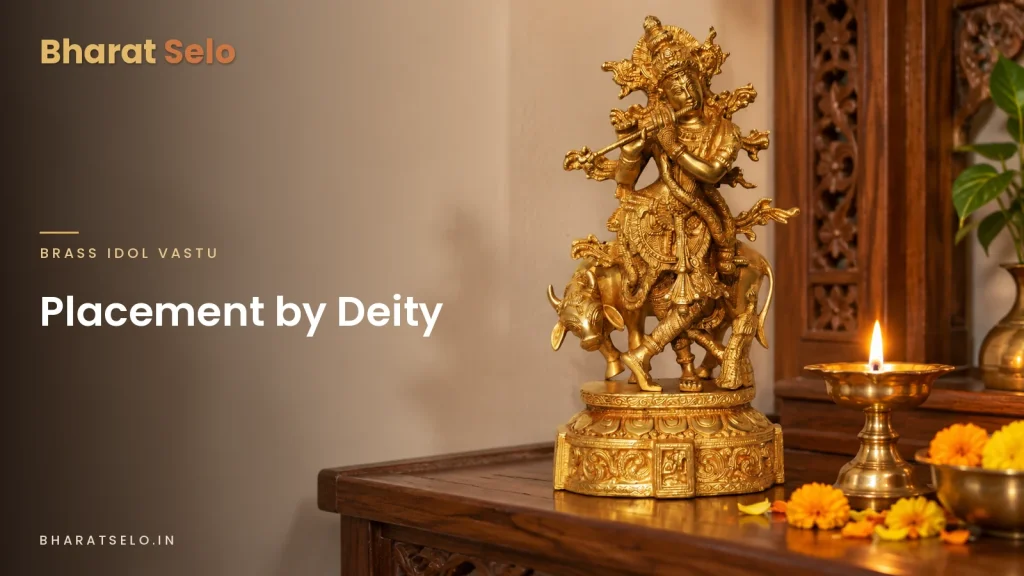
Different deities carry different traditional placements. Here are the ones most commonly followed.
Lord Ganesh
Ganesh is the most versatile idol for home placement. Vastu tradition places a brass Ganesh near the main entrance, facing into the home, to welcome prosperity and remove obstacles. In the pooja room, he sits comfortably with other deities. A white or red Ganesh idol is traditionally preferred for the home. If you are picking one, our guide to brass Ganesh murtis for Diwali gifting shows the common postures and sizes.
Goddess Laxmi
Laxmi idols are traditionally placed in the pooja room or the north or northeast zone, the direction associated with Kuber, the treasurer of the gods. A seated Laxmi is considered ideal for the home, symbolising settled wealth, while a standing Laxmi is often associated with wealth that comes and goes.
Lord Krishna
Krishna idols suit the northeast or east of the home. A brass Krishna with a cow, a popular motif, is traditionally linked with harmony and abundance in the household.
Lord Hanuman
Hanuman idols are commonly placed facing south, following the tradition that his gaze counters negative influences from that direction. Many families also keep a small Hanuman murti near the entrance for protection. Our article on brass Hanuman murtis for griha pravesh gifting covers popular forms.
Shiv Parivar and Ram Darbar
Family group idols like Shiv Parivar and Ram Darbar belong in the main pooja space, placed at the centre as the primary deities of the home temple.
General Vastu Rules for Brass Idols
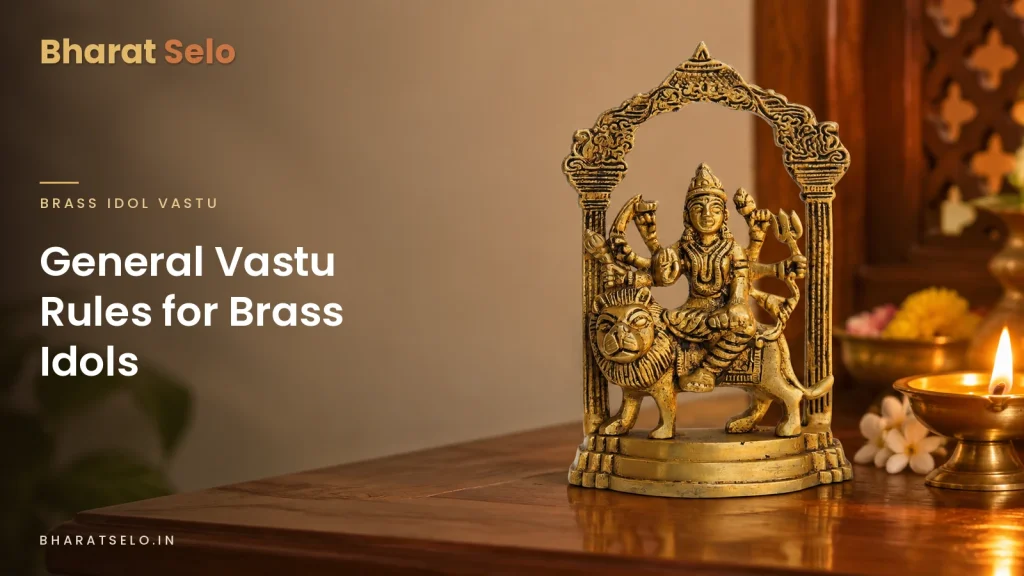
Beyond direction, a handful of placement rules come up in almost every vastu tradition:
- Height: idols should sit above waist level, ideally at chest or eye height when seated for prayer. Never place idols directly on the floor.
- No damaged idols: chipped, cracked or broken idols are traditionally replaced, not repaired and kept.
- One idol per deity: many families avoid keeping multiple idols of the same deity in one pooja space.
- Size: traditional guidance suggests home idols should not be excessively large; palm to forearm height is the common range.
- Cleanliness: the pooja area should stay clean, dry and clutter-free. Brass idols also need periodic polishing, and our step-by-step guide on how to clean brass idols at home makes that easy.
Places to Avoid
Vastu traditions are equally clear about where idols should not go:
- Bedrooms: the pooja space and the sleeping space are traditionally kept separate. A small idol in a living area shelf is the usual alternative.
- Bathrooms and adjoining walls: avoid placing idols against walls shared with a bathroom.
- Under staircases: considered an inauspicious spot for worship.
- Facing each other: idols placed on opposite shelves facing one another is traditionally discouraged.
- Kitchens: while the kitchen goddess Annapurna has her own tradition, the main pooja idols are generally kept out of the cooking area.
Choosing the Right Brass Idol
Placement guidance matters little if the idol itself is poorly made. Solid brass idols feel heavy, show clean casting lines and have a warm, even tone. Hollow or plated pieces are lighter and lose their finish quickly. If you are buying in Moradabad, the historic centre of Indian brassware, our roundup of the best brass idols in Moradabad explains what separates good casting from great casting. Brass idol making is among the traditional crafts documented by the Office of the Development Commissioner (Handicrafts).
Daily Care of the Home Temple
Placement is only half of vastu; upkeep is the other half. A neglected pooja corner works against the very energy the placement was meant to invite.
Wipe the shelf daily, refresh flowers and water, and keep the space free of unrelated storage. Brass idols benefit from a gentle weekly dust and a monthly polish. Avoid harsh chemical cleaners on idols; mild, natural methods preserve both the finish and the sanctity of the piece.
Vastu for Apartments and Small Homes
No separate pooja room? Most city homes manage beautifully without one. A wall-mounted shelf or a small cabinet in the northeast of the living room serves as a complete home temple, as long as it stays clean, raised and dedicated to the purpose.
Avoid tucking idols into multipurpose storage or entertainment units crowded with electronics. Even a compact brass idol on a dedicated shelf, lit by a small diya each evening, fulfils the spirit of vastu far better than a large idol lost in clutter.
Frequently Asked Questions
Which direction should God idols face at home?
Traditionally east or west, so the person praying faces east or west. The northeast corner is the preferred zone for the pooja space itself.
Can I keep a brass idol in the living room?
Yes, on a clean, raised shelf in the northeast or east of the living room. Many apartments follow exactly this arrangement.
Is it okay to keep a gifted idol at home?
Idols of deities like Ganesh, Laxmi and Krishna are considered auspicious gifts and are welcome in the home temple.
What should I do with a broken idol?
Tradition advises respectful immersion in flowing water or placing it under a peepal tree, depending on local custom, rather than throwing it away.
Do idols need to face the entrance?
Only certain placements, like Ganesh at the main door, follow that rule. Inside the pooja room, the east or west facing rule applies instead.
Final Thoughts
Brass idol vastu, at its heart, is about giving the sacred a clean, raised, well-lit corner of your home. Get the northeast placement right, keep idols at a respectful height, and avoid the handful of discouraged spots. After that, what matters most is the care you bring to the space every day.