


A new home is a new beginning, and the right Griha Pravesh gift item should honor that beginning with strength and intention. A Brass Hanuman Ji Murti for Griha Pravesh gift does exactly that. Bajrangbali is India’s most widely worshipped protector deity – present in temples, homes, offices, and at the entrance of millions of households across the country. Gifting his murti to a new home means gifting the very energy of fearlessness, devotion, and divine protection from the very first day.
A Brass Hanuman Ji Murti for Griha Pravesh made from solid brass – a durable alloy of copper and zinc used in Indian idol-making for centuries – carries a warmth and solidity that no synthetic material can replicate. It is a useful gift for a house warming ceremony that stays in the home permanently, seen and felt every single day.
Is It Good to Keep Hanuman Murti at Home
Yes – and in fact, keeping a Hanuman Ji murti at home is actively encouraged in Hindu tradition. Hanuman Ji is one of the few deities specifically recommended for household worship because of his protective and stabilizing energy. His presence in a home is considered a shield against negative influences and a source of courage for the family within it.
Unlike some deity idols that are associated primarily with temple worship, Hanuman Ji is specifically a householder’s protector. From small village homes to large urban apartments, a Brass Hanuman Ji Murti in the puja room or at the entrance is one of the most common and welcomed devotional presences in Indian domestic life.
Can We Keep Pital Murti at Home
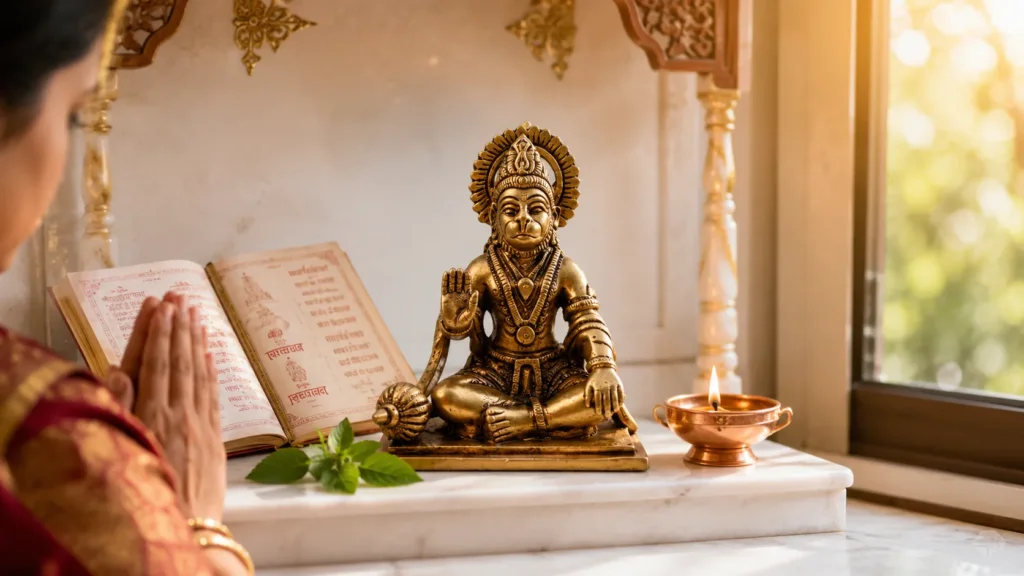
“Pital” is the Hindi term for brass, and yes – keeping a pital murti at home is not just acceptable but specifically recommended in Hindu scriptures for household puja. Brass is considered one of the purest metals for home worship because it is durable, easy to clean, and holds the energy of daily puja well over time.
Pancha-dhatu (five-metal) idols and single-metal brass murtis are both recognized in Agama Shastra as appropriate for household use. The buy brass Lord Hanuman idols and sculptures category is popular precisely because brass Hanuman murtis combine religious appropriateness with the material durability that home worship requires – no chipping, no fading, no deterioration with regular use and cleaning.
Which Hanuman Idol is Good for Home Entrance
The home entrance is one of the most important placements for a Hanuman Ji murti, and choosing the right form matters. Here is a clear guide based on traditional practice:
Standing Veer Hanuman
The most common choice for home entrances. A standing Hanuman Ji in an upright, commanding posture – often with the Gada in one hand – projects strength and watchfulness. It signals to everyone entering the home that Bajrangbali guards the threshold. BharatSeLo’s Brass Hanuman Ji Murti collection carries this classic pose in multiple sizes suited for entrance placement.
Panchmukhi Hanuman Ji
The five-faced form of Hanuman Ji is considered the most powerful for entrance and protective placement. Each face guards a different direction, making the Panchmukhi form a complete protector for the entire home. It is a useful gift for a house warming ceremony for anyone who takes their devotional practice seriously and values the deeper significance behind what they keep at their door.
Flying Hanuman Ji
A dynamic, powerful pose that works well for taller entrance walls. This style is often mounted above doorways or on entrance walls, and its energy is one of movement, courage, and active protection.
Which Statue is Good for Home Entrance
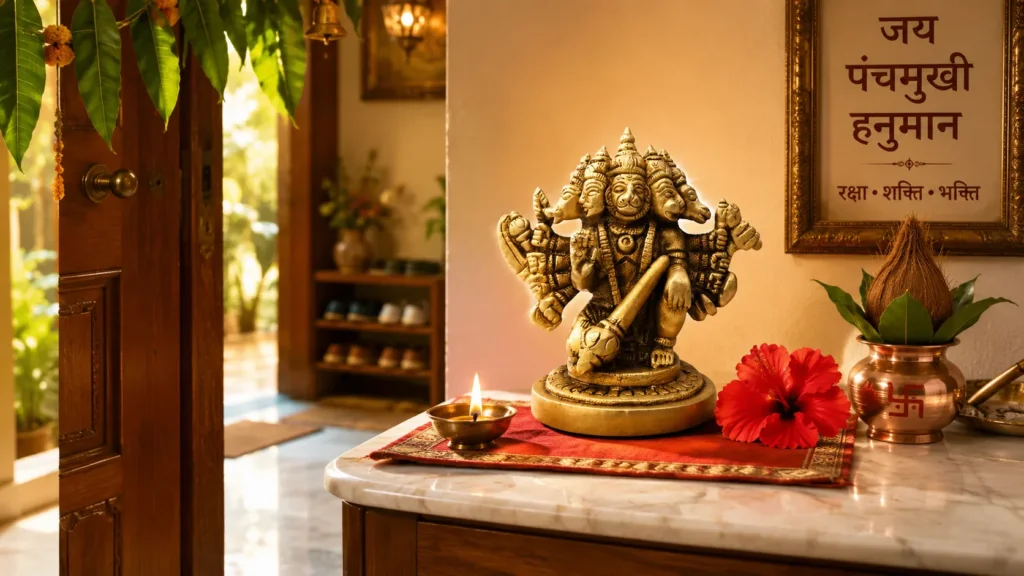
Among all the devotional statues available for home entrances, the Hanuman Ji murti – specifically in a standing or Panchmukhi form – is one of the most recommended. Here is why it works better than many alternatives:
- Universal protection – Hanuman Ji is worshipped across all Hindu traditions and is associated specifically with home protection, making him the most appropriate deity for entrance placement.
- Directional coverage – The Panchmukhi form covers all directions, while the standing form guards the entrance directly.
- Material durability – Brass holds up well in entrance areas where the idol may be exposed to varying light and temperature conditions, unlike clay or resin.
- Vastu alignment – A Hanuman Ji idol facing south at the entrance is specifically recommended in Vastu Shastra as a strong protective presence for the main door.
When you buy house warming gifts online for a devotee who values entrance placement, a Brass Hanuman Ji Murti in a standing or Panchmukhi form from BharatSeLo is one of the most thoughtful and purposeful choices available.
Buy Brass Lord Hanuman Idols and Sculptures Online – What to Check
When you buy brass Lord Hanuman idols and sculptures as a Griha Pravesh gift, quality is what separates a gift that impresses from one that simply fills a box. Here is what genuinely matters:
- Solid brass build – A genuine brass idol feels noticeably heavier than zinc or resin substitutes. Tap it lightly – solid brass gives a dull, resonant sound.
- Face and expression – Hanuman Ji’s face should convey devotion and strength together. Smudged or flat facial features indicate mass production without care.
- Weapon detailing – If the murti includes the Gada or other weapons, these should be clearly defined and proportionate to the idol.
- Size for purpose – For entrance placement, 8 to 14 inch murtis work well. For puja rooms and desks, 4 to 8 inch compact pieces are practical and elegant.
- Verified sourcing – BharatSeLo sources all its Brass Hanuman Ji Murti pieces directly from Indian artisans. Every piece is checked before listing.
Build a Complete Griha Pravesh Gift Set Around the Brass Hanuman Murti
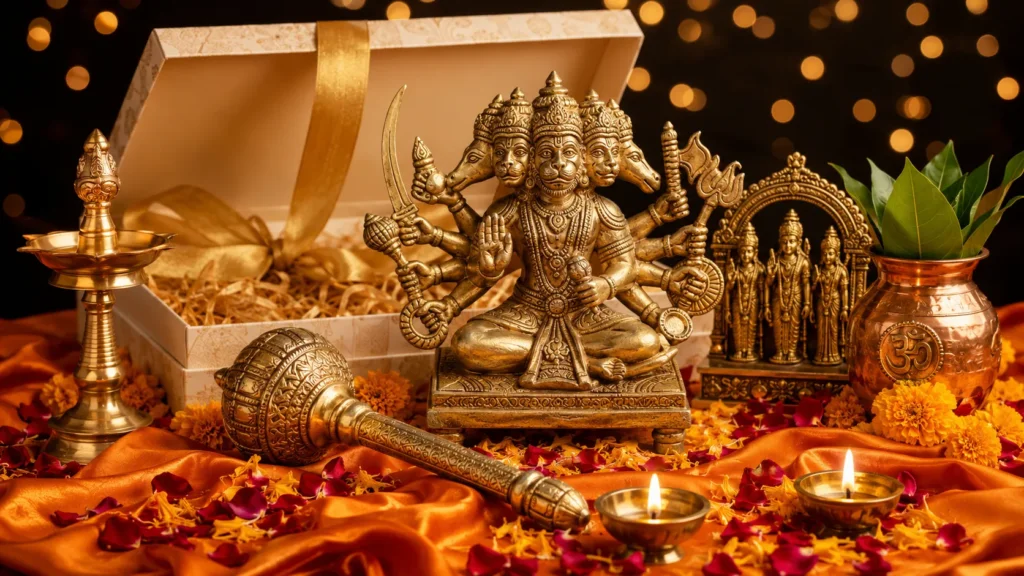
A Brass Hanuman Ji Murti for Griha Pravesh gift becomes an even more complete and meaningful gift when paired with other devotional pieces from BharatSeLo:
- Brass Ram Darbar Murti – Hanuman Ji and Lord Ram together create the most devotionally complete combination for a new home.
- Brass Laxmi Ganesh Murti – Add prosperity and the removal of obstacles alongside Hanuman Ji’s protection.
- Brass Puja Thali Set – Everything the new homeowner needs for their first puja.
- Brass Diya – A simple, traditional addition that completes any devotional Griha Pravesh hamper.
Browse the full Brass Idol and Murti collection at BharatSeLo to find the right Griha Pravesh gift items combination that truly honors the new home and the family beginning their journey in it.
Frequently Asked Questions (FAQs)
Here are answers to the most common questions about Brass Hanuman Ji Murti for home, entrance, and Griha Pravesh gifting:
Q: Which Hanuman idol is good for home entrance?
A standing Veer Hanuman Ji murti or a Panchmukhi Hanuman Ji idol are the two most recommended forms for home entrance placement. The standing form guards the threshold directly, while the Panchmukhi (five-faced) form covers all directions of protection. Both are available in brass from BharatSeLo in sizes suited for entrance walls and doorways.
Q: Is it good to keep Hanuman Murti at home?
Yes, absolutely. Hanuman Ji is specifically associated with household protection and is one of the most recommended deities for home worship in Hindu tradition. His murti in the puja room or at the entrance is considered a source of courage, stability, and protection for the entire family. A brass Hanuman Ji murti from BharatSeLo is ideal for daily home puja.
Q: Can we keep pital murti at home?
Yes. Pital (brass) murtis are specifically recommended for household puja in Hindu tradition. Brass is durable, easy to maintain, and holds the energy of daily worship well. It is one of the most appropriate materials for home puja room idols and is recognized as suitable for household use in traditional religious texts. BharatSeLo’s entire brass collection is designed for home worship and gifting.
Q: Can we keep Panchmukhi Hanuman idol at door entrance?
Yes – the Panchmukhi Hanuman Ji is actually one of the most recommended forms specifically for door and entrance placement. With five faces covering five directions, it is considered a complete protective presence for the home. Traditionally, the idol is placed so that it faces outward toward the main entrance, guarding what enters the home.
Q: Which day is lucky for Hanuman?
Tuesday (Mangalwar) and Saturday (Shaniwar) are the most auspicious days associated with Lord Hanuman. Tuesday is specifically considered Hanuman Ji’s day and is when most devotees perform special Hanuman puja, light diyas, and recite the Hanuman Chalisa. Placing or gifting a Hanuman murti on a Tuesday or during a Griha Pravesh ceremony performed on an auspicious day is considered especially blessed.
Q: Which statue is good for home entrance?
A Brass Hanuman Ji murti in a standing or Panchmukhi form is one of the best choices for home entrance placement, as Hanuman Ji is specifically associated with protection and guarding the household. Other popular entrance choices include a Brass Ganesha idol for removing obstacles and inviting positive energy. BharatSeLo offers both in solid brass, handcrafted by Indian artisans.
Q: Which type of Hanuman photo is not good for home?
Images depicting Hanuman Ji in an extremely fierce or destructive form (like those showing extreme rage or violence) are generally not recommended for home worship spaces. The most appropriate forms for home placement are the devotional seated Hanuman Ji, the standing Veer Hanuman, and the Panchmukhi form. These project protection and devotion rather than aggression, and are the forms recommended by priests for household puja.
Q: Should Panchmukhi Hanuman be standing or sitting?
The Panchmukhi Hanuman is most commonly depicted in a standing posture, as the upright form is associated with active protection and readiness. The standing Panchmukhi Hanuman is the most widely used form for home entrance placement and temple worship. A seated Panchmukhi Hanuman is rarer and generally used in meditation spaces. For Griha Pravesh gifting, the standing form is the more traditional and preferred choice.
Q: Can ladies touch Hanuman idol?
There are varying traditional views on this. Some older traditions suggest that unmarried women should avoid directly touching the Hanuman idol during puja, while others make no such distinction. Modern spiritual teachers across many traditions, including several prominent Hanuman temples, welcome women’s puja and touch without restriction. In a household context, the practice generally follows the family’s own tradition. This is a matter of personal and family belief rather than a universal rule.
Q: How to know if Hanuman Ji is angry with you?
In devotional tradition, Hanuman Ji is considered one of the most merciful and compassionate deities. He is known as Bajrangbali – one who is never angry with a sincere devotee. A feeling of distance or disconnection from his blessings is typically understood as a sign to deepen one’s practice – reciting the Hanuman Chalisa regularly, keeping the puja space clean, and performing sincere worship. A fresh, well-cared-for brass murti in a clean puja space is itself considered a way of maintaining a positive relationship with his presence.
Q: Who should not chant Hanuman’s Chalisa?
There is no universal restriction on chanting the Hanuman Chalisa. The Chalisa is considered highly auspicious and beneficial for everyone regardless of age, gender, or caste. Some older texts suggest that women who are menstruating should pause puja rituals temporarily, but this varies by family tradition. In most contemporary spiritual settings, the Hanuman Chalisa is openly encouraged for all devotees without restriction.
Q: What is the curse of Hanuman?
In traditional scriptures, Hanuman Ji was given a blessing-disguised-as-curse by sages who tapped him on his chin (hanu) as a child after a mischievous act – hence the name Hanuman. This caused him to forget his own divine powers temporarily. In another version, he was asked to forget his extraordinary abilities until reminded by those who needed them. These stories are understood as Hanuman Ji’s humility – he chose to remain a servant of devotion rather than display his power, reminding devotees that strength is always best when paired with humility and purpose.
