


A sindoor dibbi is a small lidded box that holds sindoor, the red vermilion powder used in Hindu rituals and worn by many married women. Dibbis come in brass, silver, steel and decorated finishes, and a beautiful one is a traditional gift at weddings and festivals.
Some objects are so small you could close your fist around them, yet they carry a whole world of meaning. The sindoor dibbi is one of those. It sits quietly on the puja thali or the dressing table, holding a pinch of red powder that marks marriage, blessing and celebration.
Here is a simple guide to what it is, the types you will find, and when one makes a thoughtful gift.
What Is a Sindoor Dibbi?
Sindoor is the bright red-orange powder, also called vermilion, that plays a central role in Hindu custom. During a wedding, the groom applies sindoor along the parting of the bride’s hair, a moment many consider the emotional heart of the ceremony. After marriage, many women apply a small mark of sindoor each day, though practices vary widely by region, family and personal choice.
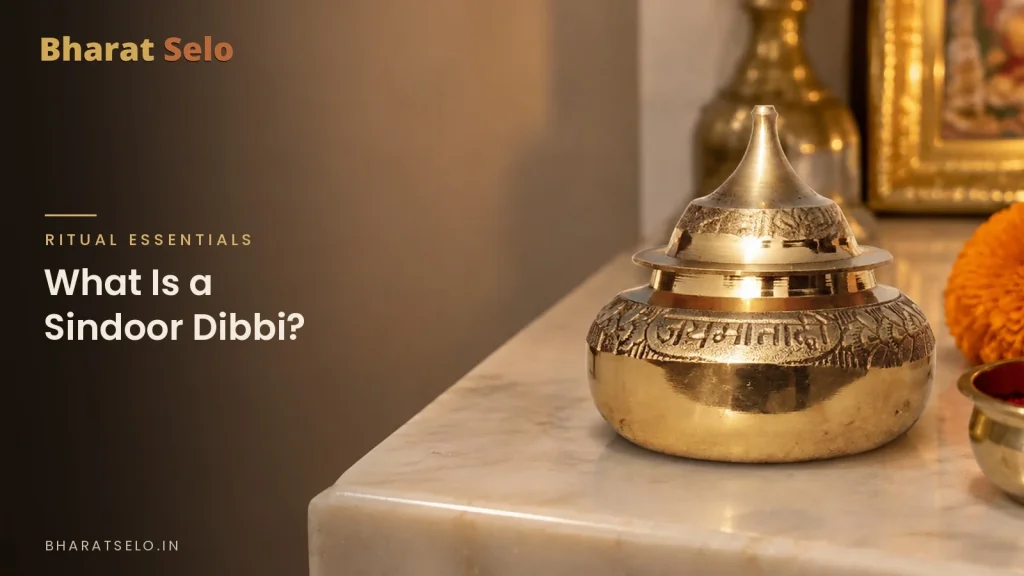
The sindoor dibbi is simply the little box that keeps this powder safe, dry and close at hand. You will also hear it called a sindoor dani, sindoor box or, when it holds the similar red powder used in worship, a kumkum dibbi. The names shift from home to home, but the job is the same: keep the sindoor clean, covered and easy to reach.
Where the Dibbi Sits in Daily Life
Most families keep theirs in one of two places. The first is the home temple, where it rests on the puja thali next to the roli, chawal and diya, ready for tilak during prayers. If you are setting up or refreshing your thali, our guide to choosing a brass puja thali set shows what typically sits alongside the dibbi.
The second home is the dressing table, where a married woman may keep her personal dibbi for daily use. Many households keep both: one for rituals, one for the person.
The dibbi also comes out at festivals. During Raksha Bandhan, Bhai Dooj and Karva Chauth, a tilak of sindoor or kumkum is part of the ritual, and the dibbi moves to the centre of the thali for the day.
Sindoor and Kumkum: What Is the Difference?
People often use the two words for the same red powder, and in many homes the same dibbi serves both. Traditionally, though, there is a gentle distinction. Kumkum is the red powder made from turmeric and lime, used in worship for tilak and offerings to the deity; a kumkum dibbi on the temple shelf keeps it ready for daily tilak. Haldi kumkum ceremonies often use the same dibbi for both powders. Sindoor is the vermilion associated specifically with marriage, worn along the hair parting.
In daily life the lines blur, and that is fine. What matters for the dibbi is simple: it should keep whichever powder you use clean, dry and easy to reach, whether it lives on the puja thali or on a dressing table.
Types and Materials
These little boxes may be small, but they come in a surprising range of materials and finishes.
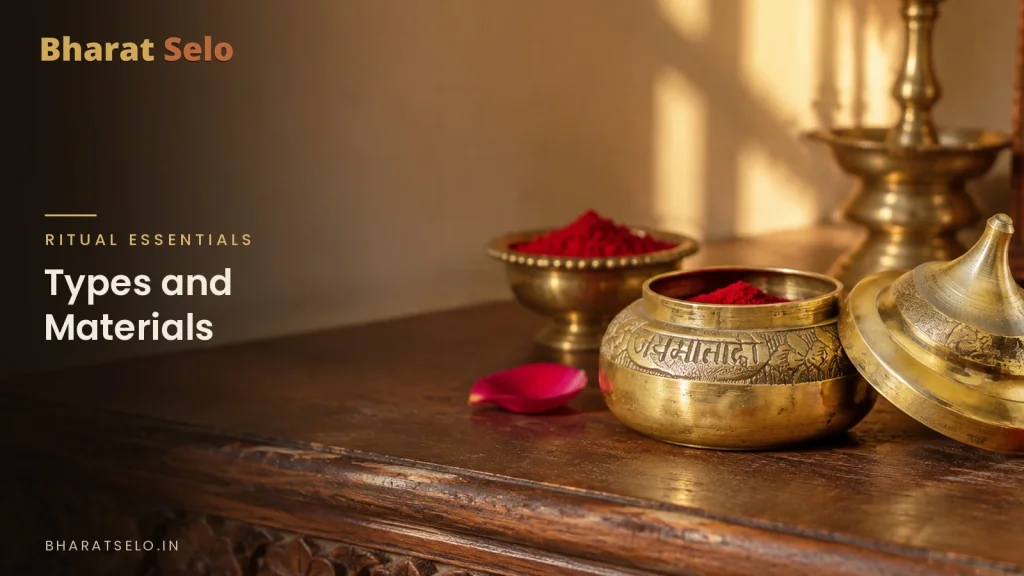
Brass is the everyday favourite. A brass sindoor dibbi has a warm golden shine, a satisfying weight, and the durability to be used every single day. It suits the puja thali perfectly, and brass has long been considered an auspicious metal in Indian tradition; we look at that belief in more detail in does brass bring good luck.
A silver sindoor box is a popular wedding gift, because silver carries its own traditional association with purity and prosperity.
Meenakari and enamel dibbis are the decorative stars. Coloured enamel work, often in red, green and blue, turns the little box into a miniature jewel. These are favourites for gifting and for festive display.
You will also find wooden, marble and stainless steel dibbis. Wood and marble suit home decor, while steel is the plain, practical everyday option.
Shaped and figural dibbis are a category of their own. Boxes topped with a small Ganesh, an elephant or a peacock combine the dibbi with a tiny showpiece, which makes them charming gifts. Whatever the material, a well-made dibbi feels balanced in the hand, opens without a struggle and closes with a satisfying little click.
How to Choose a Sindoor Dibbi
A dibbi is small, but a badly chosen one annoys you every day. A few checks help.
Start with size. A dibbi for the puja thali can be tiny, since it is refilled often and shares the plate with other items. A personal dibbi for daily use can be a little larger so it needs refilling less often.
Check the lid. It should close snugly, with no wobble, because sindoor is a fine powder that spills and stains at the slightest chance. A threaded or well-fitted press lid is ideal.
Look inside. The inner surface should be smooth, with no sharp seams or rough casting marks that trap old powder. Heavier dibbis generally feel better in the hand and stay put on a crowded thali.
Finally, match the metal to the rest of your puja items. A brass sindoor dibbi beside a brass thali and diya looks considered, and matching sets photograph beautifully during festivals.
When a Sindoor Dibbi Makes a Beautiful Gift
Few small gifts carry as much warmth as this one. As a wedding sindoor gift it may be given to the bride as part of the presents from her new family, and it fits naturally into engagement and sagan ceremonies.
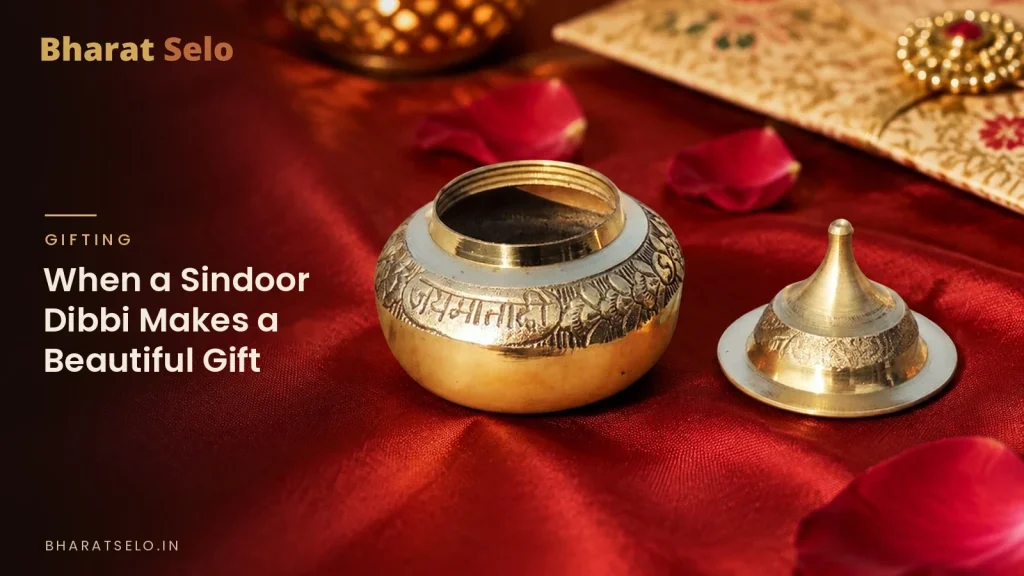
It also works for festivals. At Karva Chauth, a dibbi tucked into the sargi or the evening thali is a thoughtful touch. During Diwali visits, a decorated dibbi makes a graceful alternative to the usual box of sweets, especially when paired with other small puja items.
When gifting, pick a finish to match the occasion. Meenakari and figural designs feel festive and personal. Plain brass or silver feels timeless and suits daily ritual use. A gift box or a small cloth pouch makes the presentation feel complete.
Caring for a Brass Sindoor Dibbi
Brass dibbis need almost no maintenance, but a little care keeps them shining. Wipe the outside with a soft dry cloth every few days, and wash and dry the inside before refilling so old powder does not cake at the base.
If the brass dulls over time, the same gentle cleaning we describe for brass idols at home works here too: a light rub with lemon and salt, then rinse and dry thoroughly. Skip abrasive scrubbers, which scratch engraved and enamel work.
One practical tip: keep the lid closed between uses. Sindoor is a fine powder that stains fabric and travels easily, and a snug lid keeps both the powder and your shelf clean.
Frequently Asked Questions
What is a sindoor dibbi?
A small lidded box that keeps sindoor or kumkum clean, dry and close at hand. It lives on the puja thali for tilak or on a dressing table for daily use.
What is the difference between sindoor and kumkum?
Kumkum is the red powder made from turmeric and lime, used in worship. Sindoor is the vermilion linked with marriage, worn along the hair parting. In many homes one dibbi serves both.
Which material is best for a sindoor dibbi?
Brass suits daily ritual and the puja thali, silver is a much-loved wedding gift, and meenakari or enamel pieces are made for festive gifting and display.
Is a sindoor dibbi a good gift?
Yes, for weddings, engagements, sagan ceremonies and festivals like Karva Chauth and Diwali. A gift box or a small cloth pouch completes the presentation.
How do I care for a brass sindoor dibbi?
Wipe it with a soft dry cloth every few days and wash and dry the inside before refilling. If the brass dulls, a light lemon-and-salt rub and a thorough dry restore the shine.
A Small Box, A Big Meaning
This little box proves that the most meaningful objects in a home are rarely the largest. It holds a pinch of red powder, and with it, a daily ritual, a wedding memory and a blessing passed between generations.
Whether you want a sturdy brass sindoor box for daily ritual or a decorated one to gift, choose a material that suits its life: daily ritual, festive display, or a bit of both.


