


A griha pravesh puja samagri list covers four groups: kalash items like a brass kalash, coconut and mango leaves; thali items like roli, chawal and a diya; havan items like ghee, wood and havan samagri; and offerings like flowers, fruits, sweets and milk. Your priest may add items for your family tradition.
A new home deserves a proper welcome, and in Indian families that welcome is the griha pravesh puja. It is a beautiful ceremony, but it does ask for some preparation. Nothing deflates the morning like realising the camphor is still at the shop.
This griha pravesh puja samagri list gathers everything commonly needed, grouped so you can shop and pack in an organised way. Every family and priest has their own additions, so treat this as a strong base and confirm the final list with whoever will conduct your puja.
Before the List: Fix the Day and the Priest

Most families choose the griha pravesh date after consulting a panchang or their family priest for a shubh muhurat, since tradition holds that entering a new home at an auspicious time invites prosperity. This is a matter of belief, and practices differ across regions and communities.
Once the date is fixed, ask your priest for his samagri list early. Priests often have specific requirements, and comparing his list with this one will tell you exactly what you still need to buy. Some priests bring their own kalash and asan, while others expect the family to arrange everything, so that one conversation saves both money and last-minute confusion.
Kalash and Entry Items
The ceremony usually begins at the door, and the kalash leads the way in.
For the kalash sthapana and the ceremonial entry, you will need a brass or copper kalash, a whole coconut, fresh mango leaves, clean water and a little rice to rest the kalash on. Many families also keep a red cloth or moli thread to tie around the kalash.
At the threshold, customs vary. Some families place a small toran of mango leaves or marigold on the door, sprinkle gangajal around the entrance, and keep a pot of rice that the lady of the house gently topples as she steps in. Keep gangajal, a garland for the door, and a small bowl of rice handy for these moments.
Puja Thali Essentials
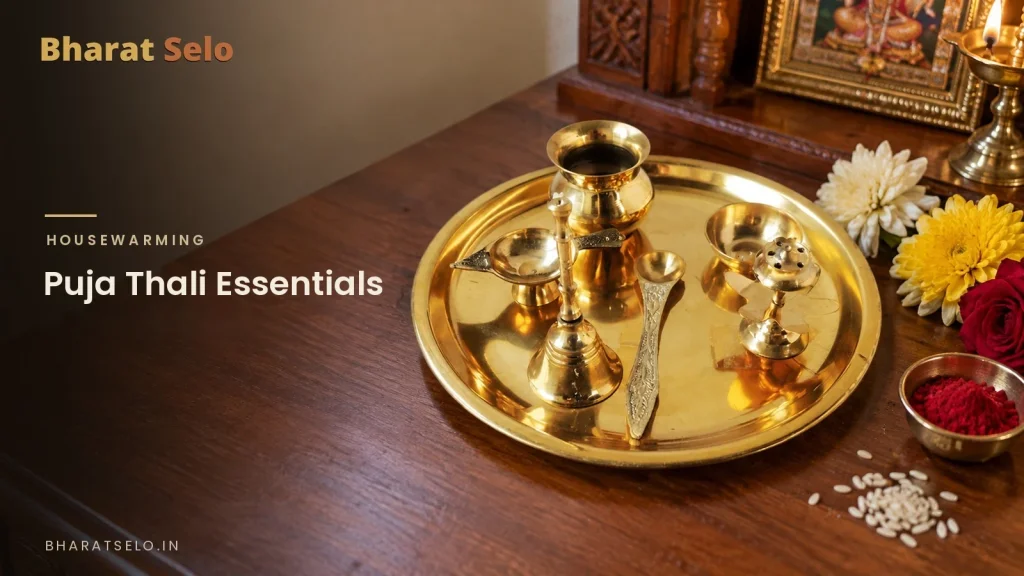
The puja thali holds the small items used through the ceremony. You will need roli or kumkum for tilak, chawal (rice grains) for akshat, haldi, a diya with ghee or oil and cotton wicks, agarbatti, camphor for the aarti, and a small bell.
Fresh flowers and garlands, a few betel leaves and betel nuts, and some moli thread complete the thali. If you are assembling a thali from scratch, our guide to choosing a brass puja thali set covers what a good set includes.
For the diya, read about which diya is auspicious to pick the right one for the day.
A small idol or photo of Ganesh and Lakshmi usually anchors the puja. Many families gift or buy these specifically for the new home, which is why a brass Lakshmi Ganesh murti is such a classic griha pravesh gift.
Havan Samagri
Most griha pravesh ceremonies include a havan, the sacred fire. For this you will need a havan kund, mango wood or other havan wood, ghee, and a packet of havan samagri, the ready mix of herbs and grains sold for the purpose. Keep kapur, dry coconut pieces and a little extra ghee within reach, plus a spoon or achmani for offering ghee into the fire.
Matches, a small plate for the ashes afterward, and a bucket of water nearby for safety are the unglamorous items everyone forgets. Add them to your list now.
If your ceremony includes a vastu shanti or satyanarayan katha, your priest may also add vastu puja samagri or ask for panchamrit ingredients: milk, curd, honey, sugar and ghee, plus tulsi leaves.
Offerings and Prasad
For naivedya and prasad, the usual items are seasonal fruits, sweets like laddoo or peda, dry fruits, sugar or jaggery, and panchamrit as above. Many families boil milk in a new vessel in the new kitchen as part of the ceremony, letting it rise and overflow as a symbol of abundance, so keep milk and a new pot ready for that moment.
You will also want dakshina for the priest and some prasad packets or sweets for neighbours and guests who drop in. These housewarming puja items are easy to forget in the ritual rush.
A Few Practical Tips
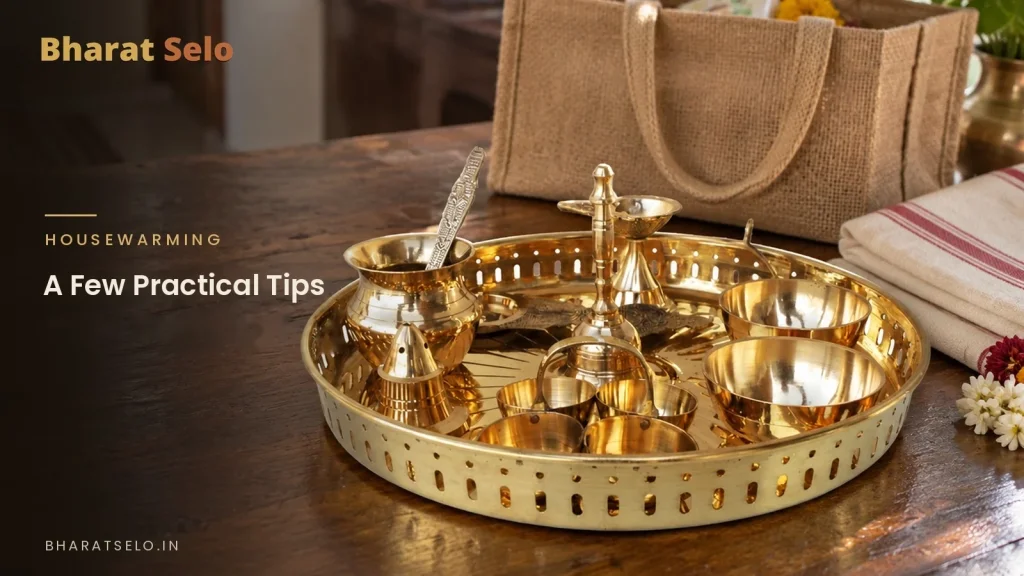
Shop two or three days early and pack the griha pravesh samagri group by group into labelled bags: kalash, thali, havan, offerings. On the morning of the puja, anyone can then lay out a group in seconds.
Clean your griha pravesh puja items the day before. Brass and copper pieces shine up beautifully with a gentle clean, the same method we use for brass idols at home, and gleaming vessels photograph wonderfully in a new home.
Finally, keep one bag of duplicate smalls: extra wicks, matches, camphor and moli. They cost little and rescue the morning when something runs out. It is also worth checking what the new home already has. If the kitchen is stocked, you only need the basic puja items for the new home. If the family is moving from far away, everyday things like a small stool for the priest or an extra asan for seating may need to be borrowed or bought too.
Two Days Before: A Simple Timeline
A simple griha pravesh checklist spreads the work and calms the morning. Two days before the puja, finish the shopping and pack items into labelled bags by group: kalash, thali, havan and offerings. Clean the brass and copper pieces this same day, so they are dry and gleaming well before they are needed.
The day before, confirm the timing with your priest, collect fresh flowers, mango leaves and garlands, and keep the milk, curd and fruits refrigerated and ready. If the ceremony includes boiling milk in the new kitchen, decide which new pot will be used and keep it aside.
On the morning itself, lay out the thali first, then set the kalash near the entrance, and only then light anything. Guests and photographers always arrive earlier than planned, so aim to be ready half an hour before the muhurat.
Traditions Vary, and That Is Normal
If you compare notes with friends, you will find every family does griha pravesh a little differently. In some North Indian homes, boiling milk until it overflows is the symbolic first act in the new kitchen. In many South Indian homes, the cow and calf may be led through the house first, and the ceremony is often called gruhapravesam. Bengali, Maharashtrian and Gujarati families each add their own touches.
None of these versions is more correct than another. The griha pravesh puja samagri list above covers the shared core, and your family priest will shape the rest. If you are moving far from where you grew up, it is worth asking both sides of the family what they expect, so no elder feels a custom was forgotten.
Frequently Asked Questions
What does a griha pravesh puja samagri list include?
Four groups: kalash items like the kalash, coconut and mango leaves; thali items like roli, chawal and a diya; havan items like ghee, wood and havan samagri; and offerings like flowers, fruits, sweets and milk.
Who finalises the samagri list?
Your family priest. Ask for his list early and compare it with a standard checklist, since many priests add items for your family tradition or the katha being performed.
When should I buy the griha pravesh samagri?
Finish shopping two or three days before the puja and pack each group into a labelled bag. Collect fresh flowers, mango leaves and garlands the day before.
Why is milk boiled during griha pravesh?
In many North Indian homes, milk is boiled in a new vessel in the new kitchen until it overflows, as a symbol of abundance. Customs differ by region and family.
Which items do people most often forget?
Matches, extra wicks, camphor, a spoon for offering ghee, a plate for ashes and a bucket of water near the havan kund. A bag of duplicate smalls rescues the morning.
A Warm Beginning
A griha pravesh is not really about the items. It is about walking into a new home with gratitude and the people you love around you. This griha pravesh puja samagri list is simply how you make that morning smooth and unhurried.
Prepare the four groups, confirm with your priest, and then relax. The house will do the rest.


