


A copper lota is a small, round copper vessel used to hold and pour water during puja, achaman and offerings like surya arghya. Families also keep one at the home temple for daily rituals. Choosing the right one comes down to size, weight, finish and how pure the metal is.
Walk into almost any Indian home with a prayer corner and you will spot a small, round-bellied vessel sitting near the idols. That is the lota. It looks simple, but it quietly does a lot of work in daily worship.
This guide explains what the lota is, how people use it in puja, and what to check before you buy one for your home.
What Is a Copper Lota?
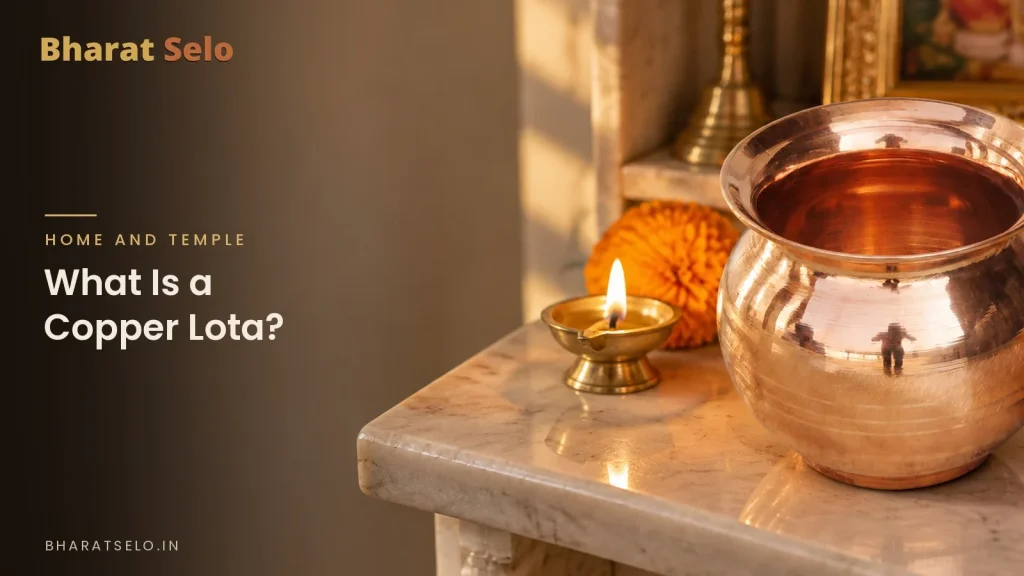
A lota is a small water vessel with a round belly, a narrow neck and a flared rim. The shape is not decoration. The wide belly holds a good amount of water, the narrow neck stops spills, and the flared rim lets you pour in a thin, controlled stream. That is exactly what rituals like abhishek and achaman need.
Copper is one of the traditional metals for a lota, along with brass. In many families, a copper lota is passed down for years, darkening slowly and gaining the kind of patina that only comes from daily use.
How a Copper Lota Is Used in Puja
The copper lota for puja is above all a water vessel, and water runs through almost every Hindu ritual. Here are the most common uses you will see at home.
Achaman
Achaman is the ritual sipping of a small amount of water before starting a prayer or ceremony. The lota is held above the right palm and a thin stream of water is poured, so the vessel never touches the hand. The flared rim of a lota is shaped for exactly this pour.
Abhishek of the deity
During abhishek, water, milk or panchamrit is poured slowly over the idol or shivling. A small lota gives a steady, gentle stream, which is why many people prefer it over a glass or jug for this ritual.
Surya arghya
Many families offer water to the rising sun each morning, a practice called surya arghya. The lota is raised with both hands and water flows out in an unbroken stream toward the sun. Many households reach for copper for this offering.
Keeping water at the home temple
A small lota of fresh water is often placed at the home mandir as part of the daily setup, next to the diya and the brass or copper puja thali. Some people also use the lota to sprinkle water around the puja space before starting, as a simple act of purification.
These are traditional practices and beliefs, and they differ from family to family and region to region. What stays common is the vessel itself.
Copper Lota with Glass: A Popular Pairing
You will often see a copper lota with glass sold as a set. The pairing is practical. The lota stores and pours the water, and the glass is used for drinking or for offering water to guests and elders.
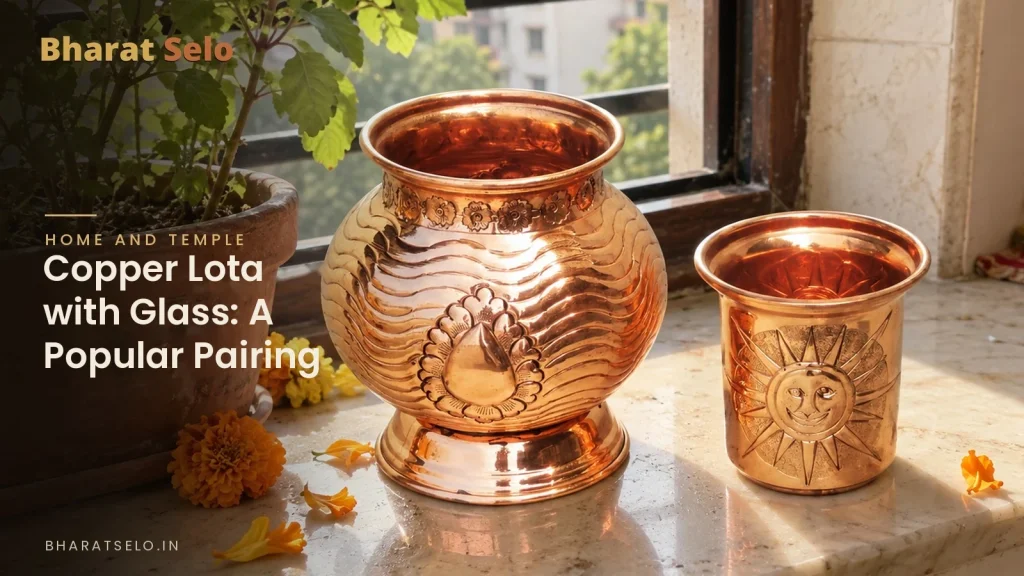
In many homes, water is left overnight in a copper water vessel as part of a long-standing household tradition, then poured into the glass in the morning. Families follow this practice out of tradition and personal belief. If you are curious about it, treat it as a custom rather than a health prescription, and follow whatever your own family practice and doctor’s advice say.
The set also works well during festivals, when the lota stays at the temple and the glass comes to the dining area.
Lota, Kalash, Surahi: What Is the Difference?
The round water vessel comes in several shapes, and the names often get mixed up. A lota is the small, everyday vessel: round belly, short neck, easy to lift with one hand. A copper kalash is its ceremonial cousin, usually larger and wider-mouthed, made to be crowned with mango leaves and a coconut during sthapana. A surahi has a tall, narrow neck and belongs at the dining table, where it stores and pours drinking water.
If you remember one line, make it this: the lota is the working vessel of daily puja, the kalash is the ceremonial one, and the surahi serves the table. Many homes keep all three, each doing the job its shape was designed for.
Copper, Brass or Steel: Does the Metal Matter?
All three metals are used for lotas, and each has its loyalists.
Copper is the traditional favourite for rituals. It has a warm, reddish shine and is linked in tradition with purity and the sun. Brass is equally common for puja items and is a little sturdier in daily handling; the same questions of metal choice come up with diyas, and we compare them in which is better, a brass or silver diya. Stainless steel is the practical, low-maintenance option many homes keep for rough daily use.
For ritual use, most families pick copper or brass. For a lota that will be refilled and washed many times a day, some keep a steel one as the workhorse and a copper one for the temple.
How to Choose the Right Copper Lota
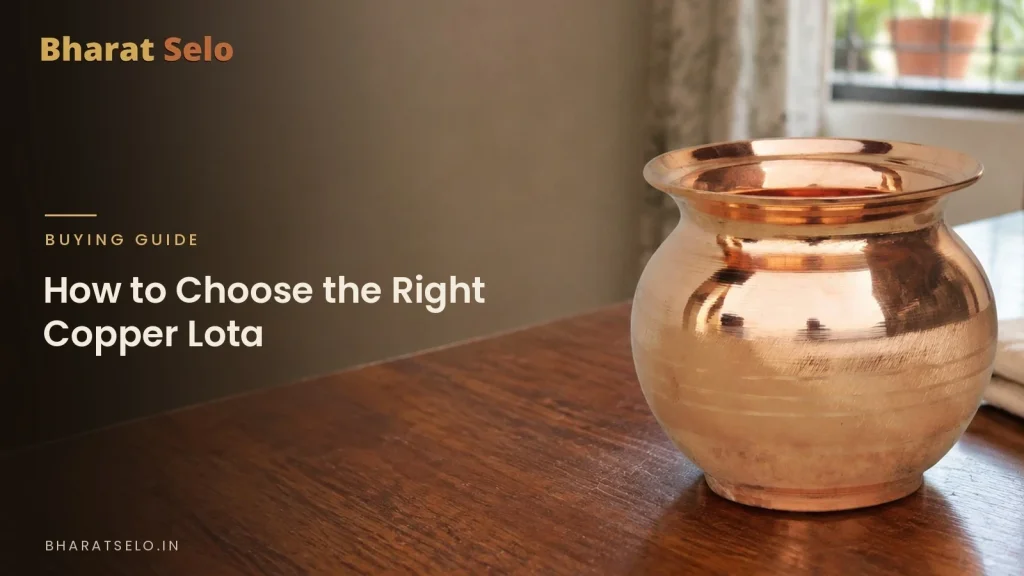
A few simple checks will get you a lota that lasts for years.
Lota size for puja comes first. For achaman and temple use, a small lota of about 300 to 500 ml is comfortable to hold and pour. For abhishek or surya arghya, many prefer 500 ml to 1 litre so the stream does not run out mid-offering.
Check the weight and thickness. A good lota feels reassuringly heavy for its size. Very thin copper dents easily and can develop sharp edges at the rim over time.
Look at the finish. Plain polished copper is classic. Hammered and engraved finishes hide small scratches and water spots, which matters if the lota will be handled daily.
Finally, ask about purity. A genuine pure copper lota is made from solid copper sheet, not copper-plated steel. A simple check many buyers use is the magnet test. Strong attraction can indicate a ferromagnetic component such as an iron or steel core under a coating, while no attraction does not prove purity, so buy from sellers who state the material and weight clearly.
Caring for Your Copper Lota
Copper darkens naturally with use. That darkening is normal tarnish, not dirt, and many people like the antique look. If you prefer the bright shine, the fix is simple: rub the lota with half a lemon dipped in salt, or with a paste of tamarind, then rinse and dry it at once. Drying matters, because standing water leaves fresh spots.
The same gentle approach works for other puja metals, and the method we describe for cleaning brass idols at home applies to copper vessels too. Avoid harsh chemical cleaners and steel wool, which scratch the surface.
If you keep your lota near the diya, wipe off any oil or ghee splashes the same day. It takes seconds and saves a scrub later. And if you are setting up a full temple corner, a lota sits naturally beside the diya, bell and other puja essentials.
Frequently Asked Questions
What is a copper lota used for in puja?
It holds and pours water. The flared rim gives a thin, controlled stream for achaman and abhishek, and many families raise it with both hands for the morning surya arghya.
What is the difference between a lota and a kalash?
A lota is the small, everyday vessel with a narrow neck. A kalash is larger and wider-mouthed, made to carry mango leaves and a coconut during sthapana.
What size copper lota should I buy?
Around 300 to 500 ml is comfortable for achaman and temple use. For abhishek or surya arghya, 500 ml to 1 litre keeps the stream from running out mid-offering.
How do I check if a lota is pure copper?
Simple checks only spot obvious mismatches: solid copper feels heavy for its size and looks reddish all through. Strong magnet attraction can indicate a ferromagnetic component such as an iron or steel core; no attraction does not prove copper purity. Reliable confirmation requires appropriate professional material testing, so buy from sellers who state the material and exact weight clearly.
Why has my copper lota turned dark?
That is natural tarnish, not dirt, and many people like the aged look. A gentle clean with lemon and salt, a rinse and a good dry bring back the shine.
A Small Vessel with a Long Memory
The lota is one of those objects that never needed redesigning. The same round belly and flared rim that worked centuries ago still pours the perfect thin stream for achaman, abhishek and the morning offering to the sun.
Choose a size that fits your rituals, pick a finish you will enjoy looking at every day, and keep it dry after washing. Do that, and it will serve your home temple for decades without a fuss.


