Quick Answer: A copper puja thali set is a traditional worship tray made of copper, typically including a diya (oil lamp), bell, small kalash, and containers for kumkum and rice, valued in Hindu tradition for its association with purity and its naturally antimicrobial surface. Copper puja thali sets are widely available online in India, generally ranging from around ₹750 for basic sets to ₹2,000-4,000 or more for larger, more complete sets, depending on weight, finish and number of accessories.
If you’re setting up a home temple and considering copper over brass, you’ve probably noticed copper thali sets are marketed with a strong emphasis on tradition and purity, alongside a fair spread in size and price. This guide covers exactly what a copper puja thali set typically includes, how it compares with brass, what affects the price, and a few copper-specific care points that are worth knowing before you buy.
Copper has some genuinely different properties from brass, particularly around how it reacts with certain substances, so this article also covers what to keep in mind if your thali will come into contact with acidic offerings or liquids.
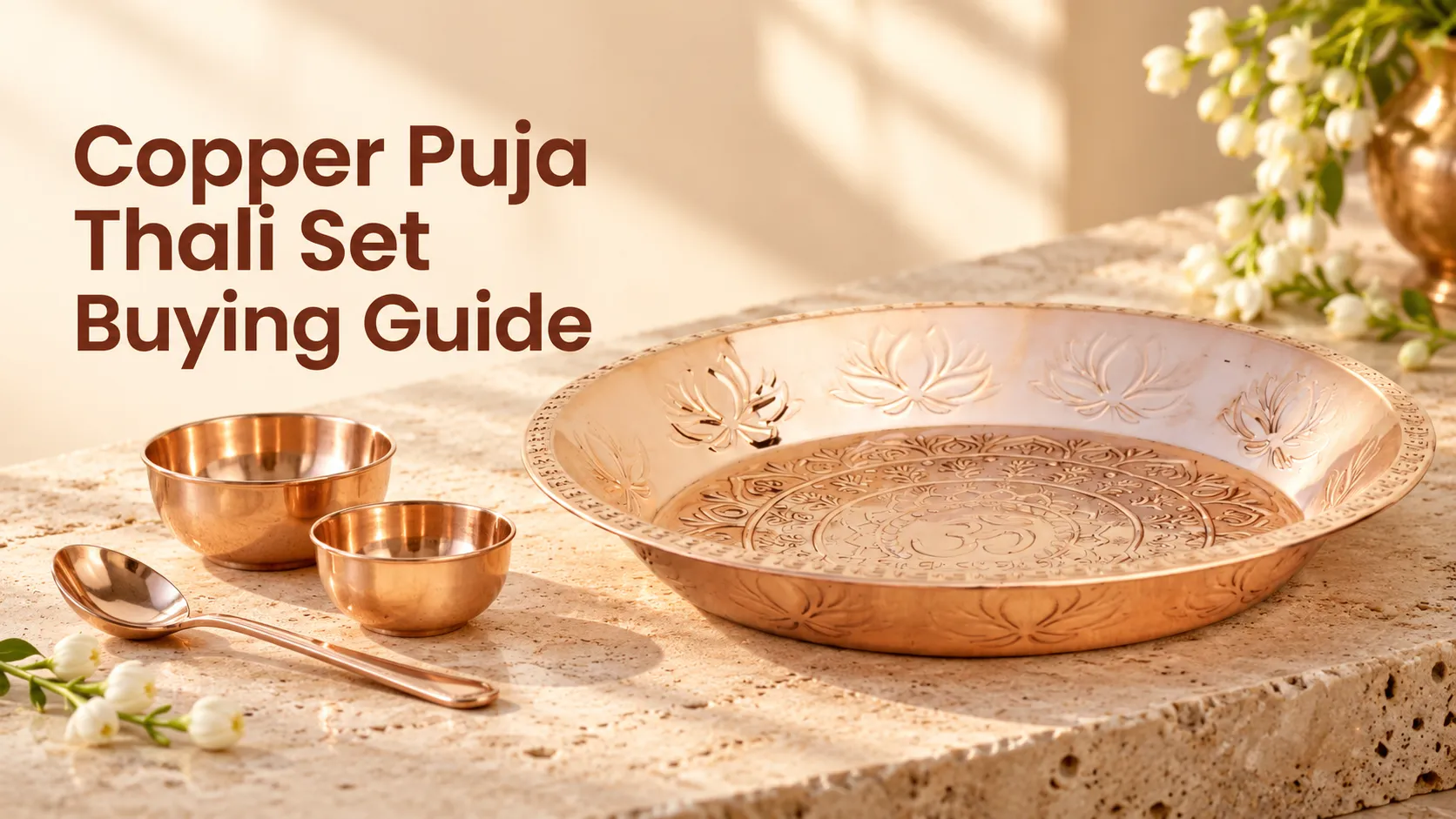
What’s Included in a Copper Pooja Thali Set?
A typical copper puja thali set includes the following core components, though exact contents vary by seller and price point:
- Thali (main tray): The base plate that holds the other items during aarti and daily worship.
- Diya (oil lamp): Used for the aarti flame; some sets use a brass diya even within an otherwise copper set.
- Ghanti (bell): Rung during aarti to mark the rhythm of worship, sometimes made in brass even within a copper set.
- Small kalash: A miniature sacred vessel, often filled with water during specific rituals.
- Panchpatra and spoon (achamani): A small copper cup and spoon traditionally used to hold and sprinkle water during rituals.
- Small bowls or containers: For kumkum, akshat (rice), or chandan (sandalwood paste).
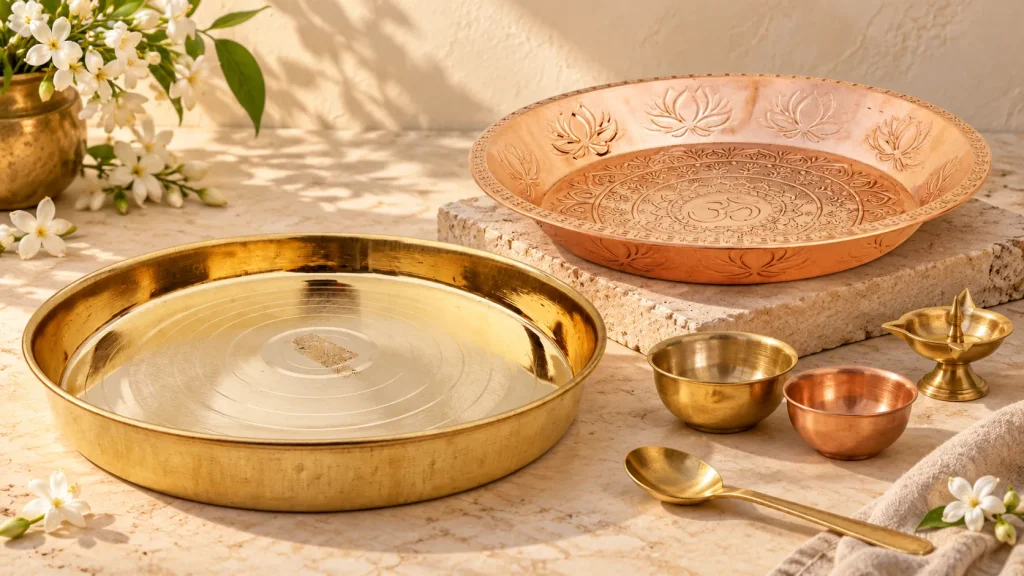
It’s worth noting that many “copper” thali sets on the market are actually mixed-metal sets, where the tray and kalash are copper but the bell and diya are brass. If you specifically want an all-copper set, check the material breakdown in the listing rather than assuming every accessory matches the tray.
If you’re comparing copper against brass for your full setup, our guide on the brass puja thali set covers the brass side of this same buying decision in more detail.
Why Choose Copper for Your Puja Thali?
Copper has a distinct place in Hindu tradition, separate from brass, and there are a few genuine, verifiable reasons behind its continued popularity:
- Traditional significance: Copper is widely regarded in Hindu tradition as a pure, sattvic metal, commonly used for water vessels (kalash and lota) in particular.
- Antimicrobial surface: Copper has a well-documented, scientifically studied antimicrobial surface property, which is one practical reason it has remained popular for items that come into contact with water and food offerings.
- Distinctive appearance: Copper’s warm, reddish-orange tone gives thali sets a different visual character from the brighter yellow-gold of brass.
- Association with water rituals: Copper is especially favoured for the kalash and panchpatra specifically, since these vessels traditionally hold water during puja.
That said, copper is a softer metal than brass and reacts more readily with certain substances, which is an important, practical difference to understand before buying – covered in detail below.
Copper vs Brass Puja Thali: Key Differences
If you’re deciding between the two metals, here’s a straightforward comparison of practical differences:
| Aspect | Copper | Brass |
| Composition | Pure copper (or copper alloy) | Copper + zinc alloy |
| Colour | Warm reddish-orange | Bright golden-yellow |
| Durability | Softer; dents more easily | Harder; more dent-resistant |
| Reaction with acidic substances | Reacts more readily; needs care with acidic offerings | More chemically stable |
| Traditional use | Kalash, panchpatra, water vessels | Idols, thalis, diyas, bells |
Many households use both metals together rather than choosing exclusively – for example, a copper kalash and panchpatra alongside a brass thali, diya and bell, which is why mixed-metal sets are so common in the market.
Copper Puja Thali Care: What You Need to Know
This is where copper genuinely differs from brass in a way worth understanding. Copper is more chemically reactive than brass, and if acidic or fermented substances stay in contact with bare copper for extended periods, it can release copper salts. This is documented in food-safety literature and is the reason copper cookware and drinkware are traditionally lined with tin, and why prolonged contact with acidic liquids in unlined copper vessels is generally discouraged.
For a puja thali, this mainly matters if you’re keeping offerings like citrus fruit, tamarind, or other acidic items directly on bare copper for long periods, or if you use a copper panchpatra to hold liquids like buttermilk or diluted lemon water as part of specific rituals. In those cases, a quick rinse after use, rather than prolonged storage, keeps things safe.
- Wash promptly after use: Don’t leave acidic offerings or liquids sitting in copper vessels for extended periods.
- Hand wash only: Avoid dishwashers, since harsh detergents can accelerate tarnishing and are not ideal for copper’s surface.
- Dry thoroughly: Copper tarnishes faster than brass when left damp, so towel-dry after washing rather than air-drying.
- Clean with traditional methods: A tamarind-and-salt or lemon-and-salt paste works well to remove everyday tarnish and restore shine.
- Know the difference between surface tarnish and damage: The greenish tarnish (verdigris) that can form on copper over time is a surface reaction and is generally considered cosmetic on decorative and non-food-contact surfaces, though it should still be cleaned off regularly, particularly on any part of the vessel that contacts food or drink.
None of this means copper is unsafe for puja use – it has been used in Indian ritual items for centuries. It simply means copper benefits from slightly more attentive care than brass, particularly around acidic contact and drying.
Copper Puja Thali Set Price: What to Expect
Based on general market research across Indian sellers, here’s a rough guide to what different types of copper puja thali sets typically cost. These are approximate ranges, not quotes for any specific product.
| Set Type | Typical Pieces | Best Suited For | Approx. Price Range* |
| Basic (single tray or pack of 2-3) | Thali or thali + kalash + panchpatra | Simple daily worship, small altars | ₹750 – ₹1,500 |
| Standard mixed-metal set | Copper thali/kalash + brass diya, bell, bowls | Most home temples, everyday use | ₹1,500 – ₹2,500 |
| Complete or premium copper set | Full copper construction, multiple accessories, finer detailing | Gifting, festivals, larger home temples | ₹2,500 – ₹4,000+ |
*These ranges are based on general market research across Indian online sellers as of 2026 and are meant as a rough guide, not a quote. Copper puja thali set prices vary based on weight, whether the set is pure copper or mixed-metal, finish, and seller. Always check the current listed price on the product page before purchasing.
How to Choose the Right Copper Puja Thali Set for Home
A few practical questions will help you pick a set that suits your actual worship routine:
- Do you want pure copper or a mixed-metal set? Confirm whether the bell and diya are copper or brass, since many listed “copper” sets combine both metals.
- Will it hold liquids or acidic offerings regularly? If so, check whether the panchpatra or kalash has any lining, or plan to rinse it promptly after such use.
- How often will you use it? Sets for daily worship benefit from a simpler design that’s easy to clean; ornate, finely detailed sets may need gentler handling.
- What’s your budget and size preference? Compact sets suit smaller altars, while complete sets suit larger home temples or gifting occasions.
- Check the weight: A listed weight that feels substantial for the set’s size is generally a good sign of solid copper construction rather than thin plating.
A well-made copper pooja thali set from bharatselo.in is a good starting point if you want genuine copper construction with the core ritual essentials covered for your home temple.
Tips for Buying a Copper Pooja Thali Online in India
A few checks make online buying smoother and help avoid surprises when the set arrives:
- Read the full item description: Confirm exactly which pieces are copper and which, if any, are brass or another metal.
- Check the material claim: Look for confirmation of genuine copper construction rather than copper-plated brass or another base metal, especially if the price seems unusually low.
- Look at listed dimensions and weight: These give a more reliable sense of the set’s actual size and solidity than photos alone.
- Consider delivery timelines: Handcrafted copper items are sometimes made to order, so check estimated delivery, especially around festivals.
- Review packaging and return policies: Copper items can dent if poorly packaged, so check how the seller protects shipments.
If you’re deciding between copper and stainless steel more broadly for puja essentials, our comparison of stainless steel vs copper puja items covers that trade-off in more depth.
Frequently Asked Questions
What is usually included in a copper puja thali set?
Most sets include a main thali (tray), a small kalash, a panchpatra with spoon, and often a diya and bell, though the bell and diya are sometimes made of brass even in an otherwise copper set. Always check the specific item list before buying.
What is a reasonable price range for a copper puja thali set in India?
Based on general market research, basic copper sets typically start around ₹750-1,500, standard mixed-metal sets fall in the ₹1,500-2,500 range, and complete or premium all-copper sets can run ₹2,500-4,000 or more. Prices vary by weight, purity of copper, and number of included items, so treat this as a general guide.
Is copper safe for daily puja use?
Yes, copper has been used in Indian ritual items for centuries and has a documented antimicrobial surface property. The main precaution is avoiding prolonged contact between bare copper and acidic or fermented substances, which is why prompt washing rather than long-term storage of such items in copper vessels is advisable.
Is copper or brass better for a puja thali?
Neither is universally better. Copper carries strong traditional association with water rituals and purity, while brass is generally more durable and dent-resistant for daily handling. Many households use both together – copper for the kalash and panchpatra, brass for the thali, diya and bell.
Why does my copper thali turn green or dark over time?
This is a natural tarnishing process as copper reacts with air and moisture, forming a surface layer often called verdigris or patina. It’s generally considered cosmetic on decorative surfaces and can be cleaned with a traditional lemon or tamarind and salt paste, though any part that regularly contacts food or drink should be cleaned more frequently.
Conclusion
A copper puja thali set brings genuine traditional significance to your home temple, particularly for water-related rituals, along with a documented antimicrobial surface property that has kept copper in Hindu ritual use for generations. Understanding what’s typically included, how it compares with brass, and a few copper-specific care points will help you choose and maintain a set with confidence.
If you’re ready to buy, a copper pooja thali set from bharatselo.in offers genuine copper craftsmanship with the essentials covered, making it a fitting choice for daily worship or festive rituals alike.