


A brass kalash for pooja is a rounded brass pot that holds water and is topped with mango leaves and a coconut during rituals. It stands for abundance and the presence of the divine in Hindu tradition, and it is set up at griha pravesh, weddings, Navratri and daily festival pujas.
At the start of almost every big Hindu ceremony, before the mantras and the aarti, someone carefully sets down a metal pot crowned with a coconut. That pot is the kalash, and placing it is often the very first act of the puja.
This guide explains what the kalash represents, how to set one up at home, and what to look for when buying a brass kalash for pooja.
What the Kalash Stands For
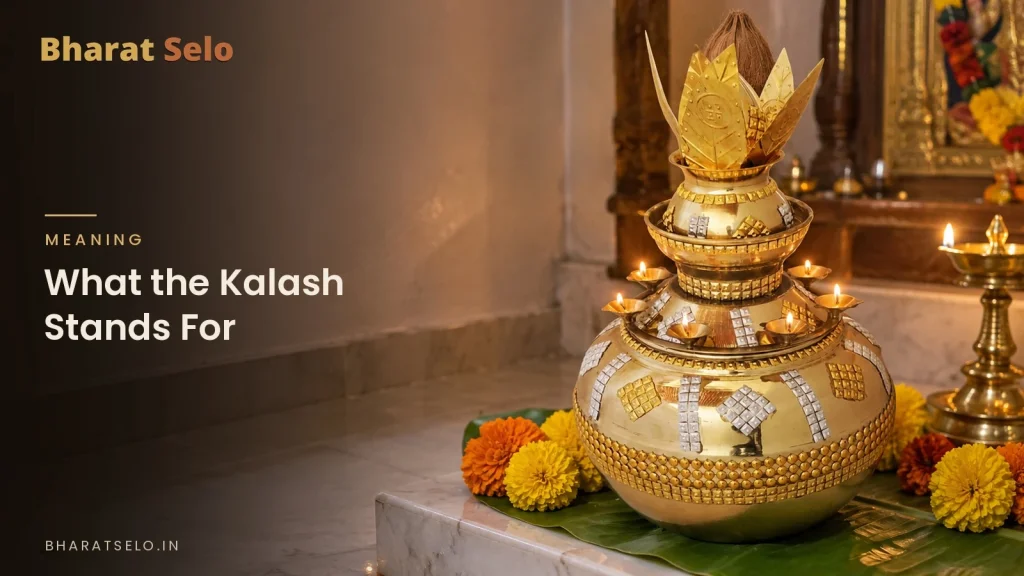
In Hindu tradition, the kalash is a symbol of abundance, creation and life. The water inside is seen as the source of life, the mango leaves at its mouth represent the created world, and the coconut on top stands for the divine consciousness watching over it all. Many families also see the kalash as an invitation: setting one up is how the deity is welcomed into the home or the ceremony.
These are matters of faith and tradition, and the details vary across regions and communities. In the South you may hear it called kalasa or kalasam, and the exact leaves and decorations differ from one custom to the next. It is also called the mangal kalash, the pot of auspiciousness. What is shared everywhere is the idea: the kalash marks the puja space as sacred.
Where the Kalash Appears
Once you start noticing the kalash, you see it everywhere.
At a griha pravesh, the housewarming ceremony, the kalash is often carried into the new home first, before the family steps in. Many households set up the griha pravesh kalash again for the vastu puja that follows. Gifting for these occasions often follows the same theme of auspicious metalwork, from kalash sets to a brass cow and calf pair for a griha pravesh gift.
At weddings, kalashes flank the mandap and mark the entrance. During Navratri, a kalash sthapana on the first day begins nine days of worship. And at Diwali, many families place a decorated kalash beside the idols of Lakshmi and Ganesh for the evening puja.
Some homes keep a small kalash permanently at the temple, filled with fresh water each morning, next to the diya. For the diya that shares that shelf, our notes on which diya is auspicious may help.
How to Set Up a Kalash at Home

The exact method differs by family and priest, but the common steps look like this.
Start with a clean kalash. Many families place it on a small bed of rice spread on a plate or chowki, so the pot sits steady and honoured. Fill the kalash with clean water. Some add a few coins, a pinch of turmeric or a little gangajal, following their own tradition.
Arrange mango leaves around the rim so their tips point outward and downward into the water, usually five or seven leaves. Then place a whole coconut, husk on, its tufted end pointing up, in the mouth of the pot so it rests on the leaves. That is the classic kalash with coconut that opens almost every big ceremony.
Some families wrap the kalash neck with a red cloth or moli thread, draw a swastika with roli on the belly, or decorate it with flowers. All of this is custom, not rule, and your family priest or elders will have their own way. When in doubt, follow the tradition you grew up with.
Brass, Copper or Steel: Choosing the Metal
The kalash comes in every puja metal, and each has its place.
Brass is the most traditional choice for a pooja kalash. It is sturdy, holds a polish beautifully, and its golden colour suits the festive look of a decorated pot. A brass kalash also handles being filled, emptied and carried around without complaint.
A copper kalash is the other classic. Many families prefer copper for the water element because of its long traditional association with purity, and copper matches other temple items like a copper puja thali if you want a matched set. Stainless steel kalashes are the everyday practical option, light and effortless to maintain.
There is no wrong answer here. Choose brass or copper for rituals and display, and steel if the kalash will see rough daily use.
How to Choose the Right Brass Kalash
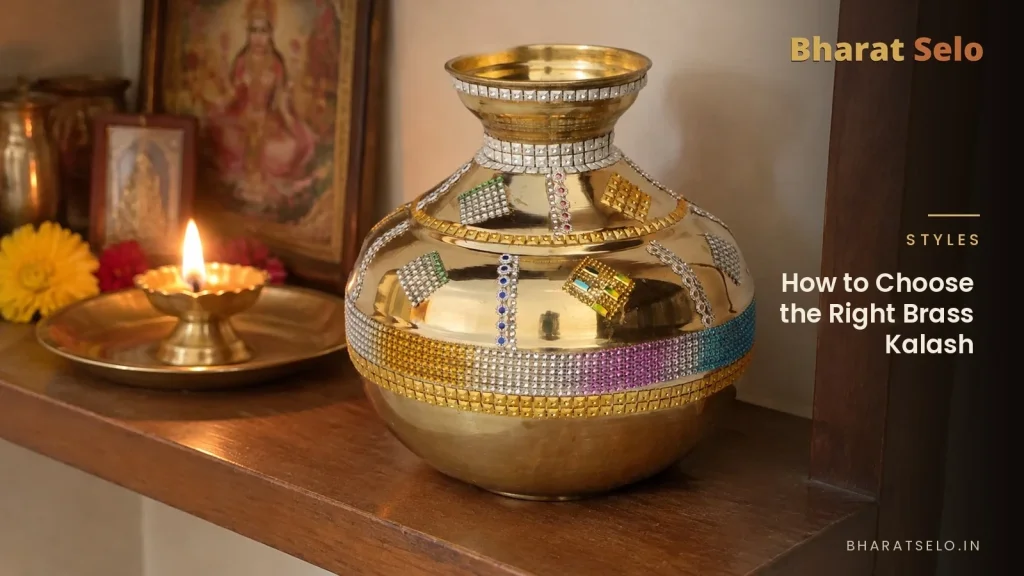
Size depends on the job. For a home temple or daily puja, a brass kalash for pooja holding 300 to 650 ml is easy to lift and top with a coconut. For griha pravesh, weddings and Navratri sthapana, a larger kalash of a litre or more looks grander and stays stable under a big coconut.
Check the mouth width before you buy. The rim should be wide enough to hold mango leaves and a coconut securely; a very narrow neck is beautiful but fiddly for sthapana.
Look at the base. A flat, well-finished base sits steady on a plate of rice, which matters more than you might think mid-ceremony.
Finally, choose a finish you love. Plain polished brass is timeless, while engraved, embossed and matka-style designs add texture and hide fingerprints. A solid, heavy feel in the hand usually signals good metal thickness.
The Water Inside the Kalash
The kalash is, at its core, a water vessel, and tradition treats that water as sacred. Most families fill it with clean drinking water, and many add a few drops of gangajal if they keep some at home. Some place a coin, a pinch of turmeric or a few grains of rice inside, each addition carrying its own meaning in their custom.
After the ceremony, the water is not wasted. Families commonly pour it into plants or sprinkle it around the home as a blessing. During longer observances like Navratri, many people freshen the water daily. As with everything about the kalash, follow the custom of your own home; the care matters more than the exact recipe.
Decorating the Kalash for Special Days
On ordinary days, a simple kalash with water is enough. On festival days, kalash decoration begins in earnest. A red cloth tied around the neck, a swastika drawn in roli on the belly, a garland of marigolds around the base: each addition is a small act of welcome.
During Navratri, some households sow barley in a small pot beside the kalash on the first day and watch the green shoots grow over nine days. At weddings, kalashes are often painted or wrapped to match the mandap colours. None of this is compulsory. The beauty of the kalash is that a plain one and a fully decorated one carry the same meaning.
Keeping Your Kalash Bright
Brass darkens slowly with use, which many people love for its antique warmth. To bring back the shine, give it a rub with lemon and salt, a quick rinse and an immediate dry. Empty the kalash after each ceremony rather than letting water stand in it for days, and the inside will stay fresh with almost no effort.
Frequently Asked Questions
What does a kalash represent in Hindu puja?
It stands for abundance, creation and life. The water inside is seen as the source of life, the mango leaves as the created world, and the coconut as the divine consciousness.
How do I set up a kalash for sthapana?
Rest the clean kalash on a bed of rice, fill it with water, arrange five or seven mango leaves around the rim with tips pointing down into the water, and place a whole coconut on top.
What size brass kalash for pooja should I buy?
For a home temple, 300 to 650 ml is easy to lift and top with a coconut. For griha pravesh, weddings and Navratri, a litre or more stays steadier under a big coconut.
Is a copper kalash better than a brass one?
Both are traditional. Brass is the classic puja metal and holds a polish well, while many families prefer copper for its long association with purity. Steel suits rough daily use.
What should be done with the kalash water after the ceremony?
It is not wasted. Families commonly pour it into plants or sprinkle it around the home as a blessing.
The First Step of Every Celebration
The kalash is how Indian families say: something sacred begins here. A pot of water, a ring of green leaves and a humble coconut, and an ordinary corner of the home becomes a temple.
A brass kalash for pooja should suit your rituals in size, match your temple in finish, and feel right in the hand. The kalash will do the rest.


