In the copper vs brass vs kansa comparison, each metal wins somewhere different. Copper is the traditional choice for storing drinking water, brass is the all-rounder for pooja items and decor, and kansa (bronze) is the classic Ayurvedic pick for eating. All three are Indian kitchen staples with distinct compositions, colours and care needs.
Walk into any Indian metalware market and you will hear these three names within a minute. They look similar at a glance, especially to a first-time buyer, but they behave differently, cost differently and suit different jobs. This guide settles the copper vs brass vs kansa question for the three uses Indians care about most: drinking, eating and pooja.
Meet the Three Metals
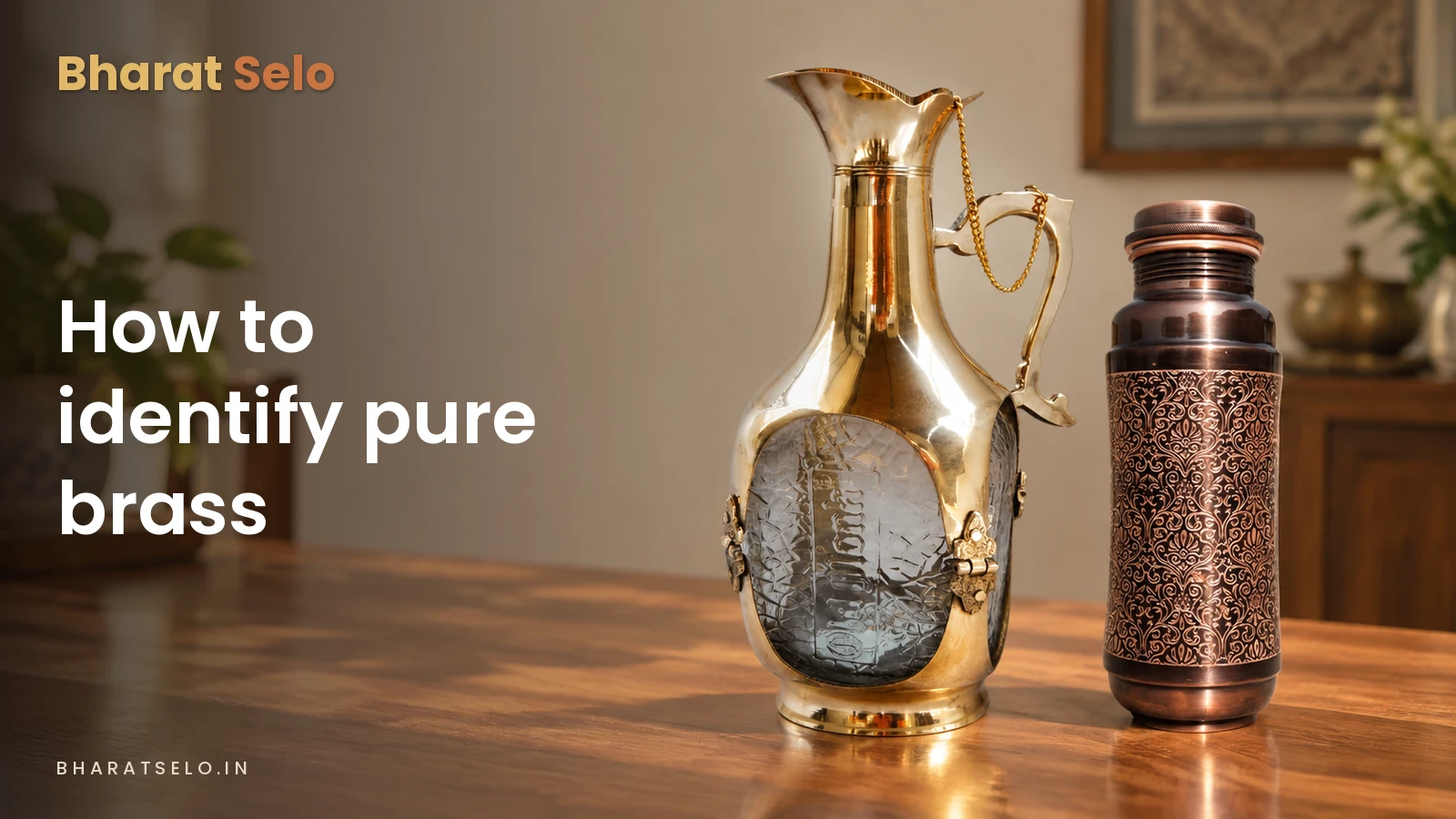
Copper is a pure elemental metal with a warm reddish-brown colour. It is soft, heavy and an excellent conductor of heat. In Indian homes it is the traditional water metal: lotas, jugs and bottles.
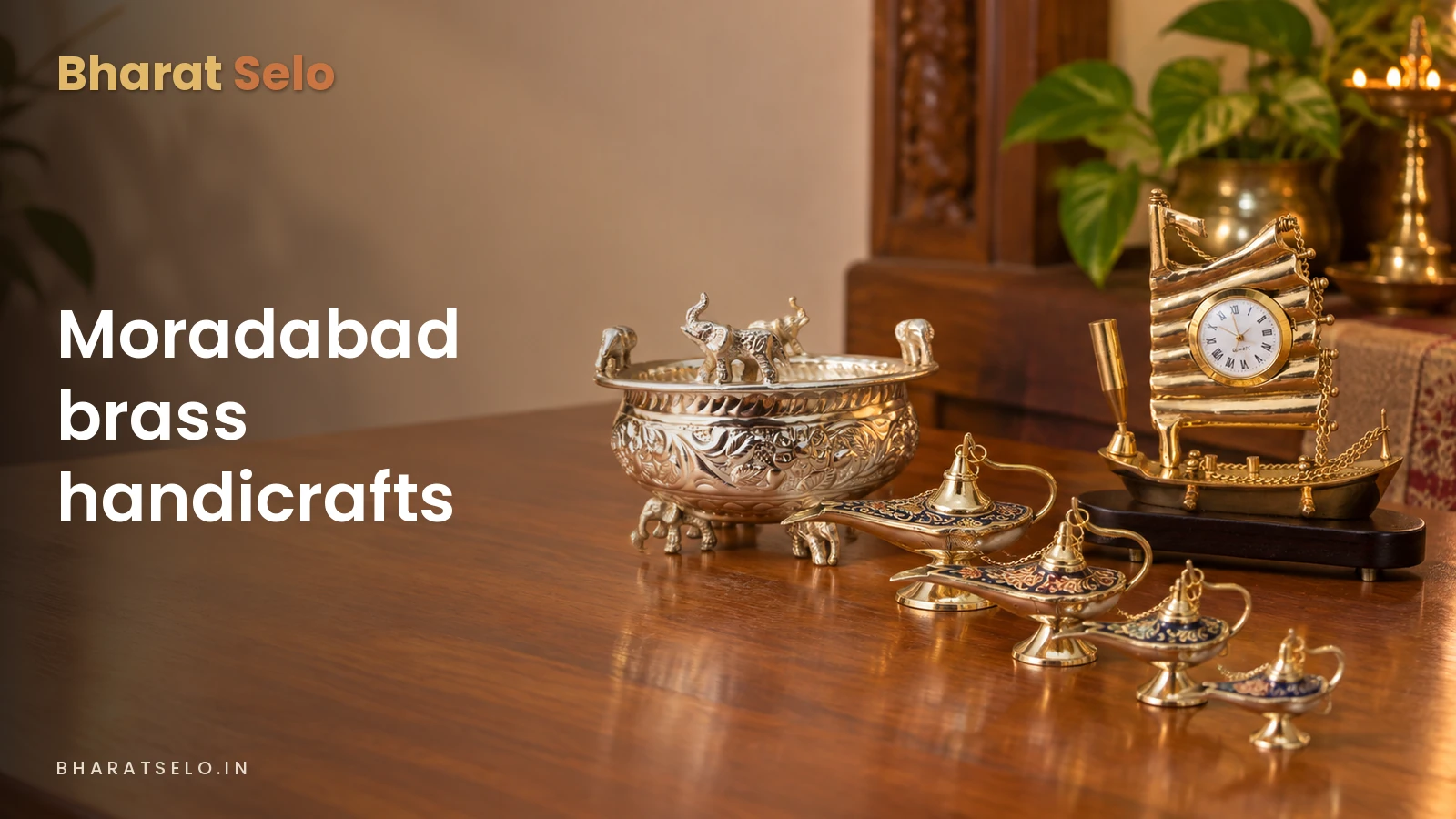
Brass is an alloy of copper and zinc. It is golden-yellow, harder than pure copper, and easy to cast into detailed shapes. That is why most idols, diyas and decorative items are brass.
Kansa is the Indian name for bronze, an alloy of copper and tin. It has a softer, muted gold-grey tone and a clear bell-like ring when tapped. Traditional kansa dinnerware has been used in India for centuries. Bronze and brass metalwork remain living crafts, documented by the Office of the Development Commissioner (Handicrafts).
Copper vs Brass vs Kansa at a Glance
| Feature | Copper | Brass | Kansa (Bronze) |
| Made of | Pure copper | Copper + zinc | Copper + tin |
| Colour | Reddish brown | Bright golden yellow | Muted gold-grey |
| Sound when tapped | Dull, soft ring | Bright ring | Clear, long bell-like ring |
| Magnetic | No | No | No |
| Best known use | Storing drinking water | Idols, diyas, pooja items, decor | Eating and serving food |
| Tarnish | Darkens, can turn green | Dulls to brown | Darkens slowly |
| Typical feel | Heavy for its size | Medium weight | Heavy, dense |
Which Is Best for Drinking Water?
Copper, without much debate. The tamra jal tradition of storing water overnight in a copper vessel is the most widely followed metal-water practice in India, and copper’s antimicrobial nature is the best documented of the three. The practice comes from Ayurveda, the traditional wellness system promoted today by India’s Ministry of AYUSH.
Brass and kansa are not traditionally used for long water storage. Their alloys react differently with liquids over time, so they are better kept for serving rather than storage. If drinking water is your goal, a pure copper bottle is the practical pick.
Which Is Best for Eating?
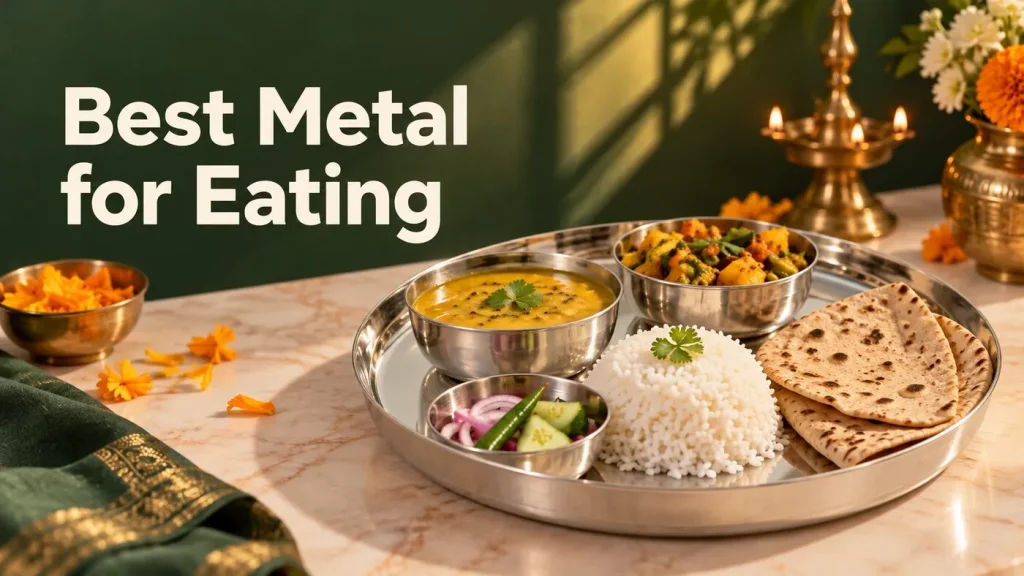
Kansa takes this one. Ayurvedic tradition considers kansa the preferred metal for plates, bowls and serving dishes. Many families still bring out kansa thalis for special meals, and the metal’s gentle weight and soft ring make eating from it feel like an occasion.
Brass plates are also widely used and considered suitable for most foods, though acidic dishes are best avoided in any reactive metal. Our detailed guide on whether brass plates are good for eating covers safety in depth, and if you have ever wondered about specific foods, we have answered even the tricky ones like eating non-veg in a brass plate.
Copper, meanwhile, is rarely used for eating directly. It reacts quickly with sour foods, which is why traditional copper cookware is usually tin-lined.
Which Is Best for Pooja?
Brass is the workhorse of the pooja room. It casts beautifully into idols, diyas, bells and thalis, holds fine detail, and polishes to a temple-like shine. Most traditional pooja items, from the family diya to the aarti thali, are brass.
Copper has its own sacred role: kalash, lotas and pooja thalis for offering water. Our guide to the 100% pure copper pooja thali explains when copper is preferred in rituals. Kansa appears in pooja mainly as bells and small bowls, valued for that clear ringing tone believed to purify the space.
How to Tell Them Apart When Buying
A few quick checks help when shopping, especially online:
- Colour: reddish means copper, bright yellow-gold means brass, soft grey-gold means kansa.
- Sound: tap gently. Kansa rings like a small bell, brass rings shorter, copper sounds duller.
- Weight: kansa feels unusually dense; copper is heavy; brass is in between.
- Magnet test: none of the three is magnetic. If a magnet sticks firmly, the item is plated over steel.
For dinnerware specifically, a genuine kansa thali will show that muted tone and clear ring that plated imitations cannot fake.
Care Differences
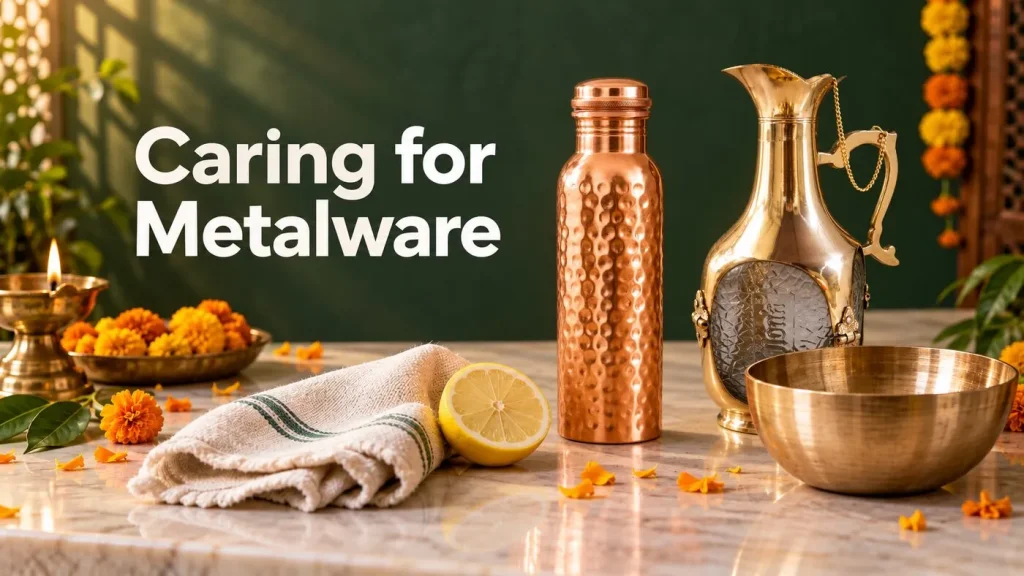
All three metals tarnish and all three clean up with the same kitchen staples: lemon, salt, vinegar or tamarind. The differences are small.
Copper tarnishes fastest and needs weekly attention if used daily. Brass holds its shine longer but dulls with handling. Kansa is the lowest maintenance of the three for eating use, though it should still be dried promptly after washing to avoid water spots.
A Note on Mixed-Metal and Coated Items
You will often see “copper-finish” steel bottles, brass-coated decor and two-tone pieces that mix metals. These are not fakes by default; they are simply different products at lower prices, and honest sellers describe them clearly.
The problem is only in the wording. “Copper finish” is not copper, and “brass polish” is not brass. If your goal is the traditional use described in this guide, such as storing drinking water or daily pooja, choose items described as pure or solid, and use the identification checks from the buying section above.
A Quick Word on Steel and Where It Fits
The hybrid approach also spreads cost sensibly. You invest in pure metal where tradition and use justify it, and let steel handle the everyday load without guilt.
No comparison of Indian kitchen metals is complete without stainless steel, the default in most homes today. Steel wins on convenience: it is cheap, rust-proof, dishwasher-safe and completely non-reactive. That is precisely why it took over.
What steel does not offer is tradition or character. Most families land on a hybrid: steel for daily chaos, copper for water, kansa for special meals and brass for the pooja room. Each metal doing what it does best.
Frequently Asked Questions
Is kansa better than brass for eating?
Traditionally, yes. Ayurveda prefers kansa for dinnerware, while brass is more common for cooking and pooja items.
Can I drink water from a brass or kansa glass?
Occasionally serving water is fine. For overnight storage, copper is the traditional and best-studied choice.
Which metal is most expensive?
Prices vary by weight and craftsmanship, but pure kansa dinnerware and heavy copper pieces usually cost more than similar brass items.
Do these metals react with food?
Acidic foods like tomato, tamarind and lemon can react with all three. Serve such dishes briefly rather than storing them in metal vessels.
Which is best for gifting?
Brass idols and diyas for festivals, copper bottles for health-conscious friends, and kansa dinner sets for weddings and housewarmings.
The Verdict
There is no single winner in copper vs brass vs kansa, and that is exactly the point. Indian tradition assigned each metal its own job over centuries: copper for your water, kansa for your plate, brass for your pooja room. Choose the metal for the task, buy pure rather than plated, and any of the three will serve your home for decades.