


A Lota Guide is a rounded Indian vessel used in puja, ceremonial water offerings and household routines. Choose a brass lota for traditional worship, a copper lota or copper kalash when that material suits the ritual, a karwa lota for Karwa Chauth, a mangal kalash for ceremonial display, or a larger brass matka when capacity matters.
BharatSeLo currently organises this category into Karwa Lota, Brass Matka, Copper Lota / Kalash, Brass Mangal Kalash and Brass Lota. This guide explains the practical differences, lists visible prices and sizes checked on 23 October 2026, and identifies what to confirm before ordering. Prices, availability and checkout charges can change, so the live product page remains the final reference.
What Is This Traditional Vessel?
This is usually a small or medium rounded vessel with an open neck. Across India, it may be used for holding water during puja, making ritual offerings, supporting festival observances or completing household tasks. The exact practice differs by region, community, family and sampradaya, so no single online description can define every use.
Retail names overlap. A seller may call a ceremonial vessel a kalash, karwa or matka according to its shape, finish and intended context. The useful shopping questions are simpler: What will it hold? How much must it hold? Does it need to be lifted easily? Will it be placed in a mandir, used in a festival ritual or displayed as decor?
Readers assembling a coordinated worship setup can pair this guide with BharatSeLo’s brass puja thali set buying guide. The thali guide helps buyers think about how the vessel will sit with a diya, bell and smaller accessories.
Kalash, Karwa and Matka: Practical Differences
| Name | Typical retail meaning | Best buying check |
| Lota | Rounded vessel for puja or general water-related use | Capacity, neck opening, balance and stated material |
| Kalash | Ceremonial vessel, often with a broader symbolic or decorative role | Overall height, mouth width and display stability |
| Karwa | Vessel associated with Karwa Chauth and related regional customs | Ritual suitability, decoration, grip and capacity |
| Matka | Larger pot-shaped vessel, often selected when volume or presence matters | Capacity in litres, weight, dimensions and intended use |
These are practical retail distinctions, not rigid linguistic rules. Product titles may combine terms, such as “Kalas Colour With Lota” or “Brass Matka Kalash”. Read the measurements and description instead of assuming the name guarantees a particular capacity or ritual purpose.
Lota Guide: Five BharatSeLo Categories at a Glance
| Category | Most suitable for | Visible listed range* | Size information visible |
| Karwa Lota | Karwa Chauth and ceremonial use | ₹331 to ₹687 | A verified 350 ML example; other items mainly use number labels |
| Brass Matka | Larger-capacity vessel or display | ₹383 to ₹4,720 | 250 ML and 6, 9 and 11 litre examples |
| Copper Lota / Kalash | Copper puja vessel or kalash setup | ₹234 to ₹494 | Numbered sizes plus 300 ML and 350 ML listings |
| Brass Mangal Kalash | Ceremonial display and gifting | ₹1,368 to ₹5,676 | One verified example measured 6 x 6 x 8.5 in |
| Brass Lota | Compact daily puja vessel | ₹286 to ₹409 among visible first-page examples | 150 ML, 220 ML and 230 ML examples plus numbered sizes |
*Ranges are based on products visible on the first category listing pages when checked. They are not guaranteed catalogue minimums or maximums. A sale, restock, tax treatment, delivery charge or website revision may change the payable amount.
Karwa Lota
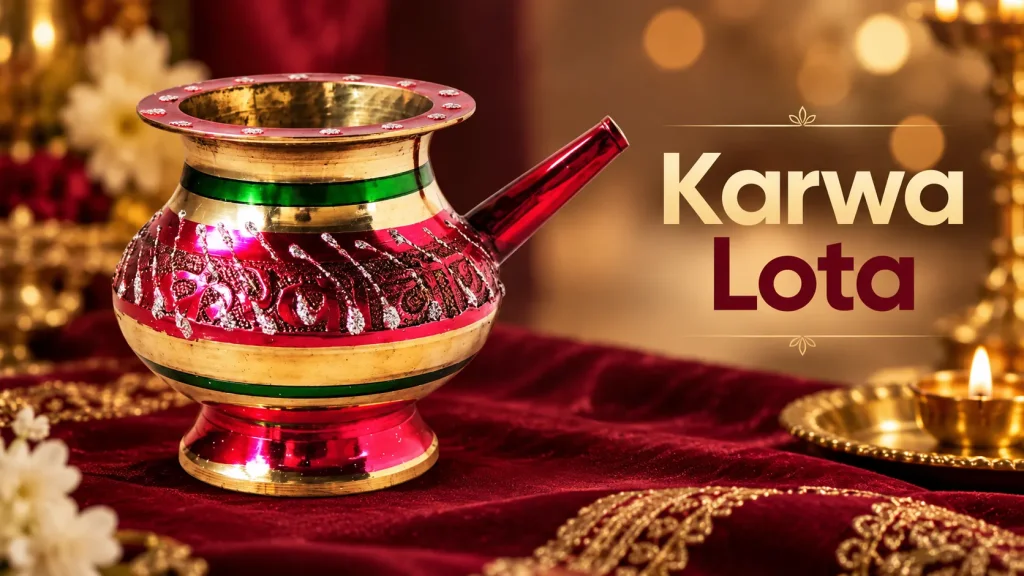
A karwa is chosen primarily for ritual context rather than everyday capacity alone. On Karwa Chauth, customs differ among families and regions, but this vessel is commonly part of the observance. The official Incredible India page describes Karva Chauth as a one-day festival centred on fasting and prayers for a spouse’s well-being, while individual ceremonial steps remain community-specific.
The visible BharatSeLo listings were Karwa Colour 6 at ₹331, Pure Brass Karwa Lota at ₹370, Karwa Lota 350 ML at ₹429, Karwa Polish 8 at ₹429, Brass Karwa Colour 8 at ₹468, Brass Karwa Colour 10 at ₹520, Karwa Meena 10 at ₹533, Karwa Polish 12 at ₹604 and Karwa Polish 18 at ₹687.
The 350 ML Karwa Lota was individually verified at ₹429, 0.1 kg and 4 x 3.5 x 3 inches. Its SKU was BS Z310 D. The website displays dimensions in sequence but does not identify which value is length, width or height, so confirm the orientation if it must fit a specific tray or storage box.
Choose a plain polished karwa if easy cleaning matters. A coloured or meena-style finish offers a more decorative appearance, but ask how that finish should be cleaned and whether it is intended for contact with water or only ceremonial display. Do not use abrasive powder on an embellished surface unless the seller’s instructions permit it.
For a respectful overview of the festival itself, see the official Incredible India Karva Chauth page. It is useful cultural context, but family practice should guide the exact ritual sequence.
Brass Matka
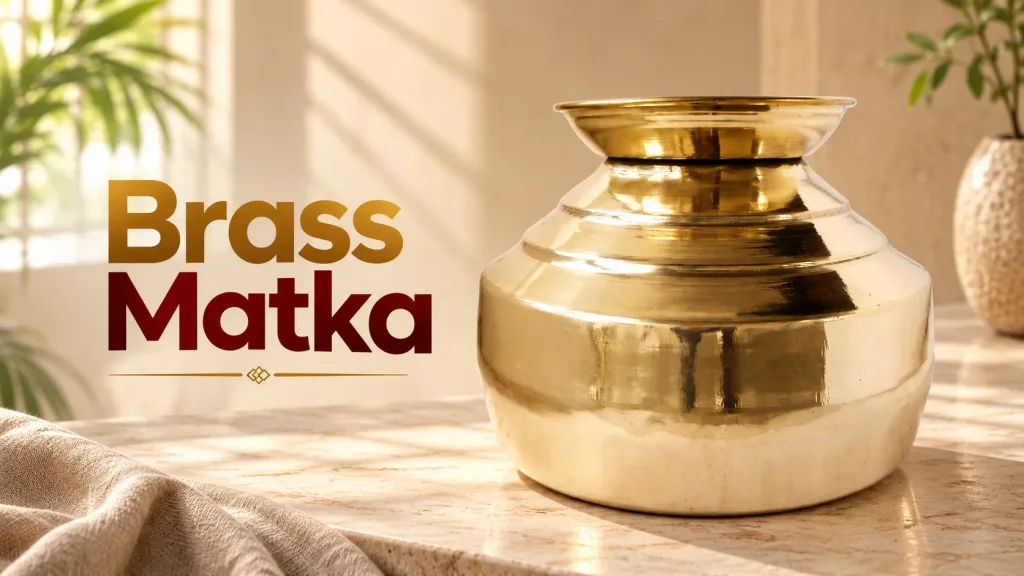
A brass matka is the capacity-focused member of this collection. Its pot-shaped body can suit a larger ceremonial arrangement, decorative placement or another use expressly supported by the product listing. The name “matka” should not be read as automatic proof that the vessel is certified for drinking-water storage.
Visible BharatSeLo examples included Brass Lota 250 ML at ₹383, Brass Matka 6 Liter at ₹3,657, Brass Matka 9 Liter at ₹3,921 and Brass Matka 11 Liter at ₹4,720. The jump from 250 ML to several litres makes measurement especially important. A product photograph cannot communicate countertop footprint or filled weight reliably.
The verified Brass Matka 6 Liter listing showed a price of ₹3,657, weight of 1.48 kg and dimensions of 10 x 10 x 9 inches. Once filled, the total handling weight will be much higher than the empty specification. Buyers should decide where the matka will stand before ordering and avoid a shelf that is too shallow or difficult to reach.
For food or drinking-water use, request clear confirmation that the exact item is suitable for that purpose and ask whether its interior is tinned or otherwise finished. FSSAI’s packaging regulations state that copper or brass containers not properly tinned are unsuitable for preparing, packaging or storing food. A product sold for puja or decor should not quietly be reassigned to food use.
If the vessel will be part of a broader metalware setting, BharatSeLo’s article on brass plate safety and care provides additional questions to ask about lining, cleaning and intended food contact.
Copper Lota and Copper Kalash
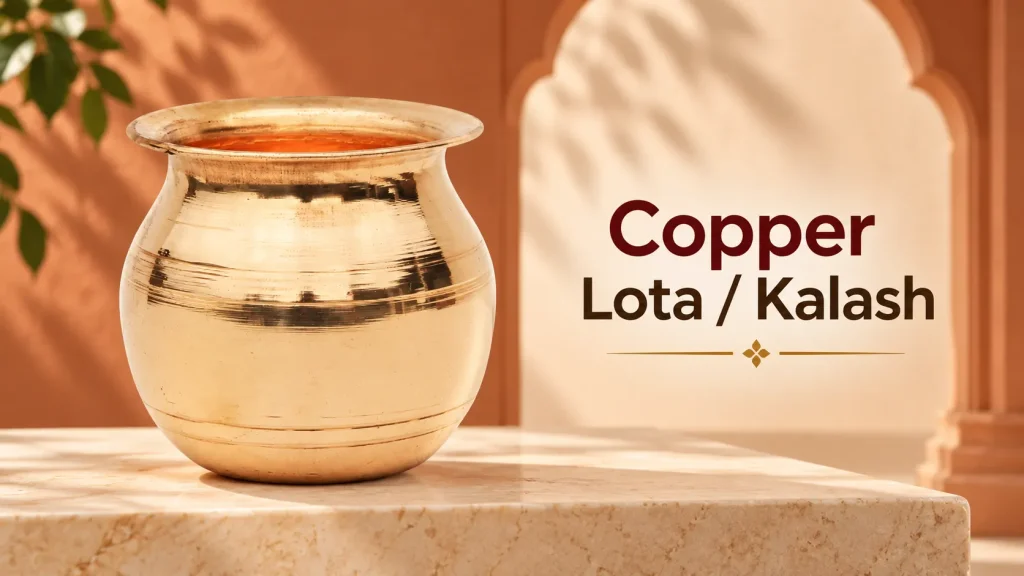
A compact copper vessel is commonly selected for puja, ritual water handling or a copper-themed ceremonial set. A copper kalash may have a similar body but be purchased for a more formal setup. Copper develops patina naturally, so a darkened surface is not automatically a defect. The buyer should distinguish normal oxidation from dents, cracks or damaged seams.
Visible first-page listings were Copper Lota No. 1 at ₹234, No. 2 at ₹273, No. 3 at ₹299, No. 4 at ₹331, Copper Lota at ₹364, No. 5 at ₹390, Copper Lota 300 ML at ₹455, another 300 ML listing at ₹481 and Copper Lota 350 ML at ₹494. Similar capacities can carry different prices because shape, weight, finish or construction may differ.
One verified Copper Lota 300 ML product was listed at ₹455, 0.12 kg and 4.1 x 4.1 x 3.5 inches. That is a compact puja-sized vessel, not a large storage pot. If choosing between two 300 ML models, compare exact weight, rim design, finish and dimensions rather than treating the lower price as the only meaningful difference.
Avoid unsupported health promises. BharatSeLo product pages contain broad wellness language, but this article does not treat marketing copy as medical evidence. Use the copper vessel according to its documented purpose. For any food or beverage contact, verify suitability and lining directly, and follow current food-safety guidance.
A copper vessel often sits beside a coordinated tray. BharatSeLo’s complete copper puja thali set guide can help readers compare material consistency, included pieces and the space required for a complete arrangement.
Brass Mangal Kalash
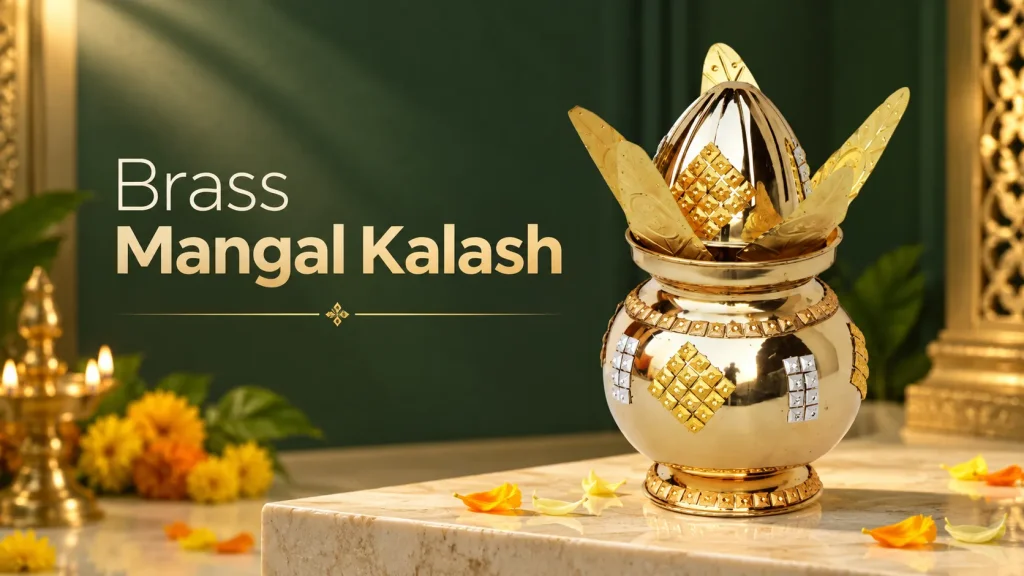
A brass mangal kalash is usually purchased for ceremonial display, festival setup, gifting or a prominent mandir arrangement. Decorative colour, sculptural details and total height matter more here than they do for a plain daily puja vessel. A taller form may look impressive online but still need a stable, level base at home.
Visible products included Kalas Colour With Lota at ₹1,368, Brass Showpiece Antique Kalash at ₹1,909, Brass Coloured Matka 5.5 Liter at ₹2,627, Brass Coloured Matka 7 Liter at ₹3,231, Brass Showpiece Kalash Statue at ₹3,530, Brass Coloured Matka at ₹3,984, two Brass Matka Kalash listings at ₹4,623 and Multicolored Brass Mangal Kalash at ₹5,676.
Kalas Colour With Lota was individually verified at ₹1,368, 0.36 kg and 6 x 6 x 8.5 inches. The height makes it more visually prominent than the compact 230 ML brass vessel in the next section. Check whether the stated dimensions include any lid, coconut-shaped top, attached ornament or base component shown in the photograph.
For gifting, confirm whether the item is a functional vessel, a showpiece or a coordinated set. Also check packaging, return terms and colour variation. Hand-finished decorative surfaces can show small differences, but the seller should still disclose material, components and any care restrictions clearly.
Brass Lota
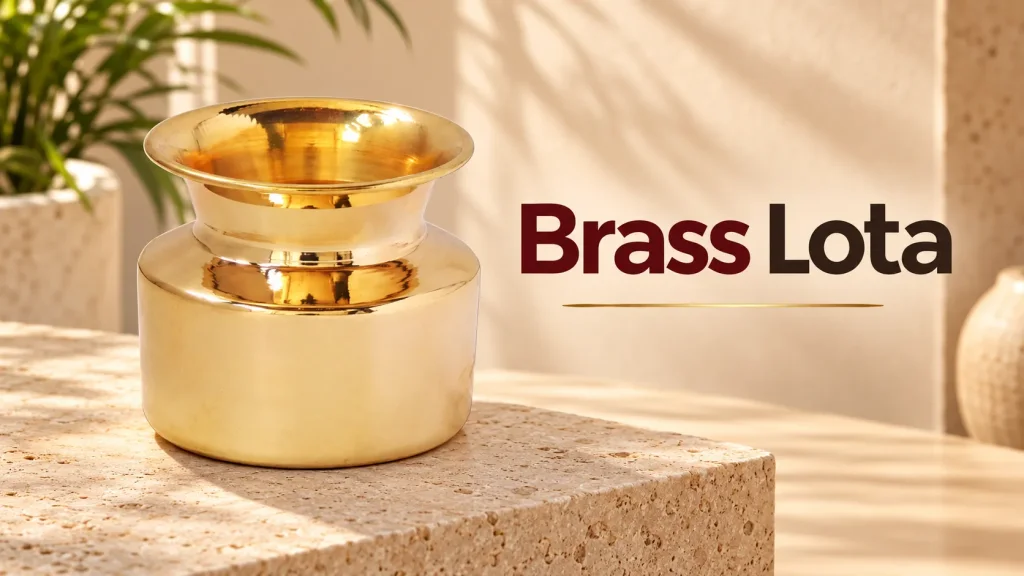
A compact brass vessel is the most straightforward choice for many daily puja settings. Small models are easy to place on a thali or mandir shelf, while larger numbered designs provide more presence. Brass also changes colour with handling and exposure, so buyers should expect routine wiping and periodic cleaning rather than permanent showroom brightness.
Visible first-page examples included Brass Lota No. 2, 150 ML at ₹286; Brass Balam Lota No. 0 at ₹299; Brass Lota 230 ML at ₹325; Brass Balam Lota No. 1 at ₹344; Brass Lota 220 ML at ₹344; Diamond Lota No. 00 at ₹377; Brass Lota No. 3 at ₹409; Brass Handi Lota No. 5 at ₹409; and Diamond Lota No. 0 at ₹409.
The verified Brass Lota 230 ML listing showed ₹325, 0.065 kg and 2.6 x 2.6 x 2.4 inches. This is very small, so measure the mandir shelf and consider whether 230 ML meets the ritual need. Compactness is useful, but a tiny neck may be less convenient to clean or fill without a narrow stream.
Number labels such as No. 0, No. 1 or No. 3 are product-series identifiers, not universal capacities. Never assume the same number means the same millilitres across brands or shapes. When capacity is absent, ask for it, along with weight, mouth diameter and overall height.
Verified Product Snapshot
| Category | Representative product | Price checked | Capacity | Weight | Dimensions |
| Karwa | Karwa Lota | ₹429 | 350 ML | 0.1 kg | 4 x 3.5 x 3 in |
| Brass Matka | Brass Matka | ₹3,657 | 6 L | 1.48 kg | 10 x 10 x 9 in |
| Copper | Copper Lota | ₹455 | 300 ML | 0.12 kg | 4.1 x 4.1 x 3.5 in |
| Mangal Kalash | Kalas Colour With Lota | ₹1,368 | Not stated | 0.36 kg | 6 x 6 x 8.5 in |
| Brass | Brass Lota | ₹325 | 230 ML | 0.065 kg | 2.6 x 2.6 x 2.4 in |
All figures above were read from the live BharatSeLo category or product pages on 23 October 2026. Product names are shortened in the table for readability. Dimensions are reproduced in the listed order, and BharatSeLo does not label each axis on these examples. Confirm live stock, final price, axis orientation and included parts before purchase.
How to Choose the Right Vessel
Start With Purpose
For a compact home mandir, a 150 ML to 350 ML vessel may be sufficient. For Karwa Chauth, select a karwa that fits the family’s practice and is comfortable to hold. For a ceremonial centrepiece, consider a mangal kalash. For several litres of capacity, compare brass matka models and their filled handling weight.
Measure the Space and Your Grip
Check shelf depth, tray diameter, storage height and mouth opening. A broad base improves stability, but it also consumes more space. A large vessel can be awkward when wet or filled. If an older family member will lift it, lower weight and a secure neck may be more useful than decorative mass.
Compare Capacity, Weight and Finish
Capacity tells you how much the vessel holds, while weight influences handling. Finish affects maintenance. Plain polished brass and copper can be cleaned differently from painted, enamelled, antique or meena surfaces. Read the care instructions before using lemon, salt, tamarind or a commercial metal polish.
Check Intended Use, Not Just Material
“Brass” or “copper” alone does not establish food-contact suitability. A decorative kalash may include coatings or mixed components. A puja vessel may not be sold as drinkware. Ask the seller whether the exact model is intended for water storage, serving, puja only or display, and request care guidance in writing when the distinction matters.
Treat Price as Live
Compare the final checkout amount, shipping, return eligibility and delivery date. Also compare the amount of verified information. A slightly higher-priced vessel with clear capacity and measurements may be a safer purchase than an unmeasured product that looks larger in a close-up photograph.
Advantages and Limitations
| Type | Advantages | Limitations |
| Brass lota | Traditional appearance, reusable, many compact sizes | Tarnishes; food use needs suitability and lining checks |
| Copper lota | Distinct material, light compact examples, common in puja sets | Patina develops; avoid unsupported health claims |
| Karwa lota | Purpose-specific festival format, decorative choices | Ritual practices vary; finishes may need gentle care |
| Brass matka | Higher capacity and strong visual presence | Heavier when filled; requires more storage space |
| Mangal kalash | Ceremonial focal point and gifting appeal | Decorative details can complicate cleaning and sizing |
Cleaning and Care
Empty the vessel after use and rinse only if its construction and finish permit it. Dry it immediately with a soft cloth, especially around seams, embossed work and the base. Water left in recesses can encourage staining. Store the vessel completely dry in a ventilated cupboard.
For plain, uncoated brass or copper, households often use mild lemon and salt or a suitable metal cleaner. Test a hidden patch first, rub gently, rinse thoroughly and dry at once. Do not apply acidic mixtures to painted, antique, lacquered or meena finishes unless the maker specifically recommends it.
Avoid steel wool, harsh scraping and dishwasher cycles. If the vessel is tinned, clean the lining gently and stop using it for food contact if the lining becomes damaged. For puja-only use, keep the item separate from kitchenware so its purpose remains clear.
Cultural Use With Respect for Regional Variation
Rounded vessels and kalash forms appear in many Hindu ceremonies, but their contents, decoration and placement vary. Some households use leaves, thread, rice, flowers or a coconut in a kalash arrangement; others follow different steps. These are living traditions, not a single nationwide instruction manual.
Karwa Chauth is especially associated with North Indian communities, though observance and participation are not uniform. A buyer should follow family elders, a trusted priest or community practice for ritual details. Product copy can describe a vessel, but it should not overrule the tradition of the people using it.
Frequently Asked Questions
Which vessel is best for daily puja?
A compact brass or copper vessel with a stable base and manageable opening works for many homes. Choose the material according to household custom and verify the capacity. A 230 ML or 300 ML example is easy to place, but only the user can decide whether that volume is sufficient.
What is the difference between this vessel and a Kalash?
The first is generally described as a rounded utility or puja vessel. Kalash often signals a ceremonial role or more decorative form. Retail usage overlaps, so the product’s capacity, mouth, height and intended purpose are more reliable than the title alone.
Is a Karwa only for Karwa Chauth?
It is primarily marketed for Karwa Chauth, but regional customs determine how it is used. Do not assume a decorated karwa is suitable for food or long-term water storage. Follow the listing and the maker’s care instructions.
Can I drink water from a brass or copper vessel?
Only when the exact product is explicitly suitable for beverage contact and any required lining is intact. FSSAI guidance flags untinned copper or brass containers for food preparation, packaging and storage. Do not convert a puja or showpiece vessel into drinkware based on material claims alone.
Why do two vessels with the same capacity have different prices?
They may differ in weight, wall thickness, finish, shape, ornamentation, workmanship or included components. Compare specifications and construction. Capacity is important, but it is not the entire product.
How do I choose between 300 ML and 350 ML?
The 50 ML difference may matter less than stability, mouth width and available shelf space. Measure the intended location and consider how often the vessel must be filled. If the ritual requires a known amount, follow that requirement rather than guessing from the photograph.
Are the prices in this guide final?
No. They are verified snapshots from 23 October 2026. BharatSeLo can update price, stock, discounts, tax or shipping terms. Check the live product page and checkout before ordering.
Final Buying Advice
The best choice is the one that fits the actual ritual, space and handling need. A compact brass vessel is practical for everyday puja, a copper vessel supports a coordinated setup, a karwa serves festival-specific use, a brass matka offers greater capacity, and a mangal kalash creates a more formal ceremonial presence.
Before buying, verify material, capacity, empty weight, dimensions, mouth opening, finish, intended use, return terms and live price. For food or drinking-water contact, obtain explicit suitability information and check the lining. That final verification is more valuable than any vague promise about purity, wellness or auspiciousness.
- Match the category to the real use, not only the product photograph.
- Measure the mandir shelf, tray or display surface before ordering.
- Treat numbered sizes as model labels unless capacity is stated.
- Check weight and dimensions for comfortable handling and stable placement.
- Use decorative and puja-only vessels only for their documented purpose.
- Confirm the live price, stock, shipping and return conditions at checkout.


