Quick Answer: Are brass plates good? Yes, brass plates can be good for occasional and traditional use, offering trace minerals like copper and zinc plus natural antimicrobial properties. However, they are not ideal for daily eating of acidic or salty foods, since brass can react with acids and may leach metals over time without a protective coating.
If you have grown up in an Indian household, chances are you have eaten at least one festive meal off a gleaming brass thali. That golden shine, the slight metallic ring when a spoon touches it, the sense of tradition on the table – brass plates carry a certain warmth that steel or ceramic rarely matches. But now that you are thinking of buying one, or bringing back a set that has been sitting in your grandmother’s kitchen cabinet, the practical question comes up: are brass plates actually good for regular use, or are they better left for special occasions?
The short answer is that brass plates are generally safe when used sensibly. They work well for dry, cooked, and mildly seasoned foods like rice, rotis, dry sabzis, and sweets. Where things get more complicated is with acidic or very salty foods, prolonged storage, and daily heavy use, which is where care and food choice start to matter. This article breaks down what brass actually is, its real benefits, the genuine safety concerns, how it compares with steel, and how to use and maintain brass plates the right way.
What Exactly Is Brass, and Why Do Indian Kitchens Use It?
Brass is an alloy, meaning it is not a naturally occurring metal but a mix of two metals – primarily copper and zinc, according to general metallurgical references. The exact ratio of copper to zinc can vary, which changes the colour, hardness, and workability of the metal, and this variation is also why brass items can look and feel slightly different from one artisan or brand to another.
In India, brass utensils are often called “pital ke bartan,” and they have a long-documented presence in Indian households, temples, and kitchens, particularly before the widespread adoption of stainless steel in the twentieth century. Brass plates, glasses, and cooking vessels were common not just for their durability but because they were relatively easy for local artisans to shape and repair. This is also why brass items are strongly linked to Indian handicraft traditions, with entire artisan communities historically built around metalworking.
If you enjoy exploring how Indian artisans work with metal for both functional and decorative purposes, it’s worth browsing collections of handcrafted brass home decor items [internal link – see note at end of document], which often use the same base alloy as traditional brass plates but are shaped for temples, festive decor, and gifting rather than daily dining.
Are Brass Plates Good? The Real Benefits
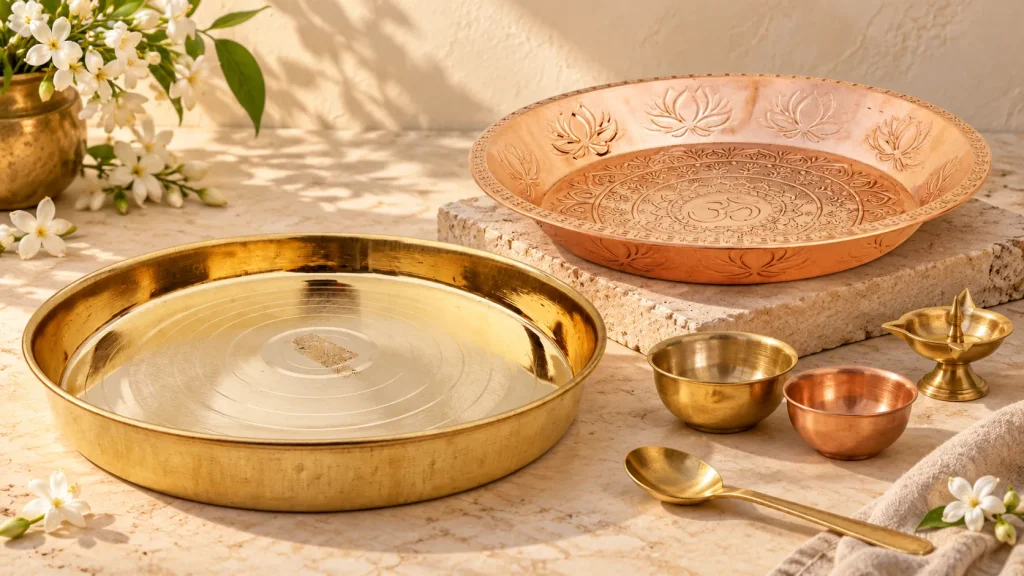
To answer “are brass plates good” fairly, it helps to separate what is genuinely useful about the metal from what is more rooted in belief and tradition. Here is what can be reasonably said about brass plates.
1. Natural Antimicrobial Properties
Copper, one of the two main components of brass, is well documented in scientific literature for its antimicrobial behaviour on surfaces. Because brass contains a significant proportion of copper, brass surfaces can share some of this bacteria-resisting quality, which is one reason brass utensils have traditionally been considered relatively hygienic for serving food, compared with materials that offer no such natural resistance.
2. Trace Mineral Contact
When food or water touches brass, especially over time, very small amounts of copper and zinc can transfer into the food. Both copper and zinc are essential trace minerals that the human body needs in small quantities for functions like immunity and metabolism. This is often cited as a reason people eat and drink from brass plates and glasses, though the actual quantity of minerals absorbed this way is minimal compared to what you get from a balanced diet, and no source in this article claims it can replace proper nutrition.
3. Excellent Heat Conduction
Brass is a good conductor of heat, which is one reason it has traditionally been used not just for plates but for cooking vessels like kadhais and tawas. For plates specifically, this means brass can retain warmth a little longer than some other materials, which some people find pleasant when eating warm Indian meals like dal-rice or khichdi.
4. Durability and Cultural Value
Brass plates, when cared for, can last for generations. They do not shatter like ceramic or glass, and they age with a patina that many households consider part of their charm rather than a flaw. Beyond function, using brass plates for festivals, poojas, or family gatherings connects a meal to a wider tradition of Indian dining culture, which is part of why brass thalis remain popular gifting items during weddings and festive seasons. If you are exploring gifting options rooted in Indian tradition, a guide to traditional Indian gifting for weddings and festivals [internal link – see note at end of document] can help you understand which brass and metal items are typically chosen and why.
5. Ayurvedic Belief in Balance
In Ayurveda, brass is referred to as “pital,” and traditional texts associate it with qualities believed to help balance the body’s doshas – Vata, Pitta, and Kapha. It is important to be clear that this is a traditional and philosophical framework rather than a claim backed by modern clinical research, and readers should treat it as part of India’s cultural and wellness heritage rather than medical fact.
The Safety Concerns: What You Actually Need to Know
This is the part that most casual articles about brass plates skip over, but it matters if you are asking whether brass plates are genuinely good for daily use.
Brass Can React With Acidic and Salty Foods
Multiple food-safety resources note that brass, like other copper-based alloys, can leach small amounts of metal when it comes into extended contact with acidic foods. This includes things like tamarind-based curries, citrus, tomato-heavy gravies, pickles, and curd-based dishes, especially if the food sits on the plate or in the vessel for a long time. This is a genuine, documented food-safety consideration, not just an old wives’ tale.
Uncoated Brass vs. Tin-Coated (Kalai) Brass
Traditionally, brass cooking vessels used for regular contact with food were given a tin coating through a process called “kalai,” which created a smoother, more inert surface between the food and the raw brass or copper underneath. Tin is widely recognised as a food-safe material for lining metal cookware. Plain, uncoated brass plates used only for dry or briefly-served food carry a lower risk than uncoated brass vessels used to cook or store acidic food for long periods.
Lead Content Is a Legitimate Concern in Some Brass Items
Some food-safety guidance points out that certain brass alloys, particularly older or non-food-grade brass, can contain trace lead used in the manufacturing process. Lead exposure through food contact is a known health risk, which is why it matters to buy brass plates specifically marketed and manufactured for food use, rather than repurposing decorative or industrial brass items as dinnerware.
Maintenance Really Matters
Brass tarnishes and can develop a green-ish patina, particularly with moisture and time. This patina, verdigris, is a copper compound that can form when copper alloys are exposed to air and moisture. Regular cleaning and polishing helps reduce the buildup of tarnish and keeps the eating surface cleaner, which is part of why traditional households cleaned brass plates with tamarind, ash, or lemon-based pastes before dishwashing liquids became common.
Brass vs Steel Plates for Health: A Practical Comparison
Since most people asking about brass plates are comparing them with the stainless steel plates found in almost every Indian home today, here is a straightforward, honest comparison.
| Factor | Brass Plates | Stainless Steel Plates |
| Reaction with acidic food | Can react over time; not ideal for prolonged contact | Generally non-reactive with most foods |
| Maintenance | Needs regular polishing to prevent tarnish | Low maintenance; resists corrosion |
| Heat retention | Retains warmth well | Retains warmth moderately |
| Traditional/Ayurvedic value | Associated with Ayurvedic beliefs around dosha balance | Not traditionally linked to Ayurveda |
| Everyday practicality | Better for occasional or ceremonial use | Better suited for daily, all-purpose use |
| Antimicrobial surface property | Naturally present due to copper content | Not a natural antimicrobial property |
| Weight | Heavier | Lighter, easier to handle |
| Cost | Often higher, especially for handcrafted pieces | Generally more affordable and widely available |
Neither option is universally “better.” Stainless steel remains the more practical daily-use choice for most Indian households, largely because of low maintenance and its neutral reaction with food. Brass plates shine, quite literally, when used for festive meals, religious occasions, and situations where tradition and presentation matter as much as convenience.
Is It Safe to Eat in Brass Plates Every Day?
This is probably the single most searched question around brass plates, so it deserves a direct answer. Eating occasionally from a brass plate is unlikely to pose any real health risk for most healthy adults, particularly if the food is not highly acidic and the plate is food-grade and well maintained.
Daily use is where you need to be more thoughtful. If your regular meals include a lot of curd, tamarind, tomato-based curries, or pickles, using brass every single day, especially uncoated brass, increases the chance of some metal transfer into food over time. For families who want the aesthetic and cultural experience of brass, a practical middle ground many households follow is reserving brass plates for less acidic meals, festivals, or serving pieces, while using steel for everyday, more acidic cooking.
If you are new to sourcing traditional Indian brass items and want to understand quality markers before buying, it can help to read a broader guide to identifying authentic handcrafted brass products [internal link – see note at end of document], since genuine, well-finished brass is generally a safer and more durable choice than poorly finished or unbranded pieces.
Buying Guide: What to Look for in Brass Plates
If you have decided that brass plates are a good fit for your home, here is what to check before buying.
- Food-grade labelling: Look for brass plates specifically sold and labelled for dining or food use, rather than decorative brass repurposed as a plate.
- Smooth, even finish: A good brass plate should have a smooth surface with no rough edges, pitting, or uneven texture where food particles could get trapped.
- Weight and thickness: Thicker, well-cast brass tends to be more durable and less likely to warp or dent compared to very thin, lightweight pieces.
- Source and craftsmanship: Buying from established artisans or verified handicraft sellers generally offers more consistency in alloy quality compared to unverified sellers.
- Coating, where relevant: If you plan to also cook in brass vessels (not just eat from plates), check whether the vessel has a tin lining, since this is the traditional way to make brass safer for regular contact with acidic food.
For those specifically looking for authentic brass dinnerware and traditional kitchenware sourced from Indian artisans, exploring a dedicated collection of brass kitchenware and dining essentials [internal link – see note at end of document] can be a useful starting point, since it helps you compare finish, weight, and craftsmanship across multiple pieces before deciding.
How to Care for Brass Plates
Proper care extends the life of brass plates and keeps them safer and more pleasant to eat from.
- Wash promptly after use. Do not let food, especially acidic dishes, sit on brass plates for extended periods.
- Use mild, natural cleaners. A paste of tamarind, salt, and a little water, or a mix of lemon and salt, is a traditional and gentle way to clean brass without harsh chemicals.
- Dry thoroughly. Moisture left on brass encourages tarnish and the greenish patina, so always dry plates completely before storing.
- Avoid abrasive scrubbers. Hard scouring pads can scratch the surface, creating tiny grooves where food and moisture can collect.
- Polish periodically. Occasional polishing, using a proper brass polish or a natural alternative, keeps the surface smoother and reduces long-term tarnish buildup.
- Store in a dry place. Humidity accelerates tarnishing, so a dry cupboard or wrapped storage helps maintain shine between uses.
If your interest in brass extends beyond dinnerware into home decor and gifting, you may also find it useful to look at a guide on caring for brass idols and decorative items [internal link – see note at end of document], since the general cleaning principles for brass metal are similar whether the piece is a plate, a diya, or an idol.
Frequently Asked Questions
Are brass plates good for health?
Brass plates can offer some benefits, such as trace mineral contact and natural antimicrobial surface properties from copper, but they are not a medical treatment or guaranteed health solution. They are reasonably good for occasional use with non-acidic foods, and less ideal for daily contact with acidic or salty dishes unless properly coated and maintained.
Is it safe to eat in brass plates daily?
It can be safe for many people in moderation, particularly with non-acidic meals, but daily use with acidic or salty food increases the chance of metal transfer over time. Many households use brass occasionally and steel for daily, more acidic meals as a practical balance.
What are the side effects of brass plates?
The main concern is reaction with acidic or salty foods, which can cause small amounts of copper, zinc, or in some cases lead, to transfer into food, particularly with uncoated or low-quality brass. Using food-grade brass and avoiding prolonged contact with acidic dishes reduces this risk considerably.
Are brass plates better than steel plates?
Neither is universally better. Brass offers cultural, aesthetic, and some mineral-related advantages, while stainless steel is more practical for daily use due to low maintenance and its non-reactive nature with most foods.
Can children eat from brass plates?
Many Indian families do use brass or bell-metal plates for children, but as with adults, it is sensible to avoid very acidic or salty food on brass and to ensure the plate is food-grade, smooth, and well maintained.
How do I know if my brass plate is food-safe?
Check that the plate was specifically sold as dinnerware or tableware from a reputable source, has a smooth and even finish, and shows no rough casting marks or corrosion. If you plan to cook in brass vessels regularly, look for tin-lined (kalai) options.
Final Thoughts
So, are brass plates good? Based on what is genuinely known about the metal, the answer is a reasonable yes, with conditions. Brass plates bring real cultural value, a naturally antimicrobial surface due to their copper content, and a traditional dining experience that connects Indian households to generations of history. At the same time, they are not a food-safety upgrade over stainless steel for daily, acidic Indian cooking, and they do require more care and mindful food choices.
The most balanced approach many Indian households take is simple: enjoy brass plates for festive meals, poojas, and special family occasions, choose food-grade and well-finished pieces, avoid prolonged contact with very acidic or salty food, and clean and store them properly. Used this way, brass plates remain what they have always been in Indian homes – a piece of everyday tradition worth preserving.