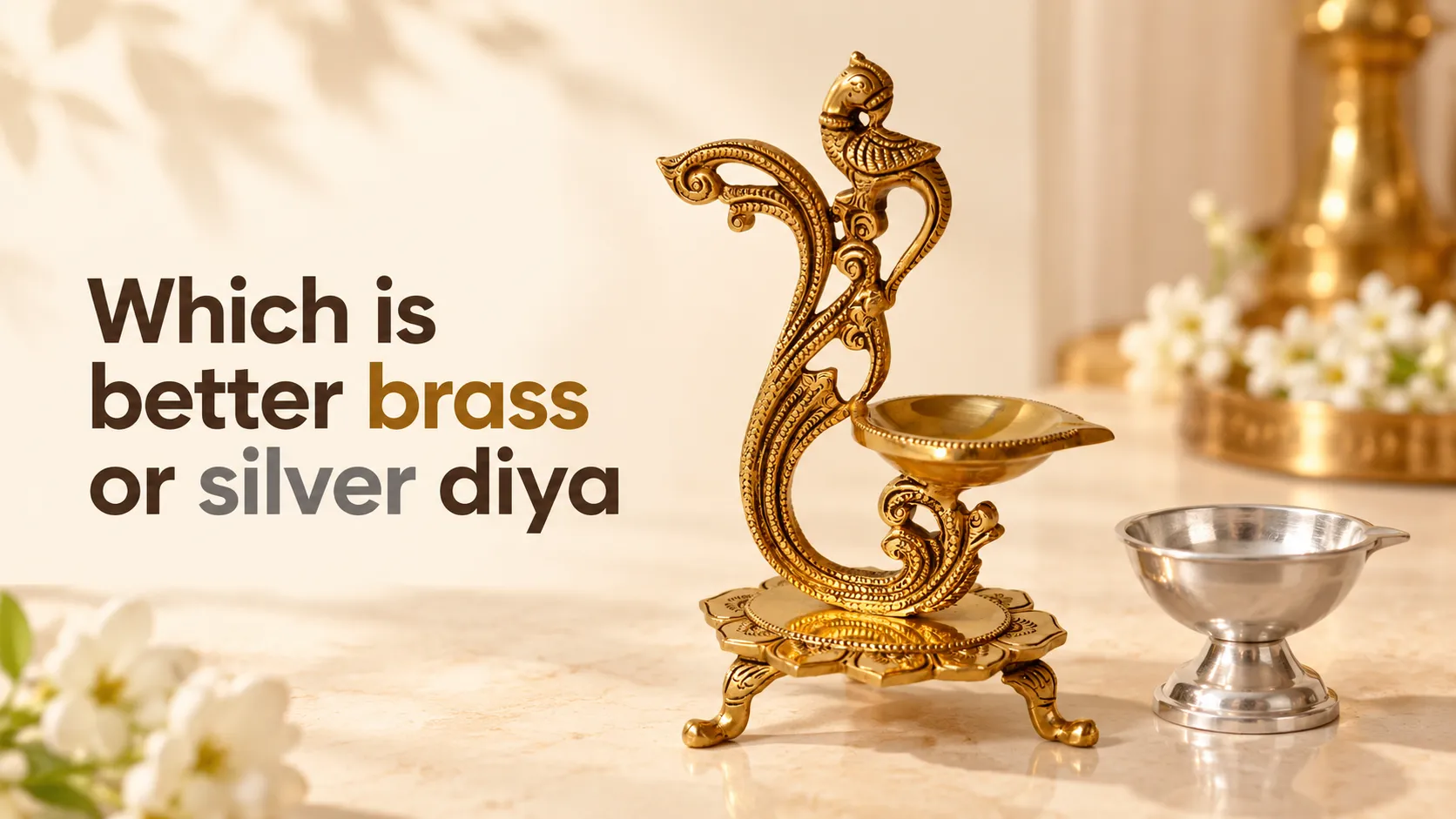
Which is better, brass or silver diya? Ask five different aunties at a Diwali gathering and you will get five confident, slightly contradictory answers. The real answer depends less on tradition alone and more on how often you actually plan to light the thing.
This guide skips the vague opinions and compares brass and silver directly, category by category, so you can make the call based on your own routine instead of someone else’s shelf.
Round 1: Durability
Brass is an alloy of copper and zinc, and Wikipedia’s entry on the diya notes that brass lamps have long been a common, sturdy choice for holding multiple wicks, in contrast to more delicate materials.
Silver, by comparison, is softer and dents more easily with daily handling. For a diya that gets picked up, moved, and lit every single day, brass simply takes more punishment before it shows any wear.
Winner: brass, by a comfortable margin.
Round 2: Maintenance
Silver tarnishes fast, especially with regular exposure to flame and oil residue, and keeping that bright shine means polishing it fairly often.
Brass also darkens over time, but far more slowly, and a quick clean with basic household ingredients brings the shine back without much effort.
Winner: brass, unless you genuinely enjoy polishing silver as a hobby.
Round 3: Cost
Silver is priced largely by weight, commonly landing somewhere around one to two dollars per gram before craftsmanship is even factored in. A modest silver diya can already cost several times more than a comparable brass one.
Brass costs a fraction of that per piece, which makes it far easier to buy multiple diyas, or replace one without much financial thought, if it ever gets damaged.
Winner: brass, unless budget genuinely is not a factor.
Round 4: Tradition and Symbolism
Both metals carry real cultural weight, so this round is closer than the others. Many households traditionally associate silver with a cooling, calming presence tied to the moon, while brass has long been the practical, everyday choice across temples and homes.
Neither belief makes one metal objectively more sacred than the other. Which one feels right often comes down to family custom more than any universal rule.
Winner: tie, genuinely.
Round 5: Everyday Practicality
This is where the decision usually lands. If a diya sits on an altar and gets lit twice a day, every day, brass handles that routine without complaint. If a diya comes out for special occasions and gets treated more like jewelry than a tool, silver’s higher-maintenance shine has room to shine, literally.
BharatSeLo’s Diya Deepak collection focuses specifically on the brass side of that equation, built for regular daily use rather than occasional display.
So, Which Is Better: Brass or Silver Diya?
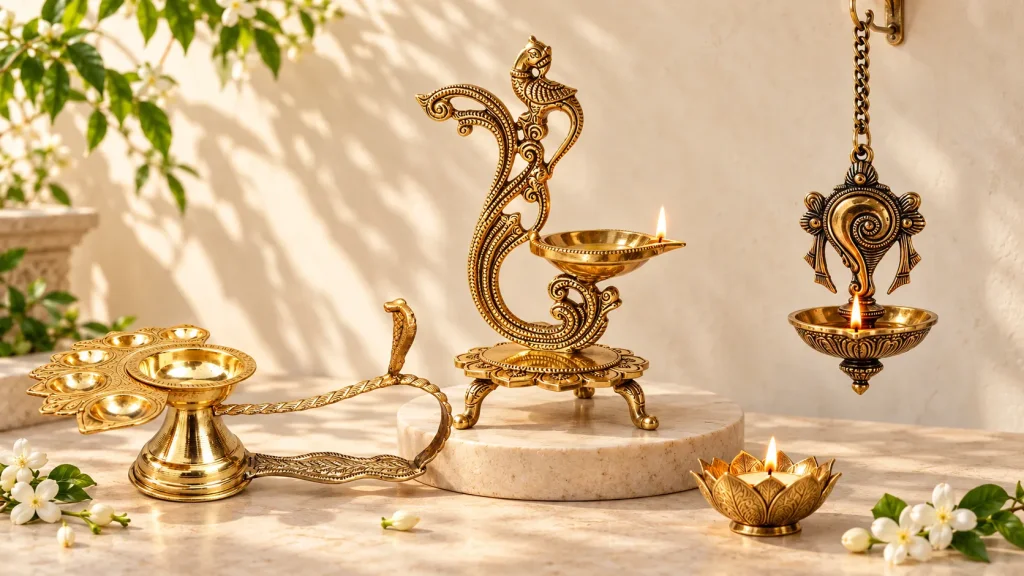
For daily worship, brass wins on durability, upkeep, and cost, three out of five rounds, with one tie. Silver remains a beautiful choice for special occasions, heirloom gifting, or households that genuinely enjoy the extra care it demands.
For daily aarti specifically, BharatSeLo’s Ganga Arti collection includes multi-wick brass designs built for exactly that kind of routine use.
A Smaller Option for Testing the Waters
If you are not ready to commit to a full-size piece, a small hand or arti diya lets you experience daily brass use without a big upfront decision.
BharatSeLo’s hand and arti diya collection covers that smaller, lower-commitment size range.
Caring for Whichever One You Choose
Brass and silver both benefit from occasional cleaning once the surface darkens. Skip harsh chemical polishes on either metal, since gentler methods usually work just as well.
This guide on how to clean brass idols at home covers simple methods that keep a brass diya looking sharp between uses.
Buying a Brass Diya From BharatSeLo
BharatSeLo works with brass artisans who cast and finish each piece by hand, so a brass diya from the collection carries genuine craftsmanship rather than a mass-produced feel.
Final Thoughts
Which is better, brass or silver diya, really comes down to how often you plan to light it. For daily routine use, brass is the practical winner. For special occasions and heirloom pieces, silver still earns its reputation.
Frequently Asked Questions
1. Which is better, brass or silver diya, for daily pooja?
Brass is generally the better choice for daily use, since it resists dents and handles repeated handling better than softer silver.
2. Does silver tarnish faster than brass?
Yes, silver typically tarnishes faster and needs more frequent polishing to maintain its shine compared to brass.
3. Is a silver diya a good investment?
Silver diyas often hold sentimental and material value as heirloom pieces, though they cost significantly more upfront than brass.
4. Why is brass more affordable than silver?
Silver is priced largely by weight and carries a much higher raw material cost, while brass is far less expensive per piece.
5. Is silver considered more sacred than brass?
Not objectively. Both metals carry real traditional significance, and which one feels more appropriate often comes down to family custom.
6. Can I use a brass diya every single day?
Yes, brass is well suited to daily use, since it resists heat and handling far better than delicate or precious metals.
7. How do I clean a tarnished silver or brass diya?
A gentle polish or a simple lemon-and-salt scrub for brass, followed by a rinse and dry cloth, works well for both metals without harsh chemicals.
8. Is a heavier diya always better, regardless of metal?
Generally yes, since more material usually means a sturdier, longer-lasting piece, whether it is brass or silver.
9. Can I mix brass and silver diyas on the same altar?
Yes, many households use both, reserving silver for special occasions and brass for regular daily worship.
10. What should I check before choosing between brass and silver?
Consider how often you will light it, your budget, and how much maintenance you are willing to do, then match the metal to that routine.