If you shop traditional brass hanging diya for pooja room use, you are not looking for a festival prop that gets packed away in a box come November. You want something that hangs above the altar year-round and earns its spot through daily use, not seasonal decoration.
This guide narrows down what actually matters when choosing one for a real, working pooja room rather than a one-time festive display.
Why ‘Traditional’ Design Still Wins in a Pooja Room
Brass lamps with multiple wicks have been the standard fixture for Hindu worship for generations, and Wikipedia’s entry on the diya notes that these traditional metal lamps remain common precisely because they hold up to repeated daily lighting far better than more delicate alternatives.
A pooja room is not the place to experiment with a trendy, minimalist redesign of a lamp. Traditional shapes exist because they work, both functionally and visually, against the rest of a classic altar setup.
Traditional Styles Worth Knowing Before You Shop
Kuthu Vilakku Style
Originating from South Indian temple design, this tall, tiered hanging lamp style is instantly recognizable and pairs naturally with a traditional pooja room aesthetic.
Bell and Chain Detailing
Small brass bells strung along the chain add a soft chime when the lamp is lit or moved, a small sensory detail that plain, undecorated chains skip entirely.
Lotus and Floral Motifs
Carved petal detailing around the base or crown of the lamp is one of the most common traditional touches, echoing motifs found across Hindu temple architecture generally.
BharatSeLo’s hanging diya collection includes several of these traditional styles, handcrafted rather than machine-stamped.
Sizing for Daily Pooja Room Use
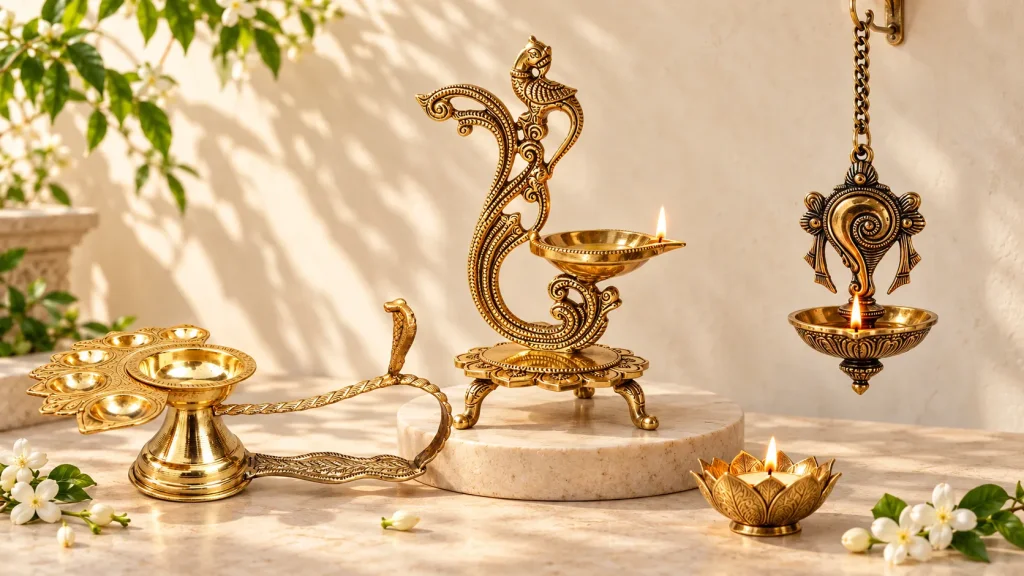
A compact hanging diya, roughly 6 to 10 inches including the chain, suits most home altars without overwhelming the space. Larger, more elaborate multi-tier designs work better in bigger prayer rooms with higher ceilings or more open wall space.
Since this piece gets lit regularly rather than once a year, weight and casting thickness matter more here than they would for a purely decorative Diwali piece. Heavier, thicker brass simply holds up better to that routine.
If you want a flat wall-mounted option instead of a chain-hung one, BharatSeLo’s wall diya collection covers that alternative mounting style.
Daily Use Changes What You Should Prioritize
For a seasonal decoration, looks alone might be enough. For a pooja room fixture that gets lit morning and evening, prioritize solid brass over plated finishes, secure chain links over decorative but flimsy ones, and a stable hook or bracket over a purely cosmetic hanging point.
You can compare this style against other everyday options in BharatSeLo’s Diya Deepak category before deciding.
Caring for a Traditional Brass Hanging Diya
Brass darkens naturally with regular flame use, and that tarnish wipes off with basic household ingredients rather than anything specialized.
This guide on how to clean brass idols at home covers simple methods that keep a hanging diya looking sharp between cleanings.
Buying a Traditional Brass Hanging Diya From BharatSeLo
BharatSeLo works with brass artisans who cast and finish each piece by hand, so when you shop traditional brass hanging diya for pooja room use here, you get genuine detailing rather than a mass-produced import.
You can read more about the artisans behind each piece on the About BharatSeLo page.
Final Thoughts
When you shop traditional brass hanging diya for pooja room use, prioritize daily durability over festive flair. A well-made piece earns its place above the altar every single day, not just during the one week a year everyone remembers to decorate.
Frequently Asked Questions
1. What size traditional brass hanging diya suits a home pooja room?
A compact 6 to 10 inch piece, including the chain, generally suits most home altars without overwhelming the space.
2. What is a Kuthu Vilakku style hanging diya?
It is a tall, tiered hanging lamp style originating from South Indian temple design, popular for traditional pooja room setups.
3. Is a traditional brass hanging diya safe for daily use?
Yes, as long as it hangs securely on a stable hook or bracket, well clear of curtains or other flammable material nearby.
4. Why do some hanging diyas have small bells on the chain?
Bells add a soft chime as the lamp moves or gets lit, a traditional decorative detail common on temple-style designs.
5. Should I prioritize looks or durability for a daily pooja room diya?
Durability matters more here than for a seasonal decoration, since a pooja room piece gets lit regularly rather than once a year.
6. How do I clean a traditional brass hanging diya?
A simple lemon-and-salt scrub, followed by a rinse and a dry soft cloth, removes tarnish without harsh chemicals.
7. Is solid brass better than plated brass for daily use?
Yes, solid brass holds up better to repeated flame exposure and handling than a piece that is only plated over a cheaper base metal.
8. What is the difference between a hanging diya and a wall diya?
A hanging diya suspends from a chain or hook, while a wall diya mounts flat against the wall using a backplate or bracket.
9. Can I use a traditional hanging diya outside of festival season?
Yes, many households keep a traditional hanging diya mounted and lit year-round as a regular fixture, not just during festivals.
10. What should I check before I shop traditional brass hanging diya for pooja room use?
Confirm the material is solid brass, check the chain and hook strength, and look for even detailing as a sign of handcrafted quality.