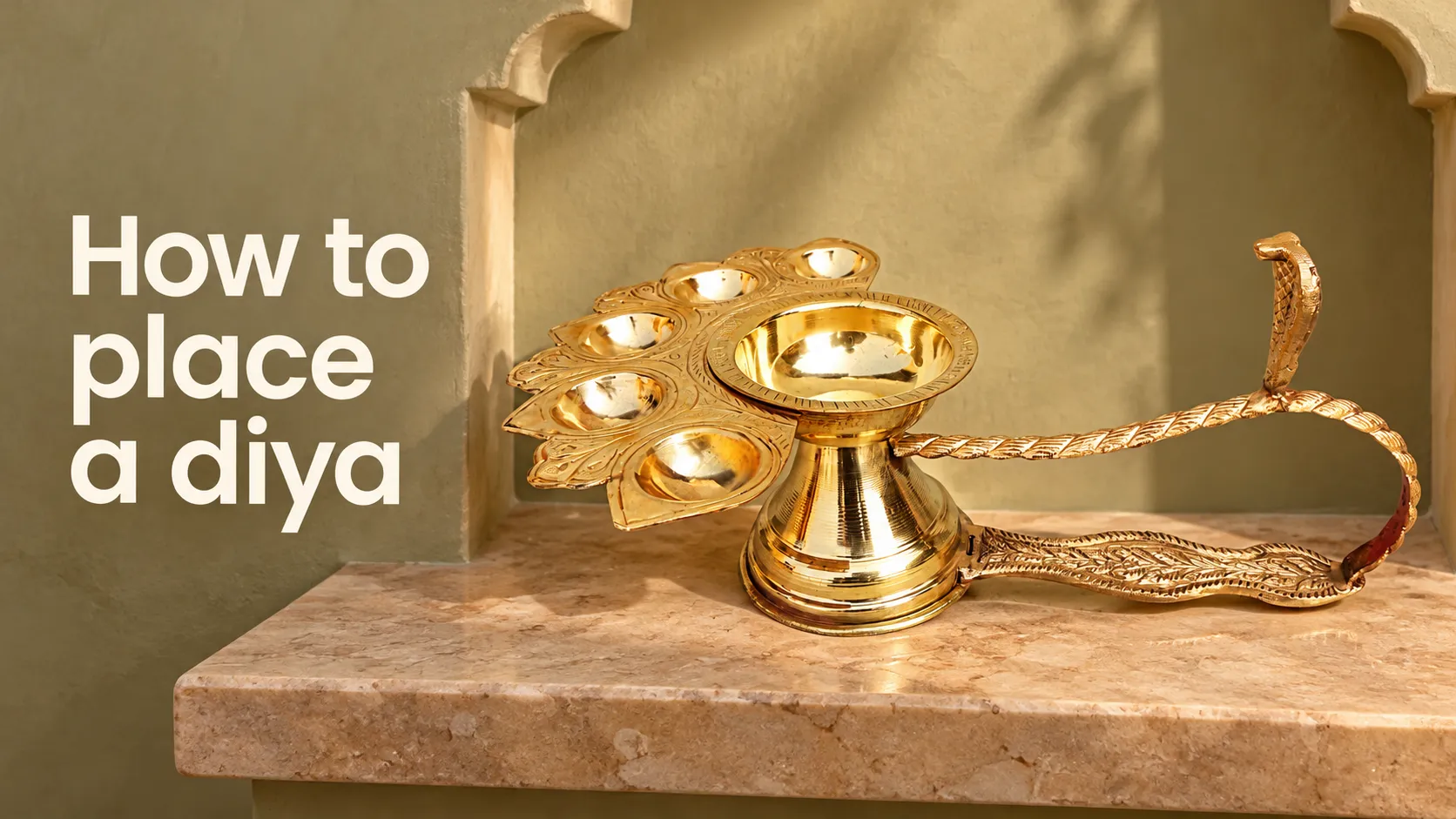
Lighting a diya is the easy part. Knowing how to place a diya correctly is where most people miss the detail. According to Vastu Shastra, the direction and location of a diya directly affect what energy it brings into your home. A diya placed in the wrong spot does not harm you – but one placed in the right spot actively works in your favour. Here is exactly what the tradition says, with no guesswork added.
Why Diya Placement Actually Matters
Most people light a diya and set it down wherever there is space. But Vastu Shastra – the ancient Indian system of architecture and energy alignment – is very specific about this. According to Vastu, the oil in a diya represents negativity in the mind, and the wick symbolizes the Atma (soul). Lighting it burns away that negativity and creates space for positive energy to enter.
Where the diya sits determines what kind of positive energy it invites. North brings wealth. East brings health. Southeast governs the fire element. Place it in the south and Vastu says it can actively drain the home’s prosperity. This is diya placement logic that has practical traditional grounding – not superstition.
Which Direction Should a Diya Face at Home?
Here is the complete Vastu direction guide for diya placement at home – each direction serves a specific purpose:
- North – For wealth and prosperity: Place the diya facing north to invite Kubera’s energy – the direction associated with the god of wealth. This is why the Kubera diya specifically faces north during Dhanteras puja.
- East – For health and family wellbeing: East represents the rising sun and incoming positive energy. A diya facing east during morning aarti aligns with sunrise energy and promotes health across the household.
- Northeast (Ishan Kona) – For overall positivity: The northeast corner is the most sacred direction in Vastu. This is the ideal location for the home mandir itself, with the diya placed inside the southeast corner of that mandir space.
- Southeast – For fire element balance: According to Vastu, diyas and agni kunds belong in the southeast direction of the mandir or pooja space. Southeast governs the fire element (Agni) and keeps the energy of flame in its correct energetic position.
- South – Avoid: Placing a diya facing south is considered inauspicious according to Vastu Shastra. South is associated with Yama, the god of death. The one exception is the Yama Deepak lit on Dhanteras – that specific lamp faces south intentionally as a ritual offering.
Quick reference: For daily pooja – east. For wealth – north. For the mandir diya position – southeast corner of the mandir space. Never south for everyday use.
Where in the Home Should You Place a Diya?
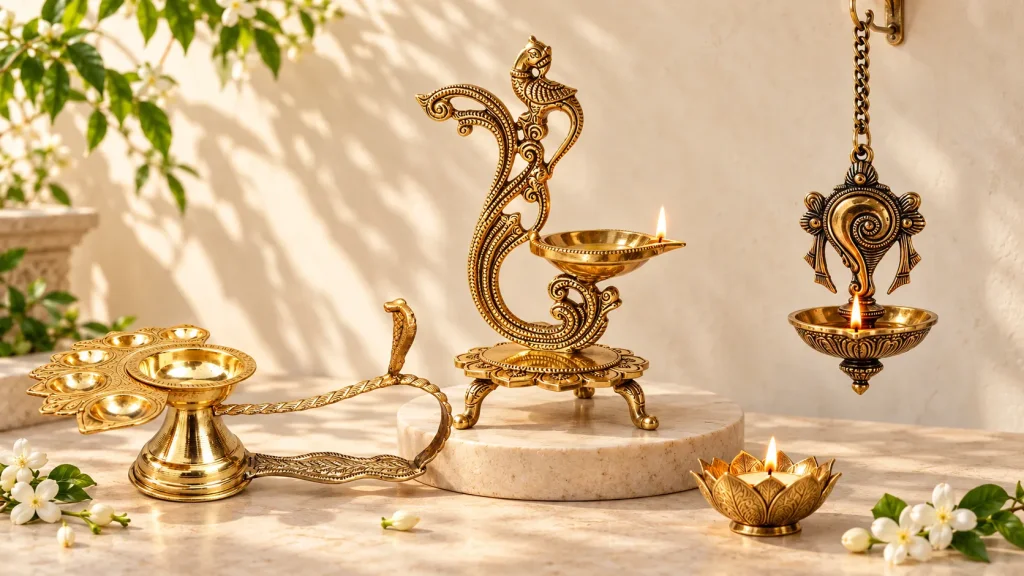
Direction handles the facing. Location handles where in the home. Here is where diya placement works best according to Vastu tradition:
- Home mandir: Primary placement. The diya sits in the southeast corner of the mandir shelf, with the flame facing east or north depending on the puja intention. Keep it elevated on a stable surface – never directly on the floor.
- Main entrance: A diya at the main door during evening aarti welcomes positive energy and Goddess Lakshmi into the home. Face the flame inward – toward the home, not outward.
- Near the Tulsi plant: Vastu associates the Tulsi (holy basil) plant with Goddess Lakshmi. Placing a diya near it during evening worship amplifies its auspicious effect.
- Near a water container: A diya placed near a pot of water or copper kalash is believed to banish negativity and protect against illness. A traditional pairing used during festivals.
BharatSeLo’s Lota/Kalash collection pairs perfectly with a brass table diya for this specific water-and-flame combination placement.
What Should You Place a Diya On?
The surface matters too. A diya should sit on a stable, heat-resistant base:
- Brass or copper puja thali: The most traditional and Vastu-correct base. It catches any oil drips and keeps the sacred space clean. Browse BharatSeLo’s Brass Puja Thali Sets for matching thali and diya combinations.
- Marble or stone surface: Heat-resistant and easy to clean. Works well for a fixed mandir shelf.
- Wooden chowki (elevated platform): Traditional and Vastu-appropriate. Keeps the diya above floor level, which is important – never place a diya directly on the ground during daily worship.
For the best diya placement at home, pair a genuine brass diya from BharatSeLo’s Diya Deepak collection with a matching puja thali for a complete, Vastu-aligned setup.
Get the Right Brass Diya for Your Home
Placement is only as effective as the diya you use. A genuine handcrafted brass diya holds ritual energy better than a machine-pressed replica. BharatSeLo offers 100% Indian-made brass diyas with free delivery above Rs.999 and 30-day returns. Browse their full Puja Item collection and set up your home mandir the right way.
Frequently Asked Questions
How to Place a Diya – Common Questions Answered
Q1. How to place a diya at home as per Vastu Shastra?
Place the diya in the southeast corner of your mandir or pooja space – southeast governs the fire element (Agni) in Vastu. Face the flame east for health or north for wealth during daily aarti. Avoid facing south during everyday worship.
Q2. Which direction should a diya face for wealth?
Face the diya north for wealth. North is the direction associated with Lord Kubera – the treasurer of the gods in Hindu mythology. This is also why the Kubera deepak specifically faces north during Dhanteras puja.
Q3. Where should I place a diya in the mandir?
Place the diya in the southeast corner of the mandir shelf. Southeast represents the fire element (Agni) in Vastu Shastra. Keep it elevated on a stable surface – a brass puja thali or wooden chowki works best. Never place a diya directly on the floor.
Q4. Can I place a diya at the main entrance?
Yes. A diya at the main entrance during evening aarti is auspicious and welcomes positive energy into the home. Face the flame inward – toward the interior of the home, not outward. This directs Lakshmi’s energy into the household rather than away from it.
Q5. Should a diya face east or north?
Both are auspicious – they serve different purposes. East is for health and family wellbeing, aligned with sunrise energy. North is for wealth, aligned with Kubera’s directional energy. For morning aarti, east is traditional. For wealth-focused puja, north is the choice.
Q6. Why should I avoid placing a diya facing south?
According to Vastu Shastra, south is the direction of Yama – the god of death. Placing a diya facing south during daily worship can drain the home’s prosperity. The one exception is the Yama Deepak on Dhanteras, which intentionally faces south as a specific protective ritual.
Q7. What surface should I place my diya on?
A brass or copper puja thali is the most traditional and Vastu-correct surface. Marble, stone, or a wooden chowki also work well. The diya should always sit elevated above floor level. BharatSeLo’s Brass Puja Thali Sets are ideal paired with their brass diyas.
Q8. Is it good to place a diya near the Tulsi plant?
Yes – very auspicious. Vastu associates the Tulsi (holy basil) plant with Goddess Lakshmi. Lighting a brass diya near the Tulsi plant during evening worship amplifies the lamp’s spiritual effect and is considered a traditional daily practice in many Indian households.
Q9. Where can I buy a genuine brass diya for home placement?
BharatSeLo’s Diya Deepak collection offers handcrafted 100% brass diyas made in India by skilled artisans. Free delivery above Rs.999, 30-day returns, and COD across India.
Q10. How often should I light a diya at home as per tradition?
Twice daily – morning and evening – is the traditional practice for daily home puja. Morning aarti aligns with sunrise energy; evening aarti at sunset is associated with welcoming Lakshmi. An akhand diya can maintain a continuous flame between the two aarti times.