Moradabad, a city in western Uttar Pradesh, is known as the Brass City of India, or Peetal Nagri, for its centuries-old metal craft. Generations of artisans here cast, engrave and polish brass, copper and bronze into everything from diyas and idols to export-quality decor, and the craft is recognised under the Government of India’s ODOP initiative.
If you own a brass diya, idol or urli bought anywhere in India, there is a fair chance it began its life in a Moradabad workshop. This city of under a million artisans, traders and exporters supplies homes, temples and stores across India and ships metalware around the world. Here is the story of Moradabad brass handicrafts: how the craft started, how a piece is actually made, and how to buy the genuine article.
Why Moradabad Is Called the Brass City
Moradabad sits on the banks of the Ramganga in western Uttar Pradesh, about 160 kilometres from Delhi. Its association with brassware is so complete that “Peetal Nagri”, literally Brass City, is used almost interchangeably with the city’s name.
The scale is what sets it apart. Metal craft here is not a cottage curiosity but the backbone of the local economy, with thousands of workshops and exporting units. The Uttar Pradesh ODOP portal, which documents the state’s One District One Product scheme, recognises Moradabad’s metal craft as the district’s signature product and notes its GI-tagged status.
A Short History of the Craft
According to the Office of the Development Commissioner (Handicrafts), Moradabad’s metal craft tradition took root in the 17th century under Mughal patronage, when Kashmiri artisans settled in the city and brought their metalworking skills with them.
By the 19th century, Moradabad brass and copper ware was being exported to Europe, and the city’s craftsmen had adapted their designs for markets far beyond India. That export instinct never left. Today the city ships everything from traditional pooja items to contemporary home decor, and its artisans move comfortably between centuries-old motifs and modern minimalism.
How a Moradabad Brass Piece Is Made
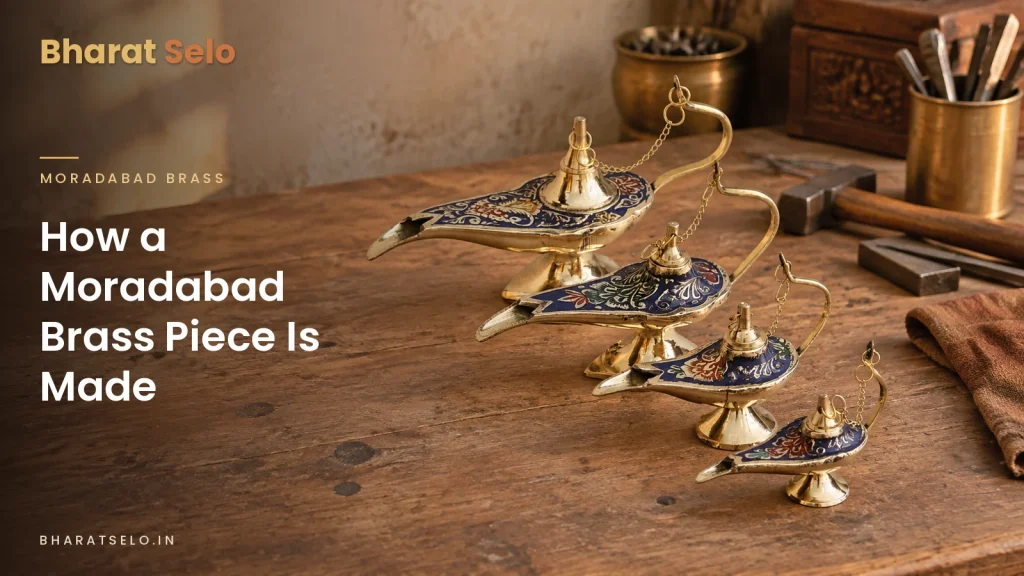
Watching a brass item come to life explains why no two handcrafted pieces are exactly alike. The exact steps vary by workshop and by product, and much of the skill sits with individual artisan families rather than any formal manual, but the broad chain looks like this.
Casting. Brass, an alloy of copper and zinc, is melted and poured into moulds. Traditional sand-casting, using patterns of wax or wood, is still common for idols and decorative pieces.
Shaping and joining. Cast pieces are cleaned of excess metal, and multi-part items are welded or joined by hand.
Engraving. This is Moradabad’s signature. Artisans cut fine patterns into the surface with chisels, a skill passed down through families and learned over years, not weeks.
Polishing and finishing. Buffing brings up the shine, and many pieces receive antique, coloured or lacquer finishes that protect the surface and add character. From raw alloy to finished showpiece, a single piece can pass through several pairs of hands over days of work.
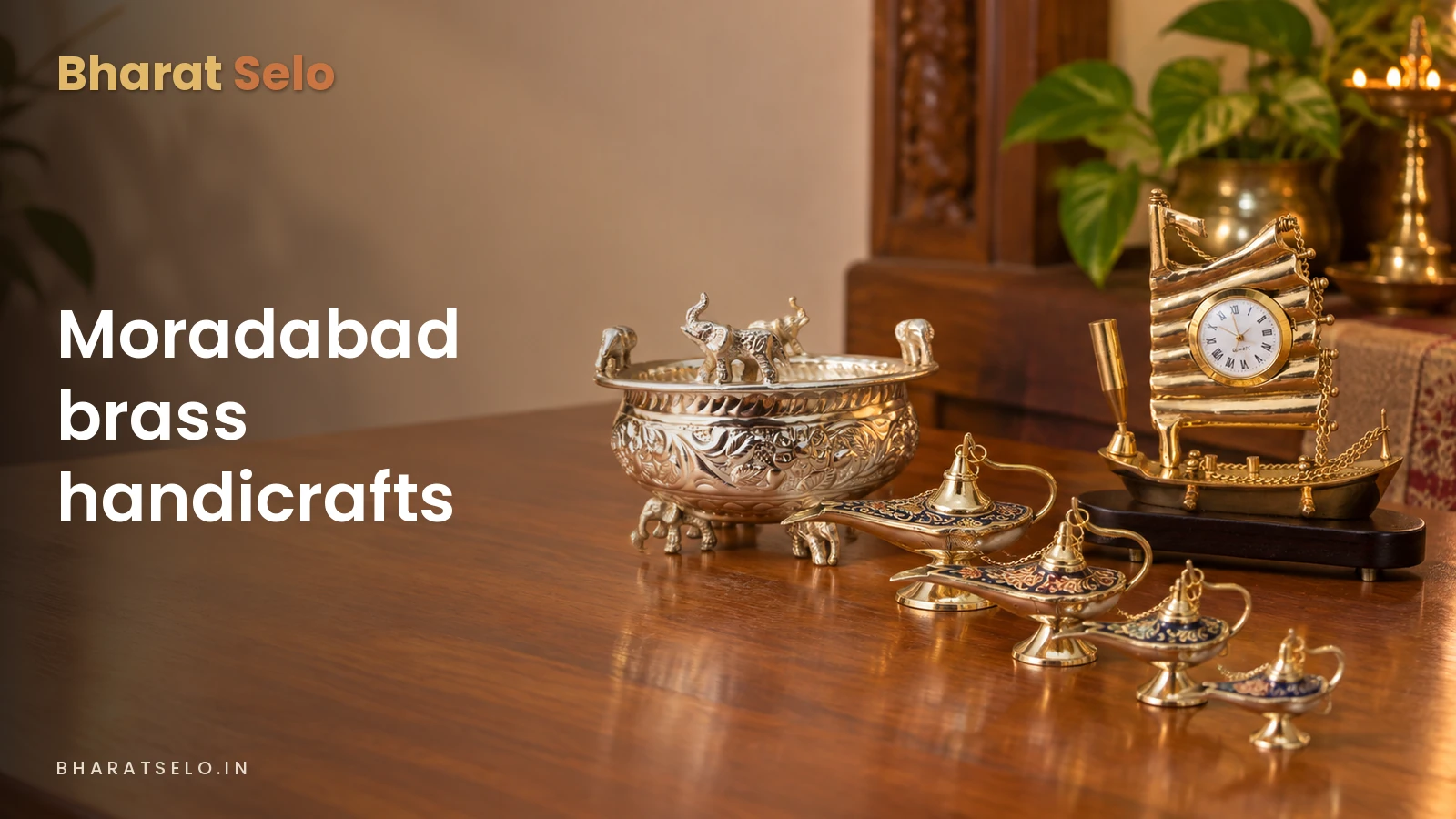
The result of this chain is the kind of craftsmanship you see in pieces like a hand-finished brass elephant urli or an engraved brass aladdin chirag showpiece.
What Moradabad Makes
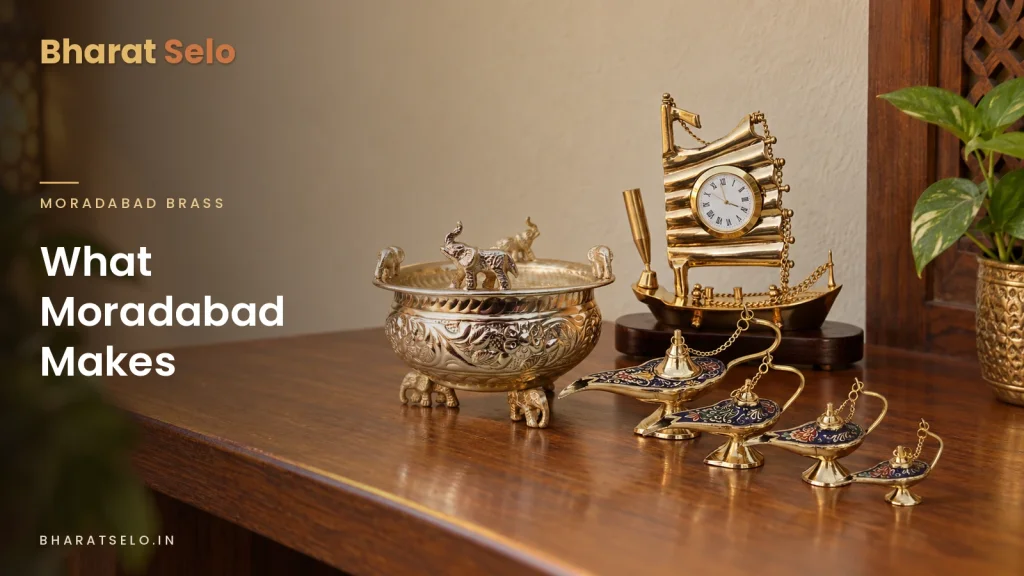
The range is wider than most buyers realise:
- Pooja and ritual items: diyas, idols, thalis, kalash and bells. Our guide to the best brass idols in Moradabad shows the variety in this category alone.
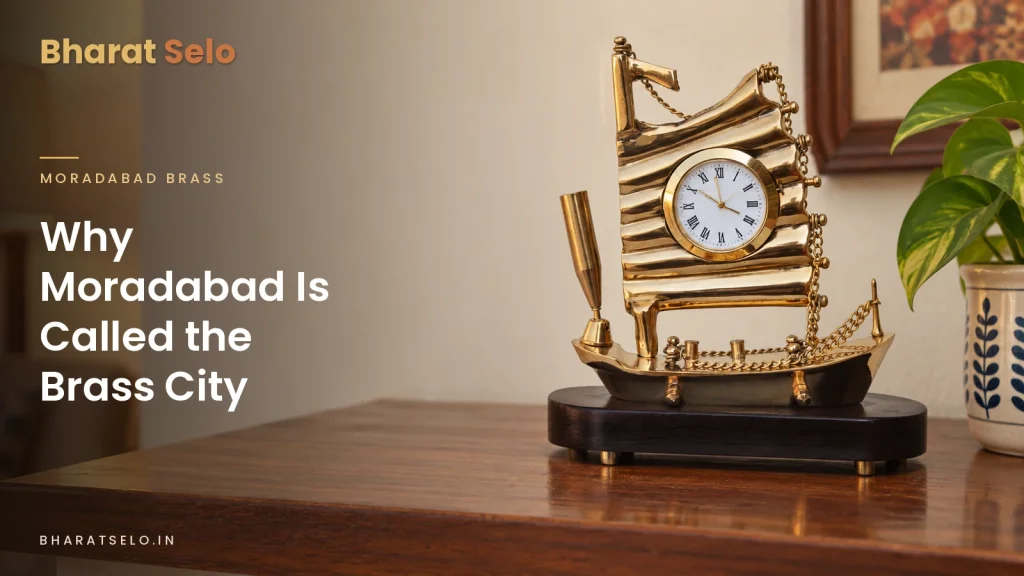
- Home decor: urlis, vases, candle stands, wall art and showpieces like the brass and wood ship clock.
- Tableware: thalis, bowls, jugs and glasses in brass, copper and kansa.
- Export decor: lanterns, trays and furniture accents designed for global markets.
- Festive gifting: the corporate and wedding gifting seasons run largely on Moradabad’s output.
The People Behind the Metal
Apprenticeship here is informal but rigorous. A young engraver may spend years on basic borders before being trusted with a hero piece, which is why experienced hands are prized across the cluster.
Behind every polished piece is a chain of specialists: the moulder, the caster, the engraver, the polisher, often working in small family-run units. Many artisans inherit the trade, and workshops cluster in mohallas where the sound of hammering is simply the neighbourhood soundtrack.
Buying genuine handcrafted metalware keeps this ecosystem alive. Every authentic piece purchased from a craft cluster supports skills that machines cannot replicate and families that have practised them for generations.
How to Buy Genuine Moradabad Brassware
Whether you visit the city or shop online, a few habits protect you:
- Ask what the item is made of. “Solid brass” or “pure copper” is an answer. “Metal” is not.
- Use the magnet test. Brass and copper are not magnetic, so strong attraction points to a ferromagnetic core such as steel beneath the finish.
- Expect slight irregularities. Hand-engraving and casting leave tiny variations. Machine-perfect surfaces usually mean machine-made.
- Check seller roots. Sellers connected to Moradabad’s craft community describe their sourcing openly and show real product photography.
- Compare weights. Solid metal is heavy. If a large piece feels light, ask why.
For care once your piece arrives, our guide on how to clean brass idols at home keeps Moradabad shine intact for years.
If you are building a full pooja collection, the brass puja thali set guide helps.
Moradabad Beyond Brass
Brass built the city’s name, but its workshops now cast and shape far more: copper bottles and lotas, kansa dinnerware, aluminium decor, iron lanterns and mixed-material pieces with wood and glass. The same artisan skills adapt across metals, which is why buyers increasingly source entire home collections from the cluster.
This range also explains the city’s resilience. When global tastes shift from ornate to minimal, Moradabad’s workshops shift with them, keeping traditional techniques alive inside contemporary designs.
The Craft’s Place in Modern India
Moradabad’s metal craft sits at an interesting crossroads. On one side, machine-made imports compete on price. On the other, a growing appreciation for handmade, sustainable and genuinely Indian products pulls buyers back toward craft clusters.
Government initiatives like ODOP and the GI recognition of the district’s metal craft aim to protect exactly this: the livelihood of artisan families and the authenticity of the Peetal Nagri name. Every genuine purchase, however small, is a vote for the craft’s next century.
Frequently Asked Questions
Why is Moradabad famous for brass?
Its metal craft dates to the Mughal era, and over centuries the city grew into India’s largest brassware hub, exporting worldwide. The craft is recognised under the government’s ODOP programme.
What is Peetal Nagri?
The Hindi nickname for Moradabad, meaning Brass City.
Is Moradabad brassware expensive?
The range is wide. Small diyas are very affordable, while large engraved showpieces command premium prices for the labour involved.
Can tourists visit workshops in Moradabad?
The city has many metal markets and export houses. Some units welcome visitors; it is best to arrange visits through local dealers.
How do I know if an item is really from Moradabad?
Ask the seller directly and check for the hallmarks of the cluster’s work: hand-engraving, solid weight and traditional motifs.
Final Thoughts
Moradabad brass handicrafts are not just products; they are a 400-year conversation between fire, metal and human hands. The next time a brass diya catches the light in your home, there is a good chance you are looking at a small piece of the Brass City itself.