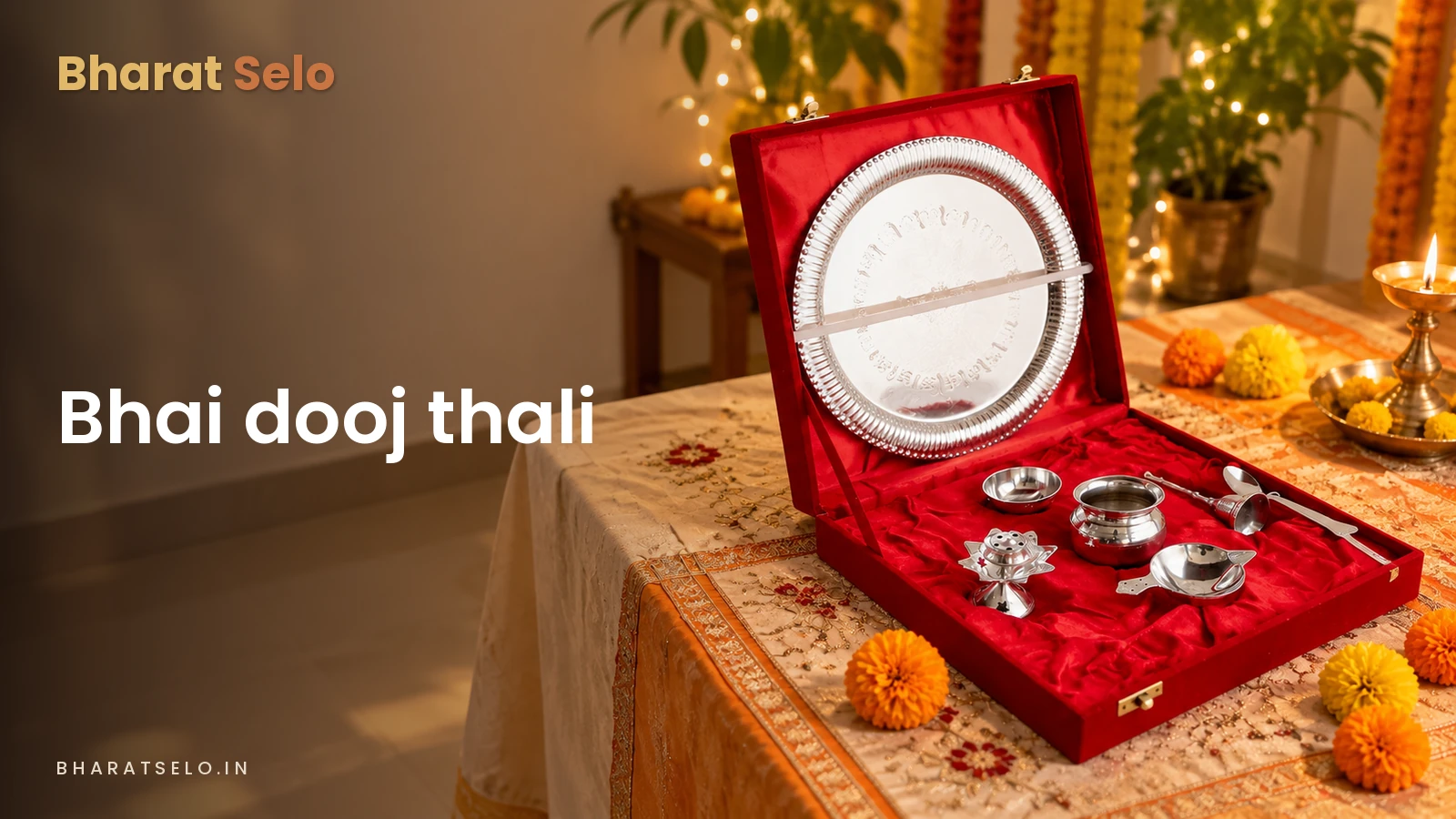
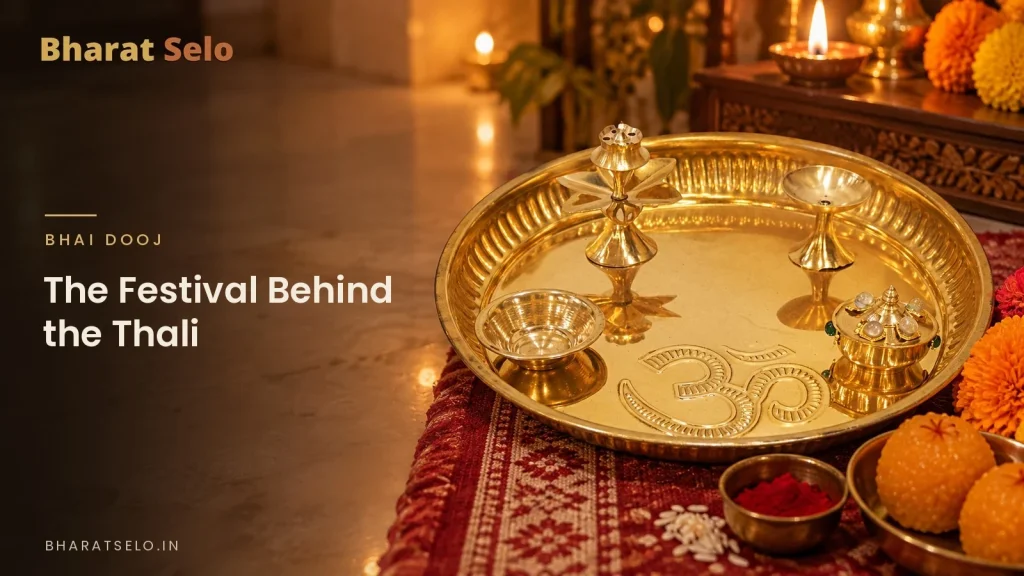
A Bhai Dooj thali holds roli or kumkum and rice for the tilak, a lit diya, sweets, moli thread, a coconut and a little water. The sister applies a tilak on her brother’s forehead, performs his aarti and offers sweets, praying for his long and happy life.
Two days after Diwali, when the diyas have just been cleared away, Indian homes light up once more for brothers and sisters. Bhai Dooj is the festival where a sister prays for her brother’s wellbeing, and the whole ceremony revolves around one small, lovingly arranged thali.
Here is what goes on it, how the ritual flows, and a few ways to make this year’s thali feel special. The Bhai Dooj 2026 date is Wednesday, 11 November, with the tilak muhurat in the afternoon; do confirm the exact time for your city on your local panchang, as timings vary by location.
The Festival Behind the Thali
Bhai Dooj is known by many names. In Maharashtra it is Bhau Beej, in Bengal Bhai Phota, and in the South it is often linked to Yama Dwitiya, after the story of Yama visiting his sister Yamuna. Whatever the name, the heart of the day is the same: a sister applies tilak to her brother, and the brother gives blessings and gifts in return.
The traditions and stories differ from region to region, and every family adds its own flavour. The thali, though, stays remarkably constant.
What Goes on a Bhai Dooj Thali
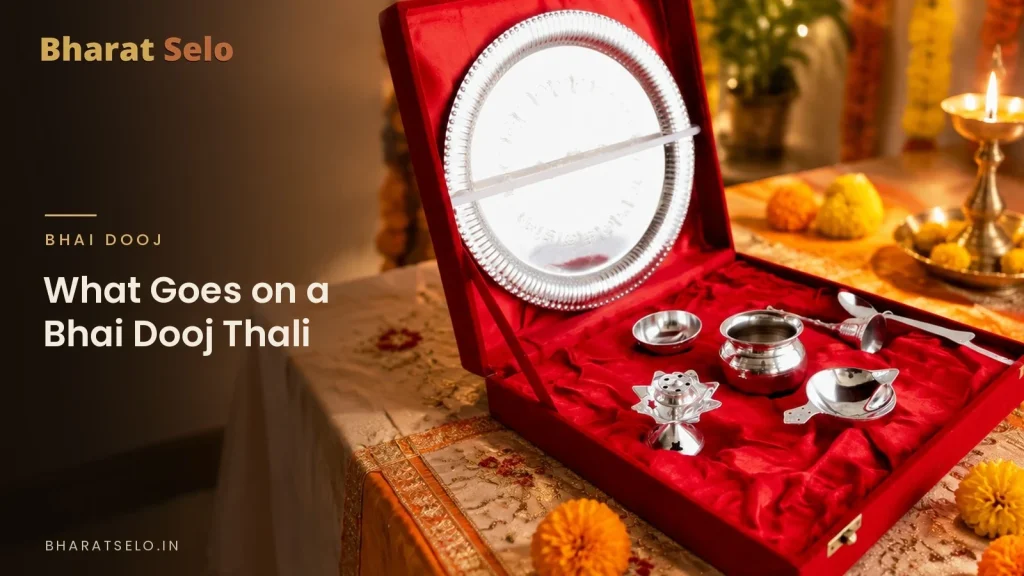
The Bhai Dooj thali is small but complete. Here are the Bhai Dooj thali items most families arrange on it.
Roli or kumkum in a small dibbi, for the tilak. Many sisters mix the roli with a drop of water or ghee into a soft paste just before the ceremony.
Chawal, plain rice grains, which are pressed onto the tilak as akshat, a mark of blessing.
A diya, lit during the aarti. A small brass diya is traditional and sits safely on a metal thali; if you are picking one for the festival season, our guide to which diya is best for Diwali walks through the options.
Sweets, usually the brother’s favourite. Laddoo, barfi and peda are classics, and many sisters now add a piece of chocolate as well.
Moli or kalava, the red-yellow sacred thread, which some sisters tie on the brother’s wrist.
A coconut and a few betel nuts, symbols of auspiciousness, and a small lota or glass of water used in the ritual in many homes.
Some families add a few flower petals and a gift envelope on the thali itself, so everything for the ceremony is in one place. If young children are doing the tilak for the first time, keep the items pre-portioned in small bowls they can reach, and let an older sibling or parent guide the hand. The first tilak a little sister applies to her baby brother is usually crooked, always photographed, and never forgotten.
How to Arrange and Use the Thali
Keep the arrangement practical, because you will lift and carry the thali during the ceremony. Place the roli dibbi and the rice at the front, where your hand reaches them first. Set the sweets to one side and the diya where it stands steady and away from hanging fabric or hair.
When the brother arrives and sits down, the sister first applies the Bhai Dooj tilak at the centre of his forehead and presses a few rice grains onto it. She then circles the thali in front of him in a gentle aarti, the lit diya tracing slow rounds. After the aarti, she offers him a sweet from the thali, and the brother, in turn, gives her his gift and blessings.
In many families, the brothers then eat together at the sister’s home, and the meal is as much a part of the day as the ritual. If the brother lives far away, sisters often send the thali items and gifts ahead and perform the Bhai Dooj tilak over a video call. The sentiment carries across any distance. Some sisters who live abroad courier the sweets a week early and keep only the roli, rice and diya for the call itself, since those three are the heart of the ceremony.
Making the Thali Feel Personal
The ritual items are fixed by tradition, but the small choices are yours, and they are what a brother remembers. Put his favourite sweet on the thali, even if it is not the classic laddoo. Tuck a short handwritten note under the coconut. Some sisters add a small photo from childhood beside the diya, and there is rarely a dry eye when they do.
If your brother is particular about his Bhai Dooj gifts, place the wrapped present on the thali itself and let the aarti circle it too. These touches cost nothing and turn a correct thali into his thali.
Regional Touches on the Thali
The core items stay the same across India, but each region adds something of its own. In Bengal, where the festival is Bhai Phota, sisters apply the tilak of sandalwood paste and ghee, and the ceremony often includes a fast until the phota is given. In Maharashtra, sisters first draw a square on the floor for the brother to sit in during Bhau Beej, and basundi or shrikhand often finds its way onto the thali.
In Nepal, where the day is Bhai Tika, the tilak becomes a grand seven-coloured stripe across the forehead, and the thali carries garlands of marigold and a special long-keeping sweet called sel roti. Ask the elders in your family what your own tradition includes. Those small inherited details are what make the thali yours.
Choosing the Thali Itself
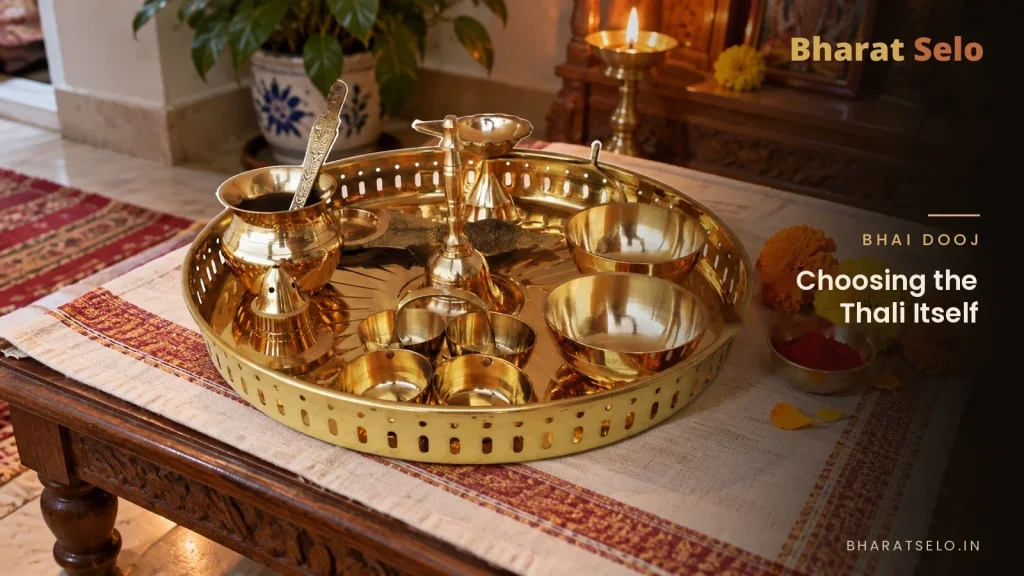
Any clean plate works, but a dedicated Bhai Dooj thali makes the day feel ceremonial. Brass thalis are the classic pick: they are sturdy, gleam in photographs and handle a lit diya safely. If you are choosing one, our guide to buying a brass puja thali set covers sizes and what a set includes.
Many sisters also keep a copper thali for the festive season, like the ones we describe in our copper puja thali notes for Diwali.
A decorated Bhai Dooj puja thali with a velvet base or engraved rim doubles as a gift for a newly married sister or brother setting up a first home. Fill it with the tilak items, wrap it in cellophane, and it is a complete Bhai Dooj present on its own.
If You Are the Brother Reading This
The thali may come from your sister’s hands, but the day belongs to both of you. Arrive on time, sit through the aarti without checking your phone, and eat the sweet she offers with genuine enthusiasm.
And bring the gift yourself, in person, when you can. It does not need to be grand. Something chosen with her taste in mind, handed over with both hands, is what the day asks for.
Frequently Asked Questions
What are the main Bhai Dooj thali items?
Roli or kumkum and rice for the tilak, a lit diya, sweets and moli thread form the core. Many families add a coconut, betel nuts and a small lota or glass of water.
When is Bhai Dooj in 2026?
Wednesday, 11 November 2026, two days after Diwali. The tilak muhurat usually falls in the afternoon; confirm the exact time for your city on a local panchang.
What is Bhai Dooj called in different regions?
Bhau Beej in Maharashtra, Bhai Phota in Bengal and Bhai Tika in Nepal. Many homes also link the day to Yama Dwitiya, after the story of Yama visiting his sister Yamuna.
Can the tilak be done if the brother lives far away?
Yes. Many sisters courier the sweets and gifts ahead and perform the tilak over a video call, keeping only the roli, rice and diya for the call itself.
Which thali material works best for the ceremony?
Any clean plate works, but brass is a favourite because it is sturdy, gleams in photographs and holds a lit diya safely.
A Small Thali, A Big Promise
Bhai Dooj lasts perhaps ten minutes of ritual, but siblings remember it for years. The Bhai Dooj thali is simple: a little roli, a few grains of rice, a flame and a sweet.
Arrange it with care, keep your brother’s favourite mithai on it, and the festival takes care of itself.