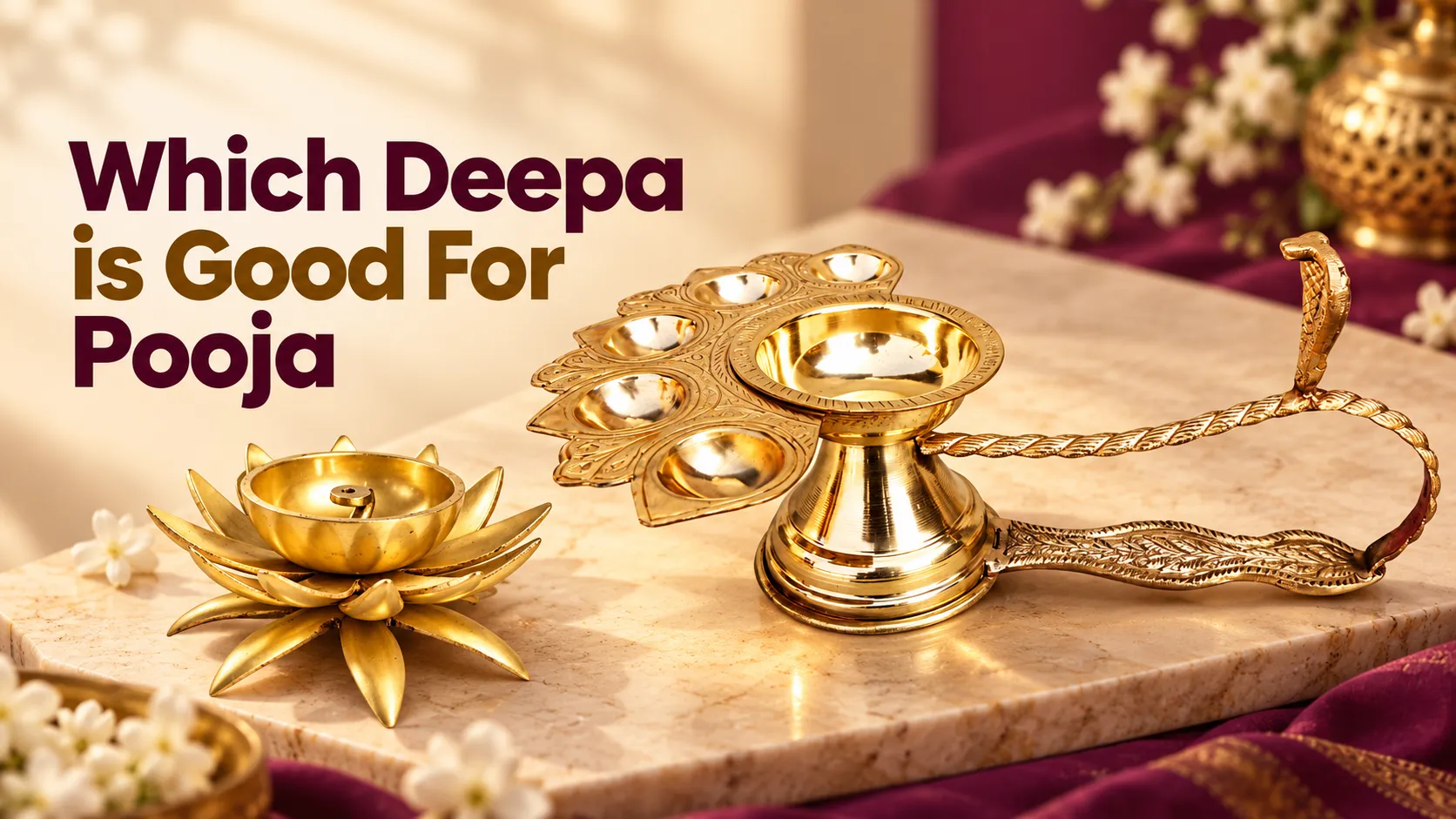
Which deepa is good for pooja: clay, brass, silver, or copper? If you have stood in a puja store staring at four different lamps wondering why this decision feels harder than picking a college major, you are not alone.
The good news is that the answer depends on a short list of practical factors, not mystery. This guide walks through each material honestly, including the annoying parts nobody mentions in the store.
What a Deepa Actually Needs to Do
Before comparing materials, it helps to remember the job description. A deepa needs to hold a wick, burn oil or ghee cleanly, and survive being lit twice a day without falling apart or setting the shelf on fire.
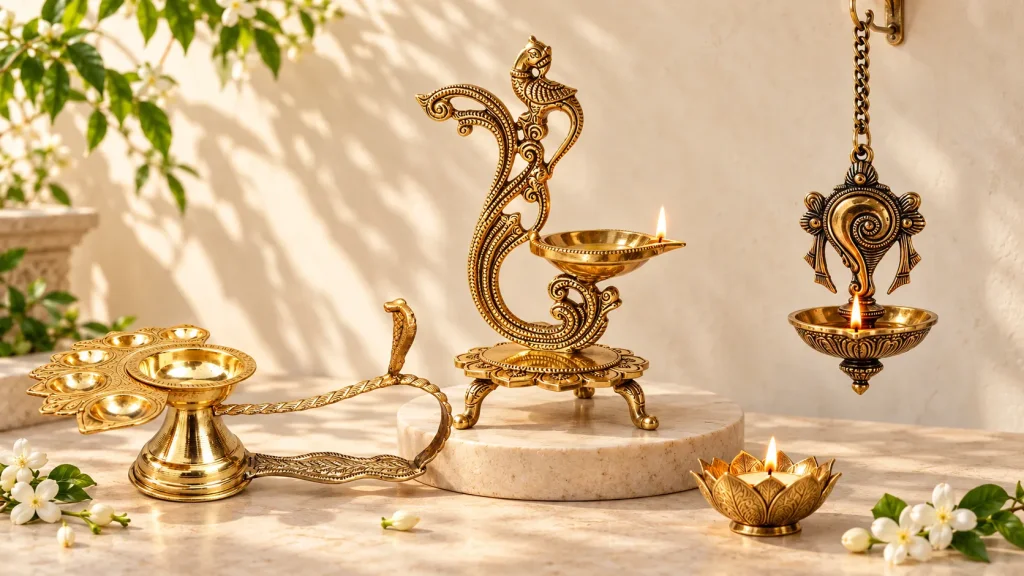
According to Wikipedia’s entry on the diya, these lamps are traditionally made from clay, brass, or silver, with brass and silver versions often built to hold multiple wicks at once.
Clay Deepa: Simple, Cheap, and Not Built to Last
Clay diyas are the ones most people picture first, especially around Diwali. They are inexpensive, earthy, and genuinely nice for one-time or seasonal use.
The catch is durability. Clay absorbs oil over repeated use, cracks with temperature changes, and rarely survives more than a season or two of daily lighting.
Silver Deepa: Elegant, but High Maintenance
A silver deepa looks stunning and is often kept as a family heirloom or gifted for special occasions. Many households associate silver with a calm, refined feel in the pooja room.
The tradeoff is upkeep. Silver tarnishes quickly and needs regular polishing to keep its shine, which makes it a better fit for occasional ceremonies than for a lamp you light every single morning.
Copper Deepa: Traditional, but Needs Frequent Care
Copper has a long history in Ayurvedic practice and gives off a warm, reddish glow when lit. It is a reasonable middle ground between clay and precious metal.
Copper corrodes and develops a greenish patina if it is not cleaned regularly, so it demands more attention than brass for the same daily-use routine.
Brass Deepa: The Practical Everyday Choice
Brass consistently comes up as the answer to which deepa is good for pooja when daily, long-term use is the priority. It resists heat, does not crack like clay, and tarnishes far more slowly than silver or copper.
A well-made brass deepa can realistically last for decades with basic care, which is why so many households treat their brass lamps as something closer to furniture than a disposable festival item.
BharatSeLo’s Diya Deepak collection includes brass options in single-wick and multi-wick designs for daily pooja use.
So, Which Deepa is Good For Pooja in Your Home?
If you perform pooja daily and want one lamp that just works without babysitting, brass is the practical answer. If you are decorating for a single festival night, a clay deepa does the job affordably. Silver and copper suit special occasions better than daily rotation.
For a matching set, BharatSeLo’s brass puja thali sets pair naturally with a brass deepa on the same altar.
Caring for Whichever Deepa You Choose
Brass and copper lamps both benefit from an occasional clean once the surface darkens from regular flame use. Skip harsh chemical polishes, since simple household ingredients usually do the job just as well.
This guide on how to clean brass idols at home covers methods that work equally well on a brass deepa.
Buying a Brass Deepa From BharatSeLo
BharatSeLo works with brass artisans on handcrafted pooja items, so each deepa is cast and finished by hand rather than machine-stamped. Slight variations between pieces are a sign of genuine craftsmanship, not a defect.
You can also browse hand and arti diyas for a smaller, portable option, or read about the artisans on the About BharatSeLo page.
Final Thoughts
There is no single correct answer to which deepa is good for pooja, only the right answer for how often you plan to light it. For daily worship, brass wins on durability and low maintenance. For everything else, clay, copper, and silver each still have their place.
Frequently Asked Questions
1. Which deepa is good for pooja if I light it every day?
Brass is the most practical option for daily pooja, since it resists heat and tarnishes far more slowly than silver or copper.
2. Is clay deepa better than brass for Diwali?
Clay is a fine, affordable choice for a single festival night, but it is not built for repeated daily use the way brass is.
3. Why does a silver deepa need so much maintenance?
Silver tarnishes quickly on contact with air and flame residue, so it needs regular polishing to keep its shine, unlike brass.
4. Is copper a good material for a pooja deepa?
Copper has strong Ayurvedic and traditional associations, but it corrodes and develops a green patina if it is not cleaned often.
5. How long does a brass deepa typically last?
With basic care, a solid brass deepa can last for decades, which is why many families treat it as a long-term household item.
6. Can I use the same deepa for both oil and ghee?
Yes, brass and most metal deepas work well with both ghee and vegetable or sesame oil. Clean out old residue before switching.
7. What size deepa is best for a home pooja room?
A small single-wick or five-wick brass deepa suits most home altars, while larger multi-wick versions fit bigger prayer spaces.
8. How do I clean a tarnished brass deepa?
A simple lemon-and-salt scrub, followed by a rinse and a dry soft cloth, removes most everyday tarnish without damaging the metal.
9. Is a heavier deepa always better quality?
Generally, yes. Heavier brass usually indicates thicker casting, which tends to mean a longer working life for daily use.
10. What should I check before buying a deepa online?
Confirm the material is solid metal rather than plated, check the wick count for your needs, and look for even soldering as a sign of careful craftsmanship.