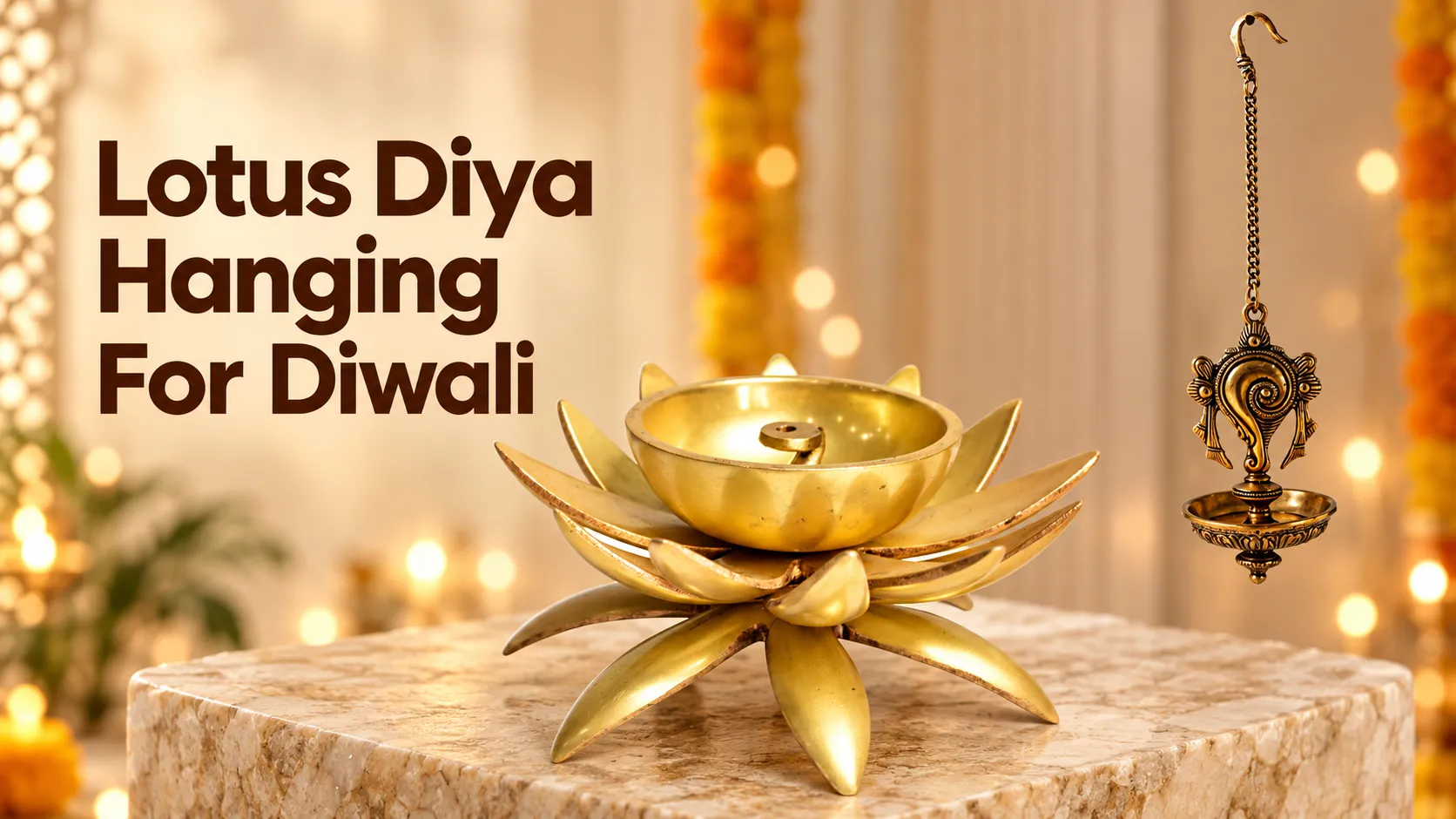
A lotus diya hanging for Diwali is not shaped like a lotus by coincidence. Of all the flowers that could have ended up carved into brass lamps, the lotus is the one tied directly to the goddess Diwali is actually about, and that connection is worth knowing before you buy one.
This guide covers where the lotus motif comes from, why it matters specifically at Diwali, and how to pick a lotus diya hanging that does the design justice.
Diwali Is Really About Welcoming Lakshmi
Diwali centers on Lakshmi Puja, and the tradition holds that Lakshmi, the Hindu goddess of wealth and prosperity, visits homes on the festival’s darkest night, which is why households clean and light lamps in the days leading up to it.
Diyas get lit specifically to welcome her in, which already makes any diya meaningful during Diwali. A lotus diya hanging takes that one step further by carrying her personal symbol into the design itself.
Why the Lotus Specifically Represents Lakshmi
Lakshmi is traditionally depicted seated or standing on a blooming lotus, and one of her Sanskrit names, Padma, literally means lotus. The flower is also said to represent purity and beauty rising untouched from muddy water, a quality closely tied to her role as a bringer of prosperity.
A lotus diya hanging for Diwali borrows that exact imagery, putting the goddess’s own symbol directly above the doorway meant to welcome her.
What to Look for in a Lotus Diya Hanging
Petal Detailing
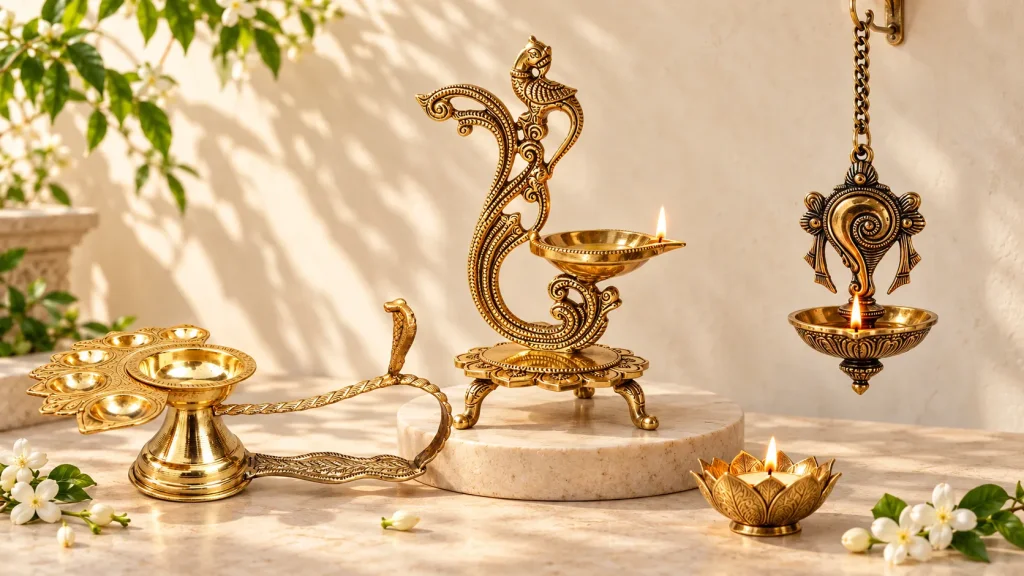
Well-made pieces show distinct, layered petals rather than a flat, stamped outline. That detail is where hand-casting shows, versus a mass-produced version that skips the depth entirely.
Chain and Hook Quality
Since this is a hanging design, the chain and hook need to hold up to repeated use, not just look good in a product photo. A secure hook matters more here than on a piece that sits flat on a shelf.
BharatSeLo’s hanging diya collection includes lotus-motif designs with that kind of hand-finished petal detail.
Where to Hang It for the Most Meaning
Since the lotus ties directly to Lakshmi’s arrival, the entryway is the most fitting spot for a lotus diya hanging, the same place households traditionally light lamps to guide her in. A second piece above the puja altar reinforces the same symbolism during the actual Lakshmi Puja ritual.
For a flat-mounted alternative to the chain-hung style, BharatSeLo’s wall diya collection includes similar lotus and floral detailing.
Brass vs. Other Materials for This Design
The lotus motif shows up in clay, brass, and silver versions, but brass holds the fine petal detailing far better than clay over repeated use, and costs a fraction of a comparable silver piece. For a design this symbolic, it is worth choosing a material that will actually last past one Diwali season.
You can compare finishes and sizes across BharatSeLo’s Diya Deepak category before deciding.
Caring for a Lotus Diya Hanging
Brass darkens naturally with regular flame use, and that tarnish wipes off with basic household ingredients, just take extra care around the fine petal edges rather than scrubbing hard.
This guide on how to clean brass idols at home covers gentle methods that protect detailed casting like the lotus petals.
Buying a Lotus Diya Hanging For Diwali From BharatSeLo
BharatSeLo works with brass artisans who hand-cast the petal detailing rather than stamping it out flat, so a lotus diya hanging for Diwali from the collection actually carries the texture the design is meant to have.
You can read more about the artisans behind each piece on the About BharatSeLo page.
Final Thoughts
A lotus diya hanging for Diwali carries more meaning than most people realize when they first buy one. It is not just a pretty shape, it is Lakshmi’s own symbol, hung in the exact spot households have used for generations to welcome her home.
Frequently Asked Questions
1. Why is the lotus used on diyas specifically for Diwali?
The lotus is closely associated with Lakshmi, the goddess honored during Diwali, who is traditionally depicted seated on a blooming lotus.
2. What does Padma, one of Lakshmi’s names, mean?
Padma is Sanskrit for lotus, one of several names used for Lakshmi that directly reference the flower.
3. Where should I hang a lotus diya for the most symbolic meaning?
The entryway is the most fitting spot, since it mirrors the tradition of lighting lamps there to welcome Lakshmi into the home.
4. Is brass or clay better for a lotus-motif diya?
Brass holds fine petal detailing better than clay over repeated use and lasts significantly longer with basic care.
5. What should I check for quality in a lotus diya hanging?
Look for distinct, layered petal detailing rather than a flat stamped outline, along with a secure chain and hook.
6. Is a lotus diya hanging only appropriate for Diwali?
No, many households keep it mounted year-round, though its symbolism is most directly tied to the Diwali and Lakshmi Puja period.
7. How do I clean a lotus diya hanging without damaging the petals?
Use a soft cloth and gentle cleaning methods rather than hard scrubbing, since the fine petal edges can wear down with abrasive contact.
8. Is the lotus symbol used by other Hindu deities too?
Yes, deities including Vishnu, Brahma, and Saraswati are also associated with the lotus, though its connection to Lakshmi is especially strong.
9. What is the difference between a lotus diya and a peacock diya?
The lotus ties specifically to Lakshmi and prosperity, while the peacock is more closely associated with Krishna and Kartikeya.
10. What should I check before buying a lotus diya hanging online?
Confirm the material is solid brass, check the chain and hook strength, and look for detailed, hand-finished petal work.