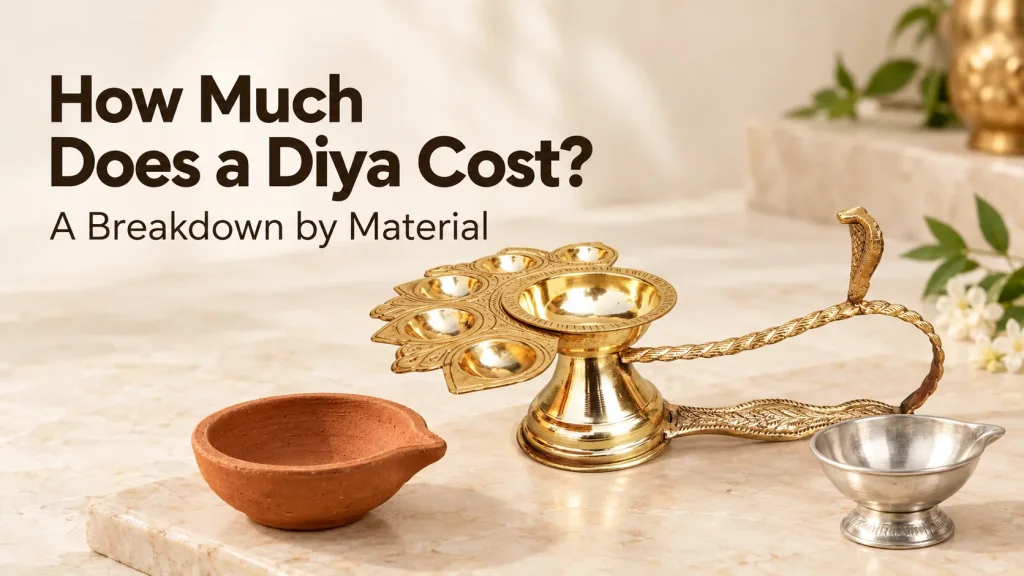
How much does a diya cost? Anywhere from a couple of dollars for a bag of clay lamps to several hundred dollars for a hand-finished silver piece, and the honest answer depends entirely on what the diya is made of.
Instead of throwing out one vague number, this guide breaks the cost down by material, so you know roughly what to expect before you start browsing.
Clay Diyas: The Budget Option
Traditional clay or terracotta diyas are the cheapest option by a wide margin. In India, basic clay diyas commonly sell for as little as a few rupees each when bought in bulk for Diwali.
For shoppers in the United States, small sets typically run in the range of five to ten dollars for a pack of ten simple clay lamps, plus shipping, based on current listings from US-based sellers.
Brass Diyas: The Middle Ground
Brass sits comfortably between clay and silver, both in price and in how long it actually lasts. Wholesale brass diyas can start as low as fifty to one hundred rupees per piece for very basic designs.
Handcrafted, retail-quality brass diyas with more detailing generally run higher, often somewhere between eight and twenty dollars for a single well-made piece, with larger or more ornate designs going up from there.
Brass itself is an alloy of copper and zinc, and according to Wikipedia’s entry on the diya, brass lamps with multiple wicks have long been a common, durable choice compared to simpler clay versions.
Silver Diyas: The Premium Choice
Silver diyas are priced almost entirely by weight, commonly somewhere in the range of one to two dollars per gram of silver, before adding craftsmanship and design costs on top.
A small silver diya might weigh under 50 grams, while a larger or more ornate lotus-shaped design can weigh several hundred grams, which is why silver pieces can range anywhere from affordable to genuinely expensive within the same material category.
What Actually Moves the Price Within Each Material
Size and Weight
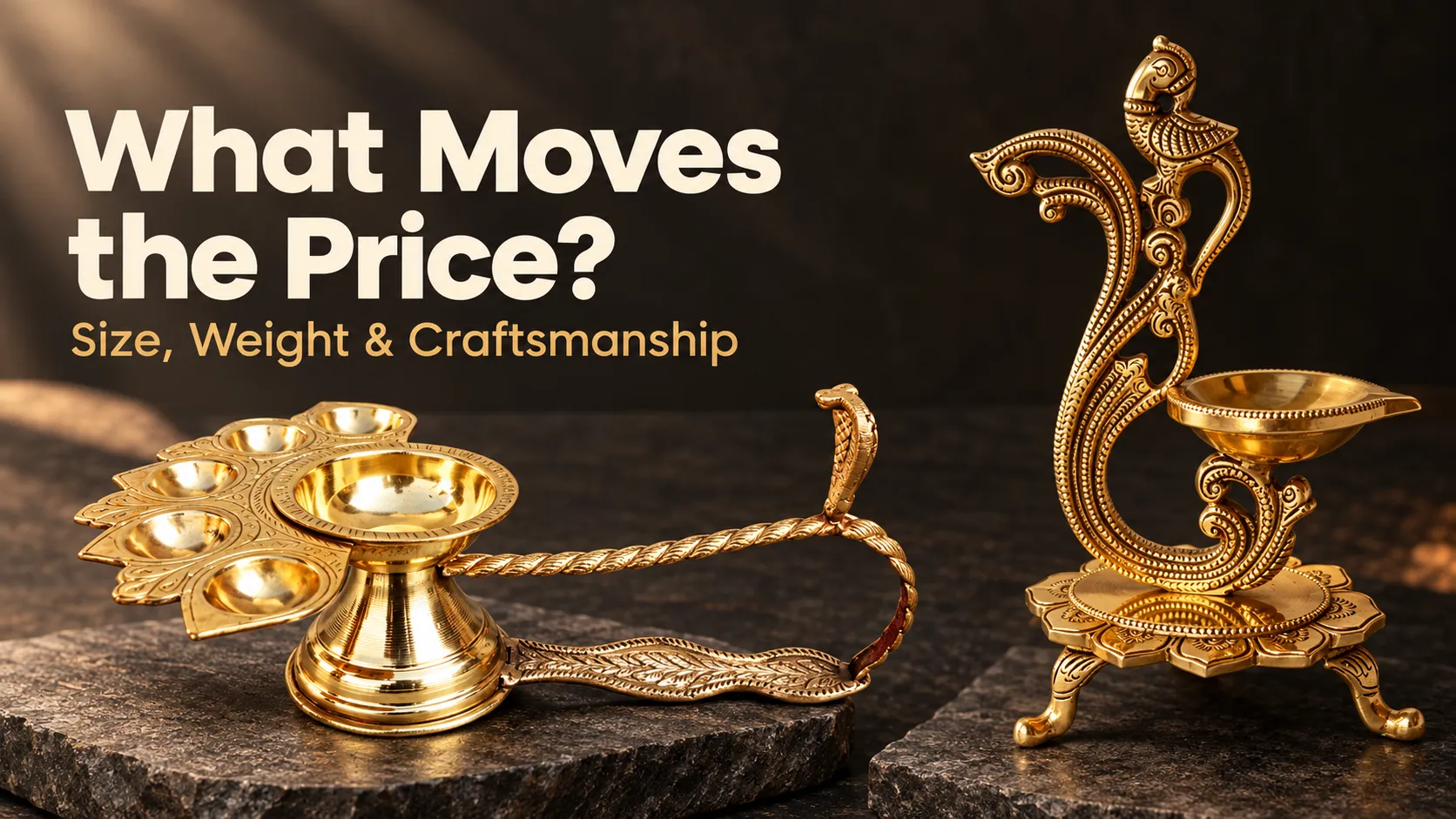
Heavier, larger pieces cost more across every material, since more raw material goes directly into the final product.
Detailing and Craftsmanship
Hand-carved patterns, peacock motifs, or added stands all take extra artisan time, which shows up in the price regardless of whether the base material is clay, brass, or silver.
Solid vs. Plated
A solid metal piece almost always costs more than one that is only plated over a cheaper base, even when the two look nearly identical from a photo.
BharatSeLo’s Diya Deepak collection lists current pricing across sizes, so you can compare real numbers rather than guessing from a general range.
Why Brass Tends to Offer the Best Value
Clay is cheap but rarely survives more than a season or two. Silver looks stunning but demands regular polishing and carries a much higher upfront cost. Brass lands in the middle: durable enough for years of daily use, without the maintenance or price tag that comes with silver.
For daily aarti use specifically, BharatSeLo’s Ganga Arti collection includes multi-wick brass designs built for regular ritual use.
Smaller, Everyday Options
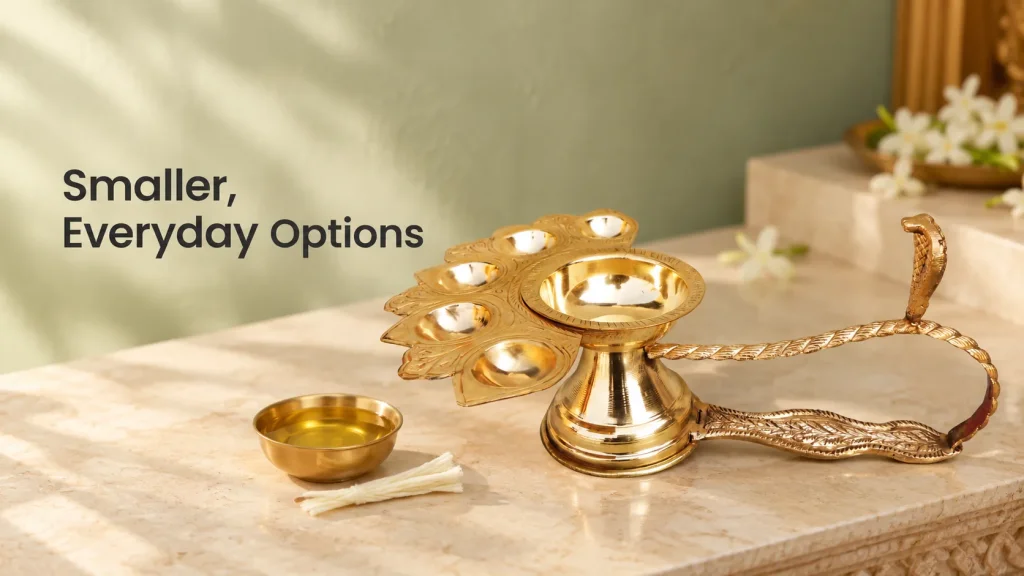
Not every diya needs to be a large statement piece. For simple daily worship, a small hand or arti diya covers the basics without the price jump that comes with bigger, more elaborate designs.
BharatSeLo’s hand and arti diya collection covers that smaller, budget-friendly size range.
Caring for Your Diya Protects the Investment
Whatever you spend, basic care keeps a brass or silver diya looking good for years rather than months. Regular flame use darkens the surface naturally, and that tarnish wipes off with simple household ingredients.
This guide on how to clean brass idols at home covers methods that work well regardless of what you originally paid for the piece.
Buying From BharatSeLo
BharatSeLo works with brass artisans who cast and finish each piece by hand, so the pricing reflects genuine material and labor costs rather than a generic markup on a mass-produced import.
You can read more about the artisans behind each piece on the About BharatSeLo page.
Final Thoughts
So, how much does a diya cost? Realistically, anywhere from a few dollars to a few hundred, depending entirely on the material and craftsmanship behind it. For most households, a solid brass piece offers the best balance between price, durability, and everyday usability.
Frequently Asked Questions
1. How much does a basic clay diya cost?
Basic clay diyas are the cheapest option, often just a few rupees each in India, or roughly five to ten dollars for a pack of ten for US buyers.
2. How much does a brass diya cost?
Simple wholesale brass diyas can start around fifty to one hundred rupees per piece, while handcrafted retail pieces often run eight to twenty dollars or more depending on size and detail.
3. How much does a silver diya cost?
Silver diyas are priced mainly by weight, commonly one to two dollars per gram, so total cost depends heavily on the size of the piece.
4. Why is there such a big price range for diyas?
Material is the biggest factor, but size, weight, hand-detailing, and whether a piece is solid or plated metal all affect the final price too.
5. Is a more expensive diya always better quality?
Generally, higher price reflects more material and craftsmanship, but it is worth comparing weight and finish details rather than assuming price alone guarantees quality.
6. Which type of diya offers the best value for daily use?
Brass tends to offer the best balance, since it costs far less than silver but lasts much longer than clay with basic care.
7. Do larger diyas cost proportionally more?
Yes, larger and heavier pieces use more raw material, so cost generally scales up with size across every material type.
8. Does hand-carved detailing add much to the price?
Yes, carved patterns, peacock motifs, and added stands all take extra artisan time, which adds to the final price regardless of the base material.
9. Is it cheaper to buy diyas in a set rather than individually?
Often yes, especially for clay diyas, which are commonly sold in bulk packs of ten or more at a lower per-piece cost.
10. Where can I check current diya pricing before buying?
Check a retailer’s current listing directly, such as BharatSeLo’s Diya Deepak collection, since material costs and designs can shift pricing over time.